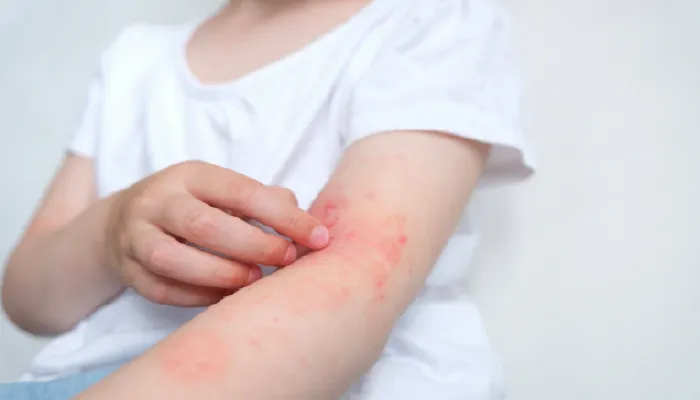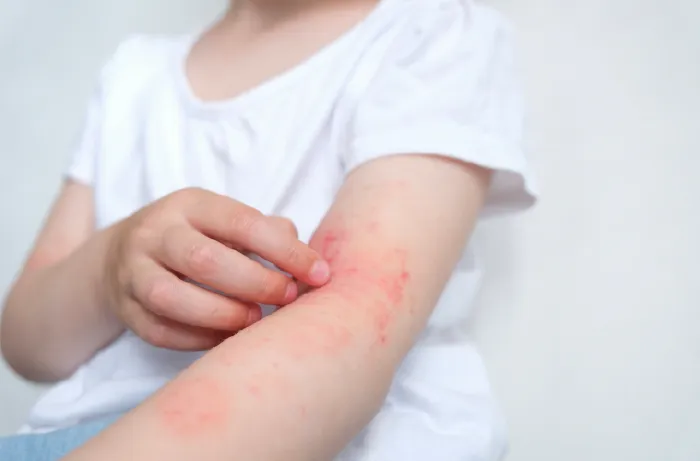

Certain health conditions have no absolute cure; they can only be managed each time they raise their ugly head. Atopic Dermatitis, more commonly known as Eczema, is one such skin condition that appears as painful, reddish, itchy, and often scaly rashes. This condition is usually chronic and often recurs if not managed properly.
Eczema is most common among babies and children and often disappears with age. However, it does reappear in some adults and continues to pose problems throughout their adulthood.
Atopic Dermatitis may be the most common form of eczema, but there are in fact at least six more forms of inflammatory skin rashes that are also known as eczema. Their occurrence, appearance, symptoms, and treatment vary according to their causative factors.
Here are 7 different types of eczema and ways to treat them:
- Atopic Dermatitis
Atopic Dermatitis usually begins during childhood, but can also affect adults. It affects people who have:
- Asthma or hay fever
- A family history of eczema, asthma, or hay fever
- Skin defects that allow moisture out and let germs in
Areas affected:
- Face
- Hands
- Feet
- Inner elbows
- Crease of knees
Treatment:
- Use a good moisturizer
- You may need steroid creams & ointments after a doctor’s consult
- Doctors often prescribe drugs that control the immune system, like a non-steroidal ointment.
- Use antibiotics in case of infections
- UV light treatment, with or without a drug, named psoralen
2. Contact Dermatitis
This type of eczema develops especially on the hands when a person comes in contact with certain chemical substances. People who don't have Atopic Dermatitis may also develop it. There are two types of contact dermatitis:
Irritant contact dermatitis: This can develop if a person touches a strong chemical substance once or repeatedly.
Allergic contact dermatitis: This is usually caused by allergens like nickel, cosmetics, poison ivy, etc.
Treatment:
- Skin moisturizers
- Steroid medications, either or both ointments and pills
- Antibiotics in case of infection
Caution:
Avoid future contact with the irritant or allergen
Wear gloves if you must
3. Dyshidrotic eczema
This type of eczema affects the hands and feet and may become chronic and painful. Although their causes are unclear, their symptoms soon aggravate and may include:
- Severe itching
- Blisters
- Scaly patches
- Deep cracks on the hands or fingers
Treatment:
- Cool, wet compress
- Steroid drugs, either or both ointments and pills
- UV-A therapy
4. Neurodermatitis
Usually caused by a localized itch like an insect bite, this type of eczema often ends up in scaly patches due to continuous, uncontrollable scratching.
This affects the skin of the:
- Scalp
- Forearms
- Wrists
- Lower Legs
- Back
- Sides or back of the neck
- Genitals
- Ear
In the case of neurodermatitis, the outbreak doesn't get any bigger. But the irritated skin can grow thick and scaly. The irritated area may get infected due to scratching.
Treatment:
- Stop scratching
- Steroid ointments
- Oral steroid medication.
5. Nummular eczema
This type of eczema usually affects men in their mid-50s and older. Some women also get it, but in their teens or early adulthood. It manifests as coin-shaped red blotches and appears most often on:
- Legs
- Backs of the hands
- Forearms
- Lower back
- Hips
Although its actual causes are unclear, its triggers include:
- Cold, dry air
- Exposure to chemicals like formaldehyde
- Exposure to metals like nickel
Treatment:
- Protect your skin from scratches & injuries
- Take a lukewarm bath or shower after coming in contact with the above triggers, then apply a moisturizer
- Apply a steroid ointment to the affected area
- Take an oral steroid medication or injection
- Taking antibiotics for infection
6. Seborrheic dermatitis
Better known as dandruff, it affects the scalp in infants, but in adults, it may also affect:
- Eyebrows
- Sides of the nose
- The area behind the ears
- Groin
- Chest
It is caused by the overgrowth of yeast-like microorganisms that are commonly found on the surface of the scalp, combined with rapid growth and shedding of skin cells. This condition causes the skin to fall off in flakes and is particularly difficult to treat when it affects people with low defence mechanisms, including those with AIDS.
Treatment:
Shampoos, containing salicylic acid, selenium sulfide, zinc pyrithione, or coal tar
Anti-fungal treatments for localized use
Steroid lotions
7. Stasis dermatitis
This type of eczema is quite severe and develops only in the lower legs of some people, whose veins from that area don't properly return blood to their heart. Stasis dermatitis erupts suddenly, causing weeping and crusting of the skin. Over time, the affected skin turns brown.
Treatment:
- Steroid creams/ointments
- Moisturizing creams/lotions
- Moist compresses
- Antibiotics for infections
- Elevating the legs
- Compression stockings
Eczema is not contagious
You can’t "catch it" from someone else!
While the exact physical reason for eczema is not known, scientists believe that a combination of genes and environmental triggers causes an outbreak of eczema.
An irritant or an allergen can simply "turn on" the immune system in a localized area, triggering the reaction on the affected skin.
Sometimes, certain food items like dairy products, shell food, nuts, and soy products, or extreme weather conditions can also trigger a flare-up.
So, if you find yourself suffering from painful rashes or blisters, don't ignore it. Book an appointment with a doctor online. Today!
Did you know? You can save over ₹5000 on annual health expenses by becoming a DocsApp Gold Member? DocsApp Gold provides unlimited consultations for you and your family in over 18 specialities for 1 year only at only ₹999!