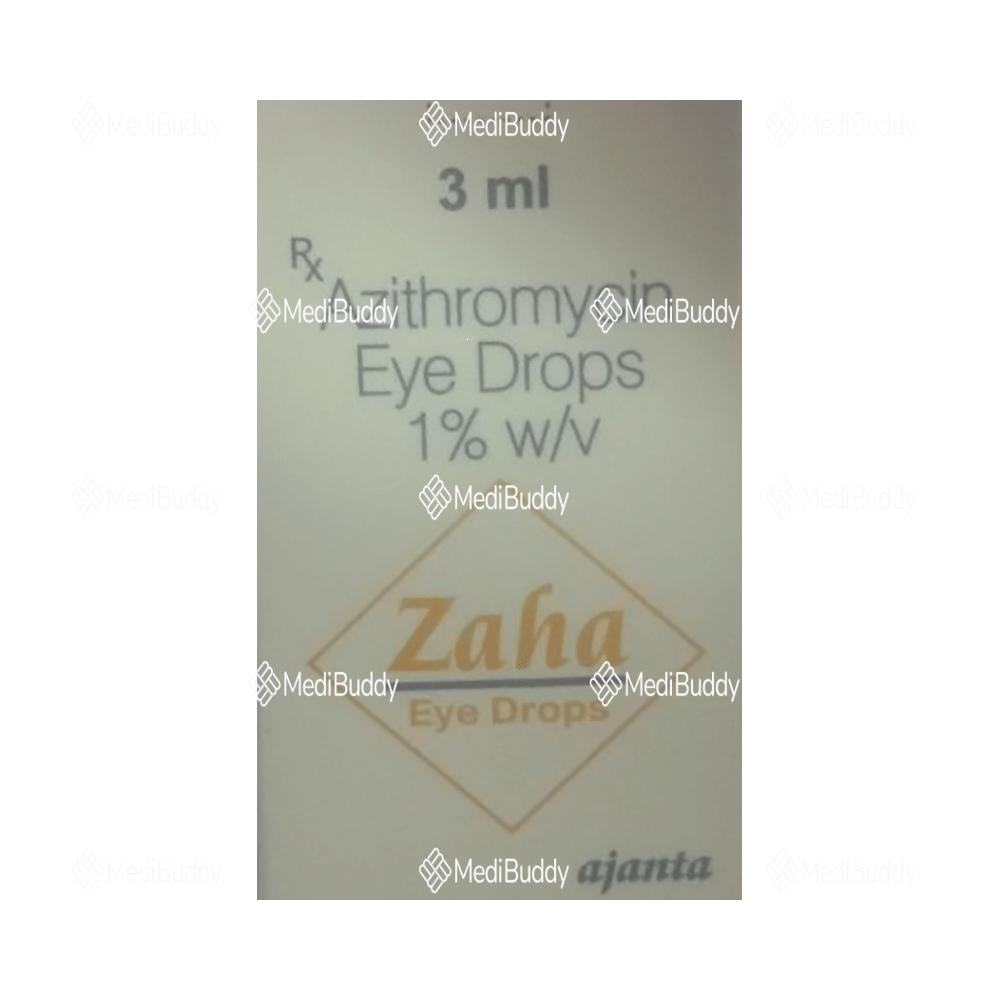
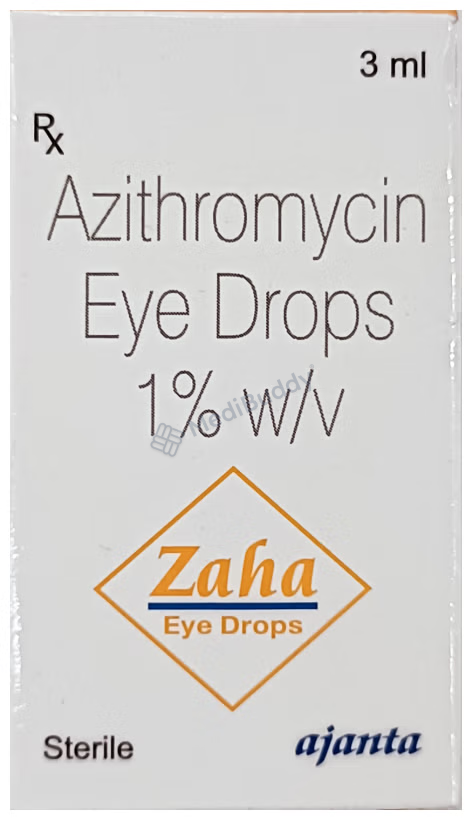
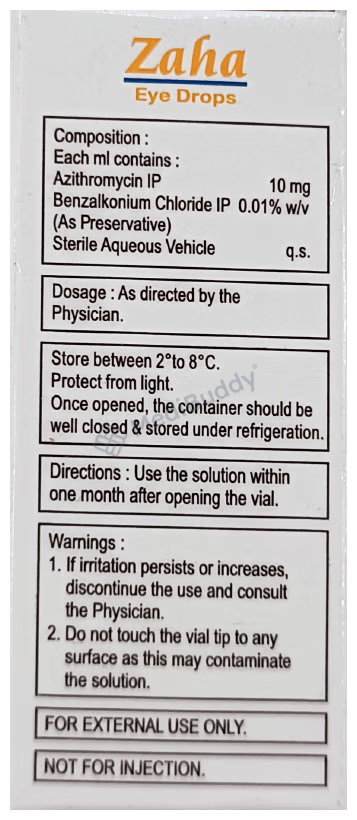
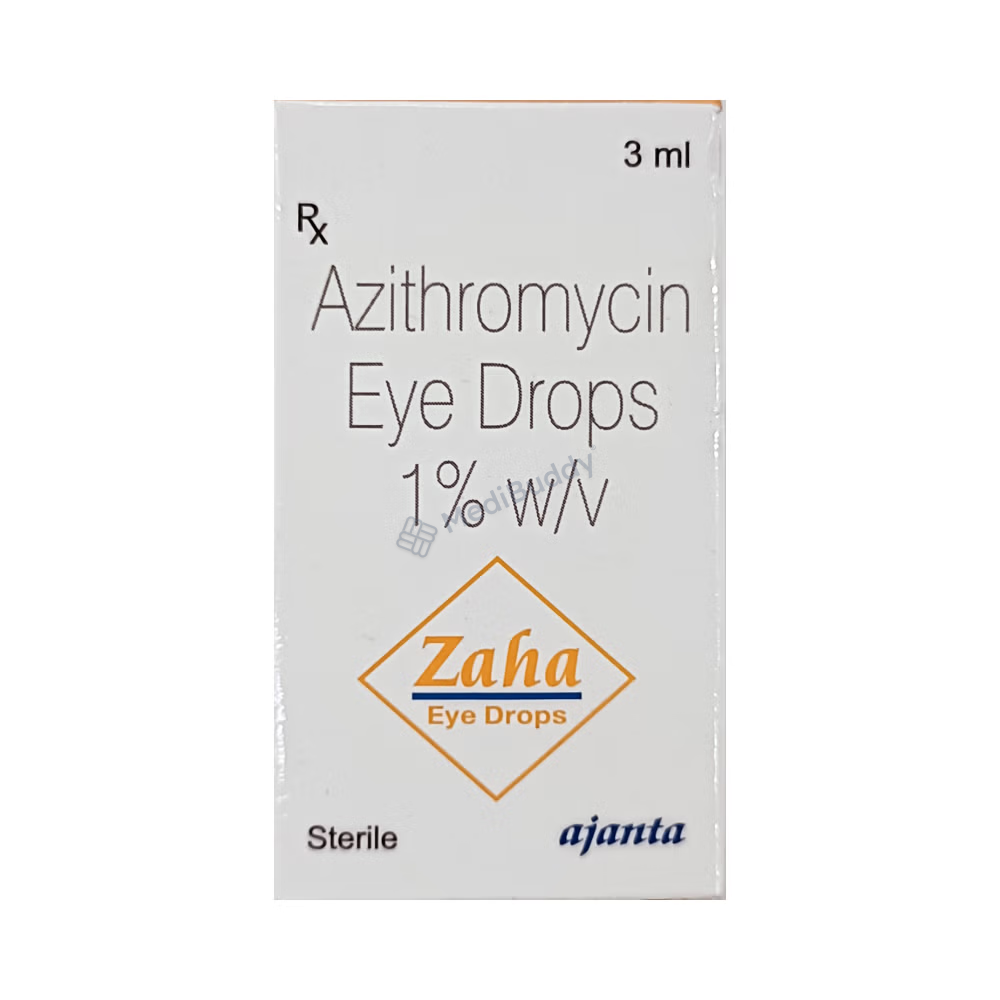
Zaha Eye Drop
By Zaha
Rx
3ml Eye Drop in a Packet

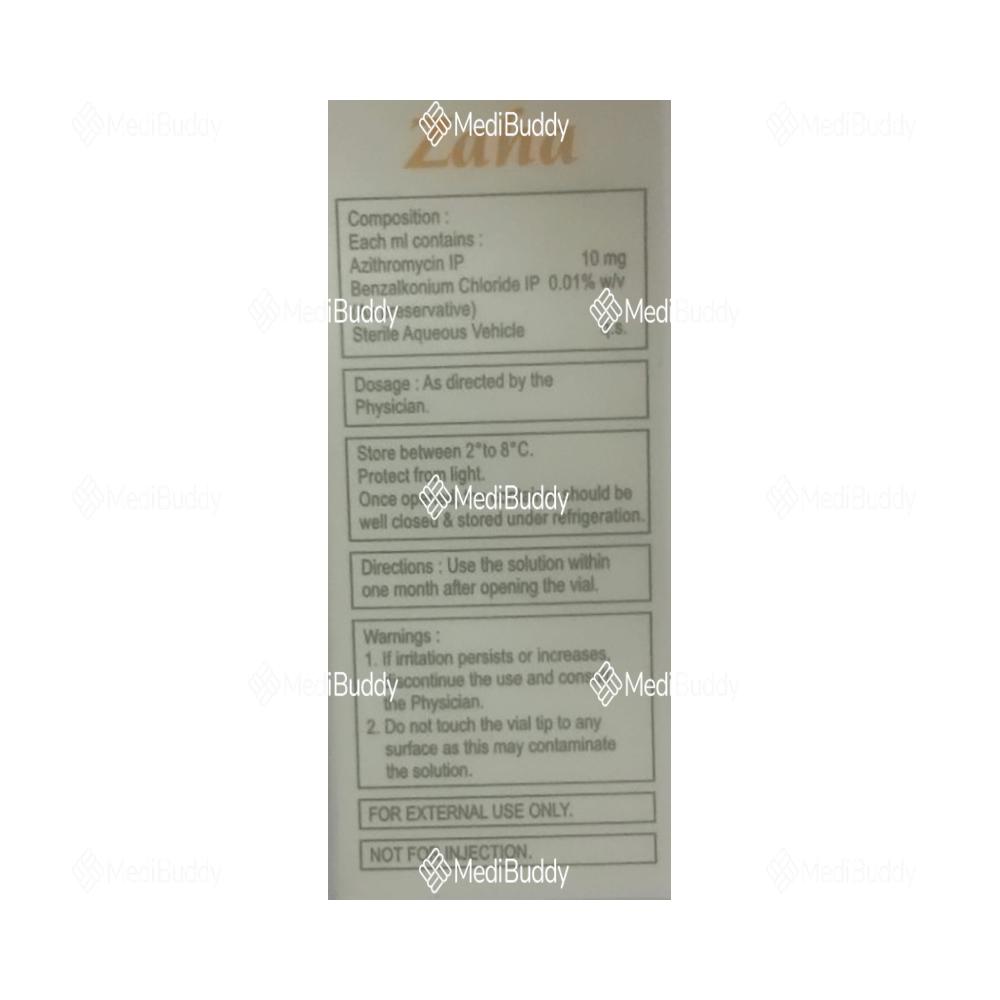
Composition
Azithromycin(1% w/v)

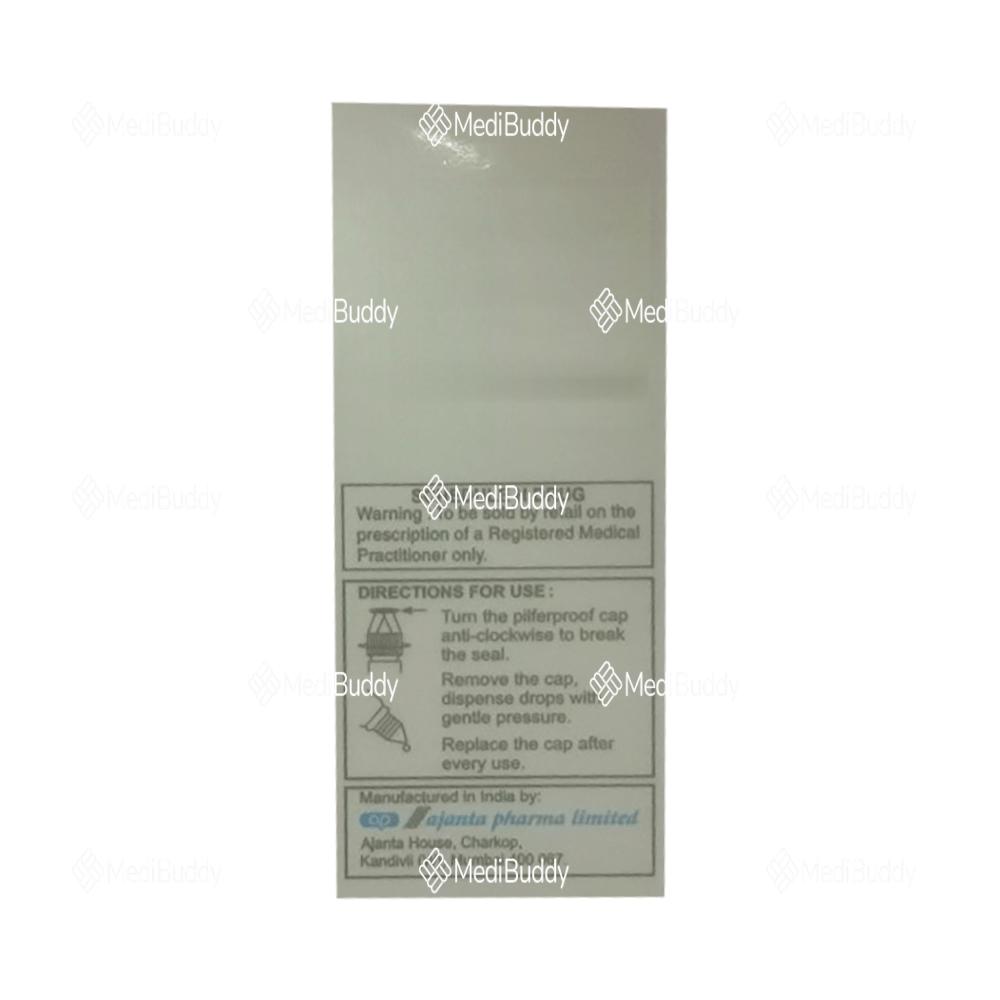
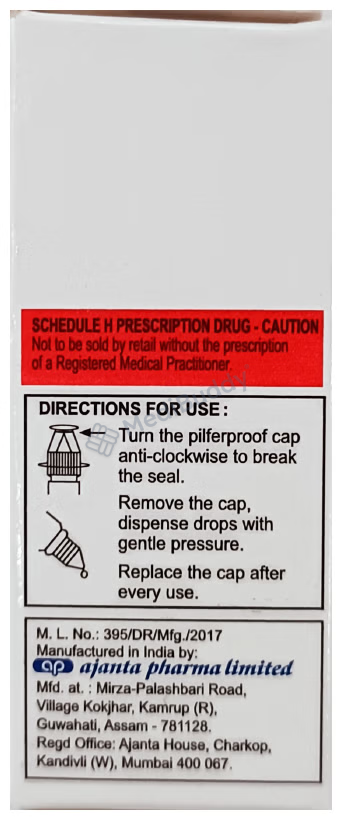
Manufacturer - Ajanta Pharma Ltd
Ajanta House, Charkop, Kandivli West, Mumbai 400 067, India

Expires on or after
July, 2026
About Zaha Eye Drop
Zaha Eye Drop is an antibiotic specifically designed to combat bacterial eye infections effectively. It falls under the category of broad-spectrum antibiotics that are proficient in eliminating various types of bacteria in both adults and children. The medication works by targeting the bacteria responsible for conditions like bacterial conjunctivitis and trachoma conjunctivitis, which are infections affecting the eyes and eyelids.
When using Zaha Eye Drop, it's crucial to follow your doctor's instructions regarding dosage and duration meticulously. Consistent use at the prescribed intervals is vital to ensure maximum effectiveness. It's important not to miss any doses and to complete the entire course of treatment, even if symptoms improve. Abruptly stopping the medication could lead to a recurrence or worsening of the infection.
Some individuals may experience temporary side effects such as eye irritation, a burning sensation, blurred vision, itching, or a sensation of foreign objects in the eyes after using Zaha Eye Drop. These side effects typically subside on their own and are generally not bothersome. However, if these symptoms persist or worsen, consulting your doctor is advisable. It's also crucial to refrain from wearing contact lenses while using Zaha Eye Drop or during a bacterial eye infection.
Taking into account individual circumstances is essential when using Zaha Eye Drop. Consult your healthcare provider before using the medication if you are allergic to azithromycin or any other macrolide antibiotic. Additionally, pregnant or breastfeeding individuals should inform their doctor before using Zaha Eye Drop. The medication may cause temporary vision issues, so it's recommended to wait until your vision returns to normal before engaging in activities like driving or operating machinery.
In summary, Zaha Eye Drop, containing azithromycin as its active ingredient, is a reliable solution for treating bacterial eye infections. Adhering to prescribed guidelines, being aware of potential side effects, and seeking medical advice when needed can ensure a safe and effective treatment experience.
Benefits
Zaha Eye Drop is a powerful antibiotic medicine specifically designed to effectively treat bacterial eye infections. When your eyes are infected with harmful bacteria, Zaha Eye Drop steps in to stop the growth of these bacteria and clears the infection, providing you with relief and promoting quick healing. It contains azithromycin, a key ingredient that targets and kills the bacteria responsible for infections like bacterial conjunctivitis and trachoma conjunctivitis. By using Zaha Eye Drop as prescribed by your doctor and completing the full course of treatment without skipping doses, you ensure that all bacteria are completely eradicated, preventing them from developing resistance. This ultimately leads to a fast and successful recovery from bacterial eye infections, restoring your eye health safely and effectively. Trust Zaha Eye Drop to combat bacterial eye infections and restore clarity and comfort to your eyes.
How to use the Zaha Eye Drop
To properly use Zaha Eye Drop, follow these simple steps as directed by your physician. Wash your hands before application to maintain cleanliness. Tilt your head slightly backwards and gently pull down your lower eyelid to create a pocket. Hold the dropper close to your eye without touching it, then squeeze the dropper to place the drop inside the pocket of your lower eyelid. Be careful not to touch the tip of the dropper to your eye to prevent contamination. Close your eye gently for 1-2 minutes. You can wipe off any extra liquid if needed.
For eye drops, lie down and tilt your head backwards, then pull your lower eyelid to form a pocket. Instill the recommended number of drops into the pocket and close your eyes for 1-2 minutes.
If you are using an eye cream or ointment, follow the same steps of lying down and tilting your head back, pulling your lower eyelid to create a pocket, and then squeezing a small amount of the cream/ointment into the pocket. Close your eyes for 1-2 minutes as well.
Remember, always use Zaha Eye Drop exactly as prescribed by your doctor. They will determine the correct dosage and duration based on your individual factors such as age, weight, and the specific condition being treated. By following these instructions carefully, you can effectively administer the eye drops for optimal results.
Uses of Zaha Eye Drop
The Zaha Eye Drop is used for treating bacterial eye infections like bacterial conjunctivitis, also known as Trachoma conjunctivitis. It effectively treats bacterial conjunctivitis caused by various susceptible microorganisms such as Haemophilus influenzae, Staphylococcus aureus, Streptococcus mitis group, and Streptococcus pneumonia in individuals affected by these infections.
What conditions Zaha Eye Drop treats?
Bacterial conjunctivitis, known as pink eye, is the inflammation or infection of the conjunctiva and inner eyelid. This contagious infection spreads through eye secretions, causing redness, itchiness, and discharge or crusting around the eye. Trachoma conjunctivitis, on the other hand, is caused by the bacterium Chlamydia trachomatis. It typically affects both eyes and starts with mild irritation and itching, leading to eye pain and blurred vision.
Should you consult a doctor?
Before using Zaha Eye Drop, it is crucial to consult your doctor if you wear contact lenses. Additionally, if you are considering using Zaha Eye Drop in children and adolescents aged 1 to 18 years, it is important to exercise caution. In such cases, it is always advisable to seek advice from a medical professional before initiating the use of this medication. Consulting your doctor in these situations can help ensure the appropriate and safe use of Zaha Eye Drop for both yourself and your children.
Side effects of Zaha Eye Drop
When using Zaha Eye Drop, you may experience certain side effects as your body gets used to the medicine. These side effects are usually mild and may go away on their own without medical treatment. However, if they persist or if you are concerned about them, it is important to consult your doctor. Some common ocular reactions that may occur include burning eyes, itching, a burning or stinging sensation, blurred vision, a feeling of sticky eyes, and a sensation of something in the eye. Additionally, you may also experience non-ocular reactions such as a taste disorder, facial swelling, red itchy welts, nasal congestion, periocular swelling, rash, and sinusitis. In some cases, eye irritation may also occur. If you notice any of these side effects and they are bothersome or persistent, seek medical advice for appropriate management.
Safety advice

liver
The use of Zaha Eye Drop has not shown any interactions or concerns related to liver issues. This means that there is no known negative impact on the liver when using this eye drop. It is always important to be cautious with any medication, so if you have any specific liver concerns or conditions, consult with your doctor for personalized guidance before using Zaha Eye Drop.

kidney
Zaha Eye Drop has no established interaction related to kidney issues. Consult with your doctor for proper guidance before using Zaha Eye Drop.

alcohol
No interaction has been found between alcohol and Zaha Eye Drop.

driving
Caution should be exercised when driving while using Zaha Eye Drop. If you notice symptoms like difficulty concentrating or reacting, avoid driving.

pregnancy
Zaha Eye Drop is generally safe during pregnancy based on animal studies showing minimal risks to the baby. Limited human studies are available.

breastfeeding
Zaha Eye Drop is safe to use while breastfeeding, as studies show it does not transfer significantly into breastmilk. Wipe it off before nursing if applied near the breast or nipple.
Age above 75(Geriatrics)
Zaha Eye Drop should be used with caution in elderly patients (aged above 87years). Consult your doctor before using the medicine.
Consumption warning before consuming Zaha Eye Drop
Before using Zaha Eye Drop, check if you have any allergies to azithromycin, other macrolide antibiotics, medium-chain triglycerides, or any of the ingredients in the product. Consult your doctor if you are pregnant or breastfeeding. Be cautious as temporary blurred vision may occur after using Zaha Eye Drop. It is advisable to wait until your vision normalizes before driving or operating machinery. Notify your doctor if you have any existing vision problems, experience severe eye pain, have glaucoma (high eye pressure), eye damage, or have undergone eye surgery before using Zaha Eye Drop.
What if you forgot to take Zaha Eye Drop?
If you forget to use your Zaha Eye Drop, take it as soon as you remember. But if it's close to the time for your next dose, just skip the missed one and continue with your usual dosing schedule. Avoid doubling up on doses to make up for the missed one.
What happens if you take overdose of Zaha Eye Drop?
In the event that you or someone else accidentally uses too much Zaha Eye Drop, it is important to seek medical help promptly. Potential overdose of this medication could lead to adverse effects and complications. Consulting a doctor or going to the nearest hospital is crucial to address any issues resulting from an overdose situation. It is always best to be cautious and seek professional medical assistance when dealing with the possibility of overdosing on any medication, including Zaha Eye Drop.
Additional Information
| Habit Forming | No |
| Chemical Class | Macrolides |
| Therapeutic Class | OPHTHAL |
| Action Class | Macrolides |
FAQs
Disclaimer
The information provided on this website is to the best of our abilities to ensure it is accurate, reliable, and reviewed by a team of professionals. It should not be used to diagnose, prevent, or cure any health problem. The information presented here is not intended to create a doctor-patient relationship or replace a registered medical practitioner's advice, diagnosis, or treatment. The absence or provision of any information or warning regarding any medicine should not be assumed as an implied or explicit assurance of safety or efficacy. We highly recommend consulting your registered medical practitioner for all queries or doubts related to your medical condition. Do not ignore professional medical advice or delay seeking it based on the content encountered on our website. We intend to support, not replace, the doctor-patient relationship.
₹189
Inclusive of all taxes
Content verified by

Dr. Preeti Kumar
MBBS, DGO - Obstetrics and Gynaecology, DNB - Obstetrics and Gynaecology
Last update on 01-Oct-2024


