
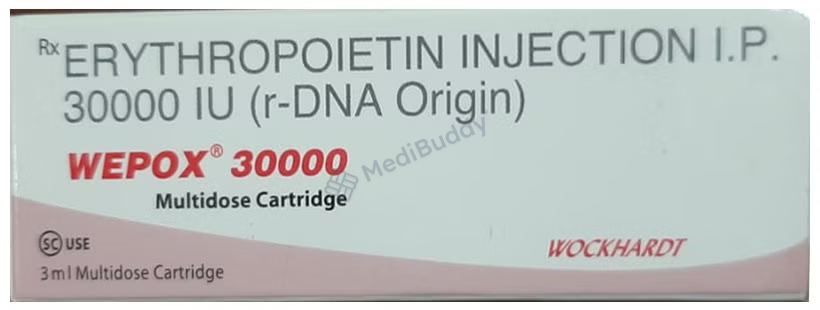

Wepox Injection
By Wepox
Rx
3ml Injection in a Cartridge

Composition
Recombinant Human Erythropoietin Alfa(30000IU)

Manufacturer - Wockhardt Ltd
Wockhardt Towers, Bandra Kurla Complex, Bandra (East), Mumbai 400051, Maharashtra, India

Expires on or after
April, 2027
About Wepox Injection
Wepox Injection is a medication aimed at boosting the production of red blood cells in the bone marrow. It is primarily used to address a specific type of anemia linked to kidney disease. Additionally, Wepox Injection is employed in the treatment of anemia related to cancer chemotherapy and certain medications used for managing HIV. Administration of Wepox Injection is typically done through injections under the skin or into a vein, a process determined by a healthcare provider. The dosage is customized based on body weight and the underlying cause of anemia. To enhance the effectiveness of the treatment, iron supplements before and during therapy may be recommended. It is worth noting that Wepox Injection should be stored in a refrigerator but utilized at room temperature.
Potential side effects of Wepox Injection include common symptoms such as nausea, vomiting, fever, and elevated blood pressure. Flu-like manifestations like headaches, fatigue, dizziness, and bodily discomfort can also occur, particularly at the onset of treatment. Should these side effects persist, consulting the doctor is advised to explore potential strategies for prevention or mitigation. Notably, immediate medical attention is essential if severe side effects like seizures emerge, as Wepox Injection could potentially lead to critical blood clots that necessitate urgent intervention. It is important to disclose any preexisting conditions such as uncontrolled high blood pressure, heart ailments, or gout to the healthcare provider before commencing Wepox Injection. Additionally, the doctor should be informed about any ongoing medications that might interact with this treatment. Regular monitoring of blood pressure and other pertinent medical tests is recommended during the course of treatment to ensure safety. For individuals who are pregnant, planning pregnancy, or breastfeeding, consultation with a healthcare provider is vital to assess potential risks.
Wepox 4000 Injection 0.4 ml, a variant of Wepox Injection, is categorized under hormones used to treat chronic anaemia prevalent in kidney disease, cancer, chemotherapy patients, bone marrow disorders, and individuals preparing for major bone surgery. Anaemia, defined by low blood counts due to insufficient hemoglobin, can diminish the blood's capacity to carry oxygen. Wepox 4000 Injection 0.4 ml contains Recombinant Human Erythropoietin Alfa, which functions by stimulating the bone marrow to generate more red blood cells, thereby rectifying low blood counts and anaemia. Among the common side effects associated with Wepox 4000 Injection 0.4 ml are vomiting, diarrhea, fever, and nasal congestion. Most of these side effects are self-resolving and typically do not warrant medical intervention. However, consistent experiences of these side effects should prompt a discussion with the healthcare provider. Prior to initiating Wepox 4000 Injection 0.4 ml, individuals should provide a comprehensive medical history encompassing ailments like hypertension, heart diseases, epilepsy, cancer, liver disorders, and other pertinent conditions. Consultation with a healthcare provider is advised for individuals considering the use of Wepox 4000 Injection 0.4 ml during pregnancy or while nursing.
Benefits
Wepox Injection, specifically Wepox 4000 Injection 0.4 ml, offers significant benefits in the treatment of anemia caused by chronic kidney disease and cancer chemotherapy. This man-made protein aids the bone marrow in producing more red blood cells, addressing the lack of oxygen-carrying cells in the body that characterizes anemia. For individuals undergoing dialysis due to kidney disease, Wepox Injection can alleviate fatigue and weakness associated with anemia by boosting red blood cell production post-treatment.
Moreover, in the context of cancer chemotherapy, Wepox Injection plays a crucial role in combating anemia by stimulating the bone marrow to increase red blood cell production. This is particularly important as chemotherapy can deplete the natural levels of this vital protein in the body, leading to anemia. By reducing the need for blood transfusions and potentially supplementing with iron, Wepox Injection supports more effective anemia management during cancer treatment.
Overall, Wepox 4000 Injection 0.4 ml not only addresses anemia related to chronic diseases and kidney issues but also extends its benefits to bone marrow disorders, pediatric and adult patients on dialysis, and those preparing for major bone surgeries. By enhancing healthy red blood cell formation, correcting erythropoiesis irregularities, and directly increasing hemoglobin levels, this medication offers a comprehensive approach to improving blood health and reducing the reliance on blood transfusions.
How to use the Wepox Injection
When it comes to using Wepox Injection, it is essential to have a healthcare professional administer it to you. It is crucial to not try to administer the injection yourself. The recommended dosage of Wepox 4000 Injection is 0.4 ml, and only a healthcare professional should give you this injection. In some circumstances, your doctor may teach you how to self-inject the Wepox 4000 Injection if necessary. However, it is important not to attempt self-injection without proper training. Following an initial treatment, your doctor or nurse may provide you with the necessary instructions and guidance on how to correctly administer the injection. Remember, always seek guidance from a healthcare professional before attempting to self-inject Wepox Injection to ensure your safety and well-being.
Uses of Wepox Injection
Wepox Injection is commonly used for addressing anemia related to chronic kidney disease and anemia induced by cancer chemotherapy. Specifically designed to treat these conditions, Wepox provides patients with a therapeutic option to manage their anemia effectively. By targeting the root causes of anemia in these cases, Wepox helps to improve the quality of life for individuals undergoing treatment for chronic kidney disease and those undergoing cancer chemotherapy.
What conditions Wepox Injection treats?
Anaemia is a health condition that occurs when there is a decrease in the production of red blood cells, affecting the blood's ability to carry oxygen. This can result in various symptoms such as tiredness, weakness, difficulty breathing, paleness, mood swings, and nerve problems. It is important to address anaemia to ensure vital tissues in the body receive enough oxygen for proper function.
Should you consult a doctor?
If you experience persistent or severe side effects while taking Wepox Injection, it is important to seek medical attention promptly. While common side effects like nausea, vomiting, fever, and increased blood pressure may lessen over time, it's essential to consult your doctor if they continue or worsen. Additionally, symptoms such as severe rash, joint pain, headache, insomnia, chills, cough, bone pain, muscle spasm, dizziness, or signs of vascular occlusion require immediate medical attention.
Moreover, if you notice injection site irritation, stomatitis (mouth inflammation), unexplained weight loss, decreased white blood cell count, or elevated glucose levels in your blood, it is recommended to contact your doctor promptly. Furthermore, blood clots in the blood vessels are a serious concern that needs urgent medical evaluation. It's crucial to inform your healthcare provider about any pre-existing conditions like high blood pressure, heart disease, or gout before starting Wepox Injection. Regular monitoring and necessary tests during treatment ensure any potential harmful effects are promptly addressed. If you are pregnant, planning pregnancy, or breastfeeding, discuss this with your doctor before using the medication.
Side effects of Wepox Injection
When receiving Wepox Injection, there may be some side effects to be aware of. Most of these reactions are mild and should go away as your body gets used to the medication. However, if any of these side effects persist or if you are concerned, it is important to consult your doctor. Some possible side effects include high blood pressure, nausea, vomiting, fever, rash, joint pain, headache, insomnia (difficulty in sleeping), chills, cough, bone pain, muscle spasm, dizziness, vascular occlusion, injection site irritation, stomatitis (inflammation of the mouth), weight loss, decreased white blood cell count (lymphocytes), increased glucose level in the blood, and blood clot in the blood vessels. Other side effects may include diarrhoea, stomach upset, fever, nasal congestion. It is crucial to communicate any discomfort or concerns with your healthcare provider for proper guidance and monitoring.
Safety advice

liver
When using Wepox Injection, patients with liver disease should take caution. There may be a requirement for dose adjustment in such cases. It is important to consult your doctor regarding the use of Wepox Injection if you have liver issues.

kidney
Wepox Injection can be used safely in patients with kidney disease. It does not require a dose adjustment, but regular monitoring of kidney function tests is recommended during the treatment.

alcohol
It is not known whether it is safe to consume alcohol with Wepox Injection. Please consult your doctor.

driving
When using Wepox Injection, be cautious while driving as it may lead to side effects impacting your driving skills.

pregnancy
Wepox Injection may not be safe during pregnancy. Animal studies indicate potential harm to the baby. Your doctor will assess benefits and risks before prescribing. Please consult your doctor before using Wepox Injection during pregnancy.

breastfeeding
Wepox Injection is likely safe for use during breastfeeding, based on limited data indicating no significant risk to the baby.
Consumption warning before consuming Wepox Injection
Before consuming Wepox Injection, it is vital to inform your doctor of any allergies to its components or if you have a latex allergy. Additionally, disclose details about your medical history, including hypertension, heart ailments, stroke, epilepsy, cancers, liver issues, blood disorders, and conditions like porphyria or pure red cell aplasia. Mention all medications you are currently taking, especially immunosuppressants, blood thinners, or stimulants. Consult your doctor before using Wepox 4000 Injection 0.4 ml during pregnancy or nursing to ensure safety.
What if you forgot to take Wepox Injection?
If you forget to take a dose of Wepox Injection, it is important to reach out to your doctor for guidance. Proper communication with your healthcare provider is crucial in situations where a dose has been missed, as they can provide personalized advice on the best course of action to take. It is always recommended to follow your doctor's recommendations closely to ensure the effectiveness of the treatment. Consulting your healthcare professional promptly in such situations is important to maintain the appropriate treatment schedule and address any potential concerns.
Related lab tests
When considering related lab tests for the evaluation of patients receiving Wepox Injection, healthcare professionals often order a Complete Blood Count (CBC) and a Peripheral Smear Examination. These tests help in monitoring the patient's response to the injection and also aid in assessing the effects on different blood cells. A Complete Blood Count provides detailed information about various blood components, such as red blood cells, white blood cells, and platelets. It helps in identifying any abnormalities in the blood cell counts, which may indicate how well the patient's body is responding to the Wepox Injection. On the other hand, a Peripheral Smear Examination involves looking at a sample of blood under a microscope to examine the size, shape, and overall appearance of different blood cells. This test can reveal specific abnormalities in the blood cells that may not be apparent from a standard CBC alone. Together, these lab tests offer valuable insights into the patient's blood profile and help healthcare providers make informed decisions regarding the management of anemia or other conditions requiring Wepox Injection therapy.
Additional Information
| Habit Forming | No |
| Chemical Class | Amino Acids, Peptides, and Analogues |
| Therapeutic Class | BLOOD RELATED |
| Action Class | Erythropoiesis-stimulating agent (ESA) |
FAQs
Disclaimer
The information provided on this website is to the best of our abilities to ensure it is accurate, reliable, and reviewed by a team of professionals. It should not be used to diagnose, prevent, or cure any health problem. The information presented here is not intended to create a doctor-patient relationship or replace a registered medical practitioner's advice, diagnosis, or treatment. The absence or provision of any information or warning regarding any medicine should not be assumed as an implied or explicit assurance of safety or efficacy. We highly recommend consulting your registered medical practitioner for all queries or doubts related to your medical condition. Do not ignore professional medical advice or delay seeking it based on the content encountered on our website. We intend to support, not replace, the doctor-patient relationship.
₹8380
Inclusive of all taxes
Content verified by

Dr. Monie Riju Simon
MBBS - General Medicine
Last update on 11-Feb-2025


