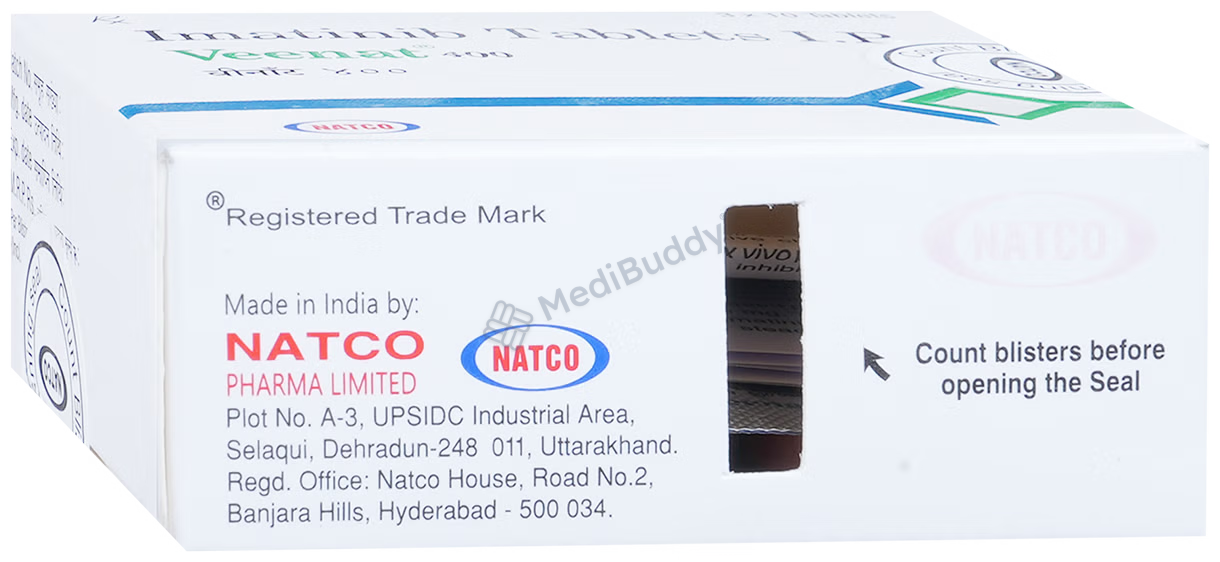
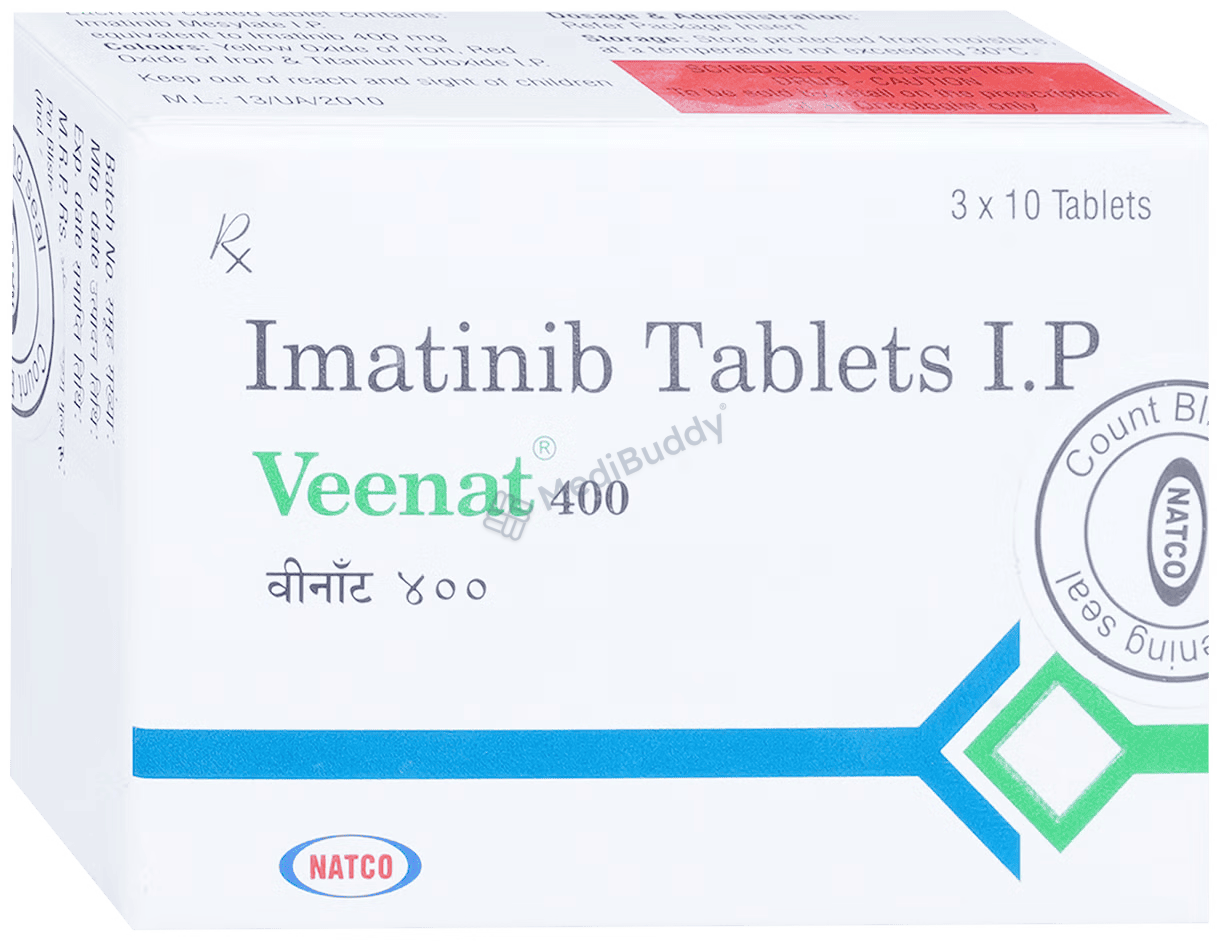
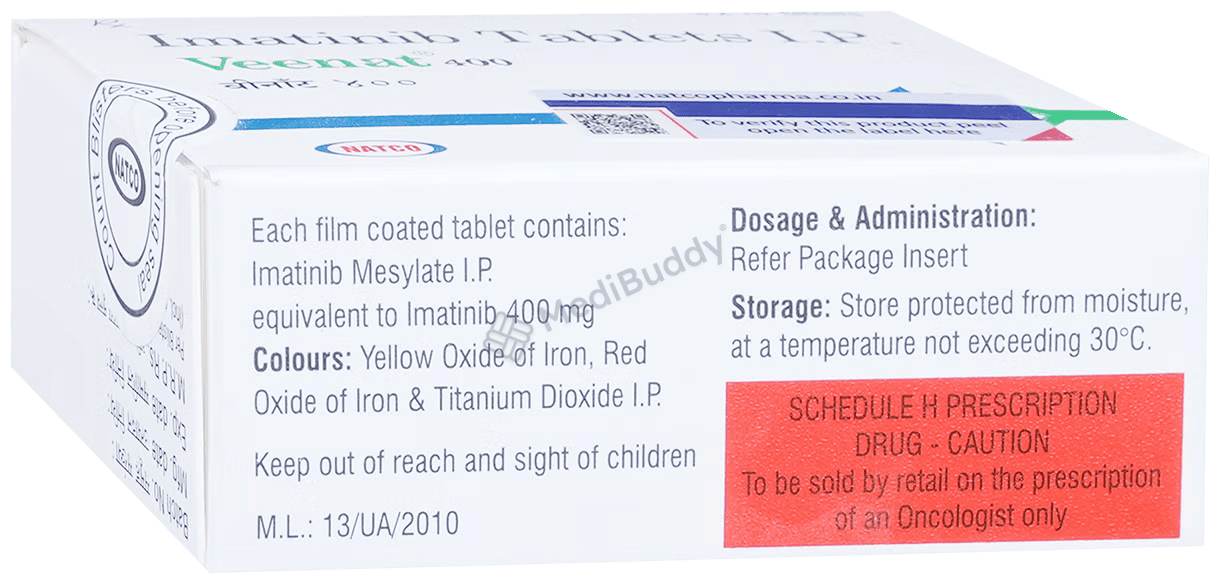
Veenat 400 Tablet

By Veenat

Rx

10 Tablet in a Strip

Composition icon

Composition

Imatinib mesylate(400mg)

Manufacturer - Natco Pharma Ltd icon

Manufacturer - Natco Pharma Ltd

Natco House, Road No.2, Banjara Hills, Hyderabad-500 034, India

Expires on or after icon

Expires on or after

April, 2027

About Veenat 400 Tablet

Veenat 400 Tablet, belonging to the class of anti-cancer medications, is primarily used for treating various types of cancer. Specifically, it is prescribed to address blood cancers such as chronic myeloid leukemia and acute lymphocytic leukemia, as well as gastrointestinal stromal tumors. Cancer is characterized by uncontrolled cell division and spread into surrounding tissues. Veenat 400 Tablet contains Imatinib, an active ingredient that inhibits an enzyme responsible for cancer cell proliferation, thereby slowing down or stopping the growth and spread of cancer cells.

It is crucial to follow your doctor's prescribed duration of treatment when taking Veenat 400 Tablet. The medication may induce certain side effects like nausea, vomiting, edema, fatigue, muscle cramps, diarrhea, rash, and abdominal pain, which usually resolve over time. If these side effects persist, it is recommended to consult your healthcare provider. Avoid Veenat 400 Tablet if you are allergic to any of its components and take necessary precautions to protect your skin from increased sensitivity to sunlight while on this medication.

Regular monitoring of liver function and blood cells is essential during the course of Veenat 400 Tablet treatment. This medication may cause swelling and water retention, leading to unexpected weight gain. If you experience rapid weight gain, seek medical advice promptly. Inform your doctor if you have a history of hepatitis B infection before starting Veenat 400 Tablet, as it may reactivate the infection.

VEENAT 400MG TABLET, another formulation of Imatinib, falls under the group of medicines known as Tyrosine Kinase Inhibitors. It is utilized in the treatment of chronic myeloid leukemia, philadelphia chromosome positive acute lymphoblastic leukemia, myelodysplastic/myeloproliferative diseases, hyper eosinophilic syndrome, chronic eosinophilic leukemia, gastrointestinal stromal tumors, and dermatofibrosarcoma protuberans.

Before initiating VEENAT 400MG TABLET, inform your doctor about any existing or past kidney, liver, or heart conditions, as well as a history of hepatitis B infection or thrombotic microangiopathy. Pregnant and breastfeeding women are generally advised against using VEENAT 400MG TABLET unless specifically prescribed by a healthcare provider. Exercise caution when administering this medication to children, adolescents, and elderly patients.

Common side effects associated with VEENAT 400MG TABLET include nausea, vomiting, diarrhea, headache, weight gain, loss of appetite, altered sense of taste, blurred vision, and weakness. If any of these side effects worsen, seek guidance from your physician.


Benefits

Veenat 400 Tablet offers significant benefits in the treatment of various types of cancer. It is specifically designed to target the proteins responsible for the growth and spread of cancer cells in conditions such as blood cancers, gastrointestinal stromal tumors, skin cancer (dermatofibrosarcoma protuberans), and aggressive systemic mastocytosis in the bone marrow. By inhibiting these proteins, the medication effectively slows down or halts the growth of cancer, leading to the shrinkage of tumors and a reduction in their progression. Ultimately, patients may experience improvements in their overall well-being as a result of the medication's ability to impede the advancement of the disease.


How to use the Veenat 400 Tablet

To use Veenat 400 Tablet, it is important to follow the directions given by your doctor. Take the medicine in the prescribed dose and for the duration recommended by your doctor. It is essential to swallow the tablet whole, without chewing, crushing, or breaking it. It is advised to take Veenat 400 Tablet with food to ensure optimal absorption and effectiveness. Following the instructions precisely will help you get the most benefit from this medication.


Uses of Veenat 400 Tablet

The primary use of Veenat 400 Tablet is in the treatment of cancer. This medication is specifically prescribed to help in managing cancer and its related symptoms. Veenat 400 Tablet is effective in targeting and controlling cancer cells, aiding in slowing down the progression of the disease. It is an important part of cancer therapy, often used in combination with other treatments to improve outcomes for patients undergoing cancer treatment.


What conditions Veenat 400 Tablet treats?

Veenat 400 Tablet is used in the treatment of various cancers including blood cancers, gastrointestinal stromal tumors, dermatofibrosarcoma protuberans (a skin tumor), and aggressive systemic mastocytosis (a bone marrow condition). It works by targeting specific proteins that promote the growth and spread of cancer cells. This action helps to slow down or stop the growth of cancer, shrink tumors, and improve the patient's well-being. It is important to take the medication with food at the same time daily, continuing as directed by the doctor to achieve optimal benefits.


Should you consult a doctor?

Seek medical attention immediately if you experience unexpected rapid weight gain, severe edema (swelling), difficulty breathing, persistent cough, unusual bleeding, or signs of hemorrhage while taking Veenat 400 Tablet. Additionally, contact your doctor if you develop severe or persistent nausea, vomiting, muscle cramps, musculoskeletal pain, diarrhea, rash, fatigue, abdominal pain, dry eyes, dizziness, or blurred vision. If any of these side effects persist or cause concern, consult your healthcare provider promptly. It is crucial to keep your doctor informed about all medications you are taking and any changes in your health status. Remember, do not drive or engage in activities that require mental focus if you experience dizziness. Also, if you have concerns or questions, always seek guidance from your healthcare team.


Side effects of Veenat 400 Tablet

When taking Veenat 400 Tablet, some individuals may experience certain side effects. These side effects are generally mild and often go away as the body gets used to the medication. However, it is essential to consult your doctor if the side effects persist or if you have concerns about them. Possible side effects of Veenat 400 Tablet include swelling (edema), nausea, vomiting, muscle cramps, musculoskeletal pain (affecting bones, muscles, or joints), diarrhea, rash, fatigue, abdominal pain, bleeding, breathing problems, cough, weight gain, dry eyes, dizziness, and hemorrhage. Be vigilant to these effects and seek medical advice if needed.


Safety advice

scroll

liver

Veenat 400 Tablet should be used cautiously by individuals with severe liver disease. It may be necessary to adjust the dosage of Veenat 400 Tablet in these cases to ensure safe use. It is important to consult with your doctor regarding the appropriate use of this medication if you have a liver condition.

scroll

kidney

Veenat 400 Tablet requires caution in patients with kidney disease. Adjustments to the dosage may be necessary. Consult your doctor for personalized guidance.

scroll

alcohol

When taking Veenat 400 Tablet, it is advised to consult your doctor before consuming alcohol. The safety of combining alcohol with this medication is uncertain.

scroll

driving

When taking Veenat 400 Tablet, be cautious while driving due to potential side effects impacting driving ability.

scroll

pregnancy

Veenat 400 Tablet should not be used during pregnancy due to the risk it poses to the developing baby. In rare life-threatening situations, a doctor might prescribe it, weighing the benefits against the risks. Consult your doctor before use.

scroll

breastfeeding

Veenat 400 Tablet is not safe to use while breastfeeding. Limited data indicates it can pass into breastmilk, potentially harming the baby. Avoid breastfeeding while taking this medication and for 15 days after stopping it.


Consumption warning before consuming Veenat 400 Tablet

Before consuming Veenat 400 Tablet, it is important to be aware of certain precautions. This medication is primarily used to treat various types of cancers such as chronic myeloid leukemia, acute lymphocytic leukemia, and gastrointestinal stromal tumors. Additionally, it is prescribed for skin tumor dermatofibrosarcoma protuberans and aggressive systemic mastocytosis. Veenat 400 Tablet should be taken with food daily at the same time for maximum effectiveness. Follow your doctor's instructions regarding the duration of treatment.


Misuse or overdose of this medication can lead to severe side effects, so it is crucial to take it as prescribed. Common side effects may include edema, nausea, vomiting, muscle cramps, diarrhea, fatigue, and abdominal pain. If you notice rapid weight gain or experience dizziness, inform your doctor immediately.


Regular monitoring of blood cells and liver function may be necessary while using this medication. Avoid driving or activities requiring mental alertness if you experience dizziness or blurry vision. Inform your healthcare provider about all other medications you are taking as interactions can occur. Veenat 400 Tablet is not recommended during pregnancy or breastfeeding, and both males and females should use effective contraception to prevent pregnancy during treatment.


What if you forgot to take Veenat 400 Tablet?

If you forget to take a dose of Veenat 400 Tablet, just skip it and take the next dose as per your regular schedule. It's important not to take a double dose to make up for the missed one. Simply resume your normal dosing routine to maintain the effectiveness of the medication.


Additional Information

Habit FormingNo
Chemical ClassBenzanilides Derivative
Therapeutic Class-
Action ClassTyrosine kinase inhibitors

FAQs


Disclaimer

The information provided on this website is to the best of our abilities to ensure it is accurate, reliable, and reviewed by a team of professionals. It should not be used to diagnose, prevent, or cure any health problem. The information presented here is not intended to create a doctor-patient relationship or replace a registered medical practitioner's advice, diagnosis, or treatment. The absence or provision of any information or warning regarding any medicine should not be assumed as an implied or explicit assurance of safety or efficacy. We highly recommend consulting your registered medical practitioner for all queries or doubts related to your medical condition. Do not ignore professional medical advice or delay seeking it based on the content encountered on our website. We intend to support, not replace, the doctor-patient relationship.

1990

Inclusive of all taxes

Content verified by

chevron-right

Dr. Archana Prabhakar

MBBS, M.Med (Family Medicine)

Last update on 01-Oct-2024