
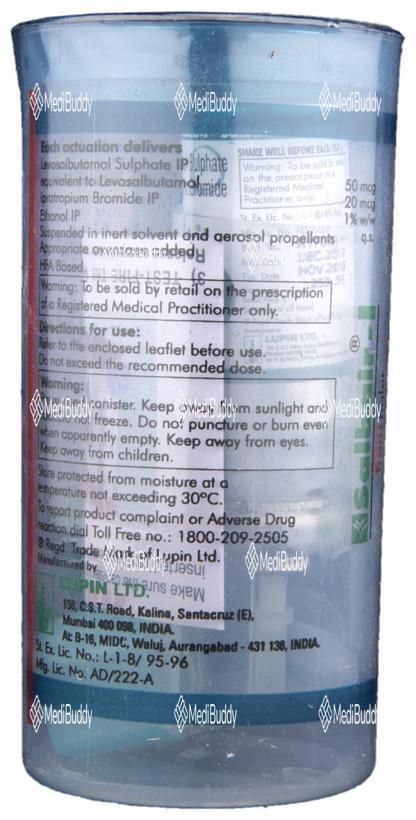


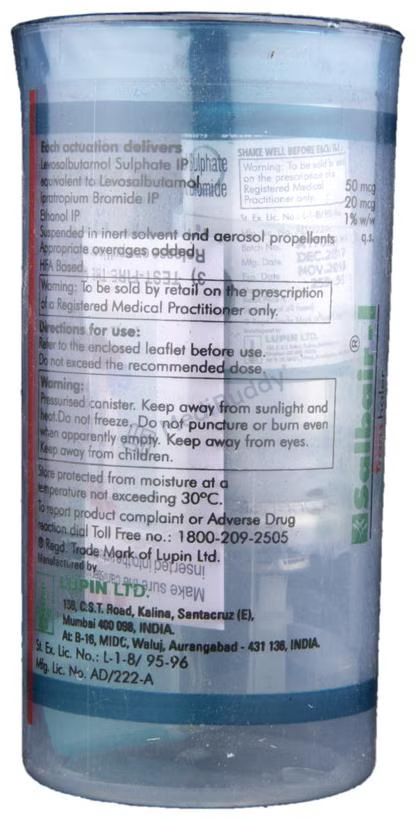
Salbair-I Transhaler

By Salbair-I

Rx

200mdi Transhaler in a Packet

Composition icon

Composition

Levosalbutamol(50mcg) + Ipratropium(20mcg)

Manufacturer - Lupin Ltd icon

Manufacturer - Lupin Ltd

Lupin Ltd, 3rd floor Kalpataru Inspire, Off. W E Highway, Santacruz (East), Mumbai 400 055. India

Expires on or after icon

Expires on or after

July, 2026

About Salbair-I Transhaler

Salbair I Transhaler is a combination medication used to treat chronic obstructive pulmonary disease (COPD), a lung disorder that causes airflow blockage. This medication helps by relaxing the muscles of the air passages, making it easier to breathe and relieving symptoms such as coughing, wheezing, and shortness of breath.

The active ingredients in Salbair I Transhaler are Levosalbutamol and Ipratropium bromide, which are bronchodilators that work by widening the airways in the lungs, allowing for improved airflow. It is important to use Salbair I Transhaler as prescribed by your doctor, as the effectiveness of the medication may take some time to reach its full potential.

Common side effects of Salbair I Transhaler may include dry mouth, sore throat, headache, dizziness, nausea, and vomiting. These side effects typically subside over time and may not require medical attention, but it is recommended to consult your doctor if they persist or worsen.

Before using Salbair I Transhaler, inform your doctor if you have any existing medical conditions such as high blood pressure, diabetes, glaucoma, heart problems, kidney or liver diseases. It is also important to inform your doctor if you are pregnant, planning to become pregnant, or breastfeeding, as special considerations may apply.

Salbair I Transhaler is not recommended for use in individuals who are allergic to its components or have certain medical conditions. It should be used cautiously in children, adolescents, and elderly patients, and special precautions should be taken as advised by a healthcare professional.

Overall, Salbair I Transhaler is a medication that can help manage the symptoms of COPD and other obstructive airway diseases when used correctly and under the guidance of a healthcare provider.


Benefits

Salbair-I Transhaler offers multiple benefits in the treatment of respiratory conditions such as Chronic obstructive pulmonary disease (COPD), Asthma, and Bronchitis. This medication is a combination of two bronchodilators, Levosalbutamol and Ipratropium bromide, which are effective in keeping the airways in the lungs open by relaxing the muscles surrounding them. By doing so, Salbair-I Transhaler helps in easing symptoms like chest tightness, shortness of breath, wheezing, and coughing, thereby enabling individuals to carry out their daily activities with more ease.

In the case of COPD, Salbair-I Transhaler works rapidly and its effects can last for several hours, providing quick relief from symptoms. It proves to be a safe and efficient treatment option that allows individuals to breathe more comfortably and improve their overall well-being. For individuals suffering from Asthma, this medication is beneficial in reducing the swelling of the airways, making it easier for air to flow in and out of the lungs, thereby alleviating breathing difficulties associated with the condition.

Moreover, for individuals with Bronchitis, Salbair-I Transhaler helps in managing sudden muscle constriction in the airways, reducing mucus production, and promoting easier breathing. This ultimately leads to an improvement in respiratory function and contributes to enhancing the overall quality of life for those dealing with bronchitis.

It is crucial to follow the guidance of a healthcare professional regarding the correct usage of the inhaler to ensure optimal results. Salbair-I Transhaler acts swiftly, and its efficacy in providing relief from respiratory symptoms makes it a valuable medication for individuals dealing with conditions like COPD, Asthma, and Bronchitis. Remember, it is important not to discontinue the use of this medication unless advised by a healthcare provider, ensuring that you reap the full benefits of Salbair-I Transhaler in managing your respiratory condition effectively.


How to use the Salbair-I Transhaler

To use Salbair-I Transhaler effectively, first, check the label for directions. Shake the inhaler well before each use. Remove the cap and insert the inhaler into a spacer. Breathe out gently to prepare. Now, press down on the inhaler one time while breathing in through your mouth. Hold your breath for about 10 seconds to allow the medication to reach your airways. Slowly breathe out and repeat the process until you have taken the number of puffs recommended by your doctor.

After using the Salbair-I Transhaler, remember to rinse your mouth thoroughly with water and spit it out. This step is important to prevent fungal infections in your mouth and throat. Your doctor will determine the correct dosage and duration of use based on factors like your age, body weight, and the specific condition being treated. It is crucial to follow your doctor's instructions carefully.

Using the Salbair-I Transhaler is easy, but it is essential to do it correctly to ensure the medication reaches your lungs effectively. By following these steps and guidelines provided by your healthcare provider, you can make the most out of your inhaler therapy and manage your respiratory condition effectively.


Uses of Salbair-I Transhaler

The Salbair-I Transhaler is used to treat and prevent Chronic Obstructive Pulmonary Disease (COPD), Asthma, and Bronchitis. It helps in managing bronchospasm, which is the narrowing of the airways, in individuals with reversible obstructive airway diseases like COPD, bronchitis, asthma, or emphysema. The device is beneficial for those with these conditions to alleviate symptoms and improve their respiratory health.


What conditions Salbair-I Transhaler treats?

Salbair-I Transhaler is commonly used to manage chronic obstructive pulmonary disease (COPD), a group of lung diseases including emphysema and chronic bronchitis. COPD is mainly caused by smoking tobacco and exposure to air pollutants such as asbestos and chemicals/fumes. Prolonged exposure to these substances can lead to symptoms like chronic cough, shortness of breath, and wheezing.


Should you consult a doctor?

Seek medical advice before using Salbair-I Transhaler if you have conditions such as high blood pressure, seizures, hyperthyroidism, diabetes, narrow angle glaucoma, prostatic hypertrophy, or bladder-neck obstruction. Children and adolescents aged 4 to 18 should also consult a doctor before using this medication. If you experience any concerning symptoms or side effects while using Salbair-I Transhaler, such as worsening breathing difficulties or increased heart rate, seek prompt medical attention. It is essential to prioritize your health and consult a healthcare professional for personalized guidance on the safe use of Salbair-I Transhaler.


Side effects of Salbair-I Transhaler

When using Salbair-I Transhaler, you may experience side effects that are usually mild and temporary. These can include dryness in the mouth, cough, tremors, headache, palpitations, muscle cramps, back pain, chest pain, fatigue, dizziness, nausea, diarrhea, abdominal pain, vomiting, constipation, taste changes, and sore throat. Some individuals may also encounter dysphonia, indigestion, runny or stuffy nose, throat irritation, chest tightness, nervousness, tiredness, and vomiting while using this medication. Other possible side effects can involve dry mouth, sore throat, stuffy nose, dizziness, weakness, abdominal pain, nausea, vomiting, diarrhea, constipation, muscle pain/cramps, back pain, shortness of breath, cough, sinusitis, altered taste, stomach flu, urinary tract infection, conjunctivitis, ear pain, blurred vision, acne, menstrual cramps, high blood pressure, nosebleeds, skin rash, itching, red itchy welts, and swelling of the face, mouth, or throat. It is important that you contact your doctor immediately if you experience signs of paradoxical bronchospasm, sudden hypersensitivity reaction, acute narrow angle glaucoma, prostatic hyperplasia or urinary bladder neck obstruction, or significant cardiovascular effects while using Salbair-I Transhaler.


Safety advice

scroll

liver

For people concerned about liver health when using Salbair-I Transhaler, there is no known interaction or established information regarding its impact on the liver. It is important to note that caution specifically related to liver issues has not been reported. If you have any uncertainties or specific concerns about how Salbair-I Transhaler may affect your liver, it is recommended to consult with your healthcare provider for personalized guidance.

scroll

kidney

Consult with your doctor for proper guidance before using Salbair-I Transhaler.

scroll

alcohol

When using Salbair-I Transhaler, be cautious as it can make you very sleepy when drinking alcohol.

scroll

driving

When using Salbair-I Transhaler, no interactions affecting driving have been found. It is safe to drive while using this medication.

scroll

pregnancy

Salbair-I Transhaler may not be safe to use during pregnancy as there are limited human studies but animal studies suggest harm to the baby. Consult your doctor for weighing the benefits and risks before use.

scroll

breastfeeding

Salbair-I Transhaler is considered safe for breastfeeding based on limited human data indicating minimal risk to the baby. It is advisable to proceed with caution and consult a healthcare professional.


Age above 75(Geriatrics)

SALBAIR I TRANSHALER should be used with caution in elderly patients (aged above 65 years).  Consult your doctor before using the medicine.

Consumption warning before consuming Salbair-I Transhaler

Before using Salbair-I Transhaler, certain precautions should be taken into consideration for your safety. It is crucial to consult a doctor if you have any allergies to this medication or to any other drugs, are pregnant or breastfeeding, or if you are experiencing severe difficulty in breathing. Following the prescribed dosage is essential as exceeding the recommended amount may result in serious heart or lung issues. Regular monitoring of potassium levels is advisable while using Salbair-I Transhaler, as it could potentially cause a decrease in potassium levels in the blood. Pay close attention to symptoms such as irregular heartbeat, leg cramps, extreme thirst, constipation, increased urination, muscle weakness, numbness, or tingling, as these could indicate low potassium levels. Additionally, if you have certain medical conditions like high blood pressure, diabetes, epilepsy, enlarged prostate, glaucoma, thyroid or heart problems, bladder obstruction, or urinary issues, inform your doctor before starting the medication. Lastly, it is important to keep the Salbair-I Transhaler away from open flame or heat to prevent any potential hazards.


What if you forgot to take Salbair-I Transhaler?

If you forget to take a dose of Salbair-I Transhaler, take it as soon as you remember. But if it is close to the time for your next dose, just skip the missed one. Avoid taking a double dose to make up for the missed one. It's important to stick to your regular dosing schedule to ensure you get the full benefit of the medication.


What happens if you take overdose of Salbair-I Transhaler?

If too much SALBAIR I TRANSHALER is taken accidentally, it can lead to an overdose. In such a situation, it is crucial to seek immediate medical help by contacting your doctor or going to the nearest hospital. Symptoms of an overdose may include seizures, chest pain, high or low blood pressure, rapid heartbeat, irregular heart rhythms, feelings of nervousness, headaches, tremors, dry mouth, palpitations, nausea, dizziness, fatigue, weakness, difficulty sleeping, low potassium levels in the blood (hypokalaemia), and potential visual accommodation disorder. It is important to be aware of these symptoms and seek prompt medical attention if an overdose is suspected.


Related lab tests

When using the Salbair-I Transhaler, healthcare providers may recommend certain lab tests to monitor the effects of the medication. One important test is the Absolute Eosinophil Count, which measures the number of a specific type of white blood cell that can indicate inflammation or allergic reactions. Another test that may be relevant is the Complete Blood Count, which provides a detailed analysis of different types of blood cells, including red blood cells, white blood cells, and platelets.

In addition to lab tests, healthcare providers may also suggest other diagnostic tests to assess lung function and monitor respiratory health. Spirometry is a common test that measures how well the lungs are able to take in and release air, helping to diagnose conditions such as asthma or chronic obstructive pulmonary disease. A Chest X-ray may also be recommended to visualize the structures of the chest, including the lungs, heart, and bones. For more detailed imaging, a CT scan may be necessary to provide a more in-depth view of the lungs and surrounding tissues.

Related Lab Tests:
1. Absolute Eosinophil Count
2. Complete Blood Count

Other Related Tests:
1. Spirometry
2. Chest X-ray
3. CT scan


Additional Information

Habit FormingNo
Chemical Class-
Therapeutic ClassRESPIRATORY
Action Class-

FAQs


Disclaimer

The information provided on this website is to the best of our abilities to ensure it is accurate, reliable, and reviewed by a team of professionals. It should not be used to diagnose, prevent, or cure any health problem. The information presented here is not intended to create a doctor-patient relationship or replace a registered medical practitioner's advice, diagnosis, or treatment. The absence or provision of any information or warning regarding any medicine should not be assumed as an implied or explicit assurance of safety or efficacy. We highly recommend consulting your registered medical practitioner for all queries or doubts related to your medical condition. Do not ignore professional medical advice or delay seeking it based on the content encountered on our website. We intend to support, not replace, the doctor-patient relationship.

417.8

Inclusive of all taxes

Content verified by

chevron-right

Dr. Archana Prabhakar

MBBS, M.Med (Family Medicine)

Last update on 01-Oct-2024