
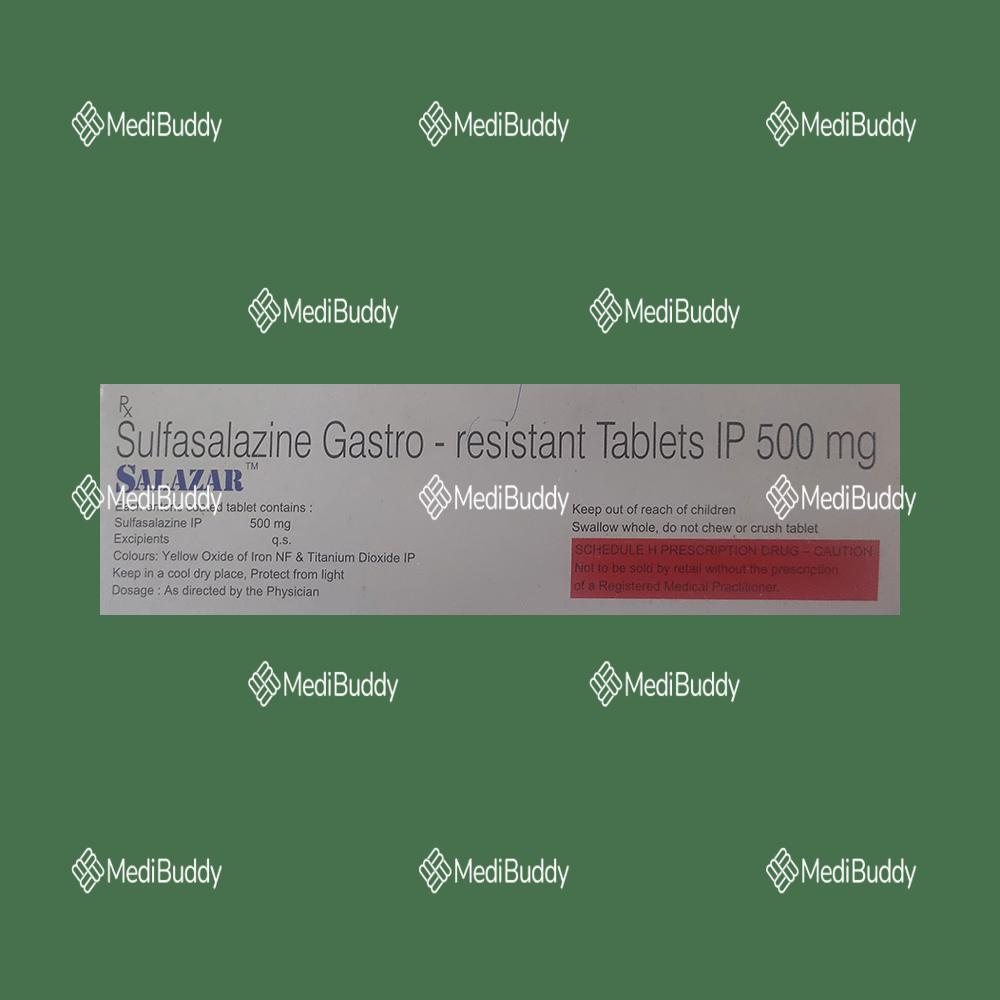

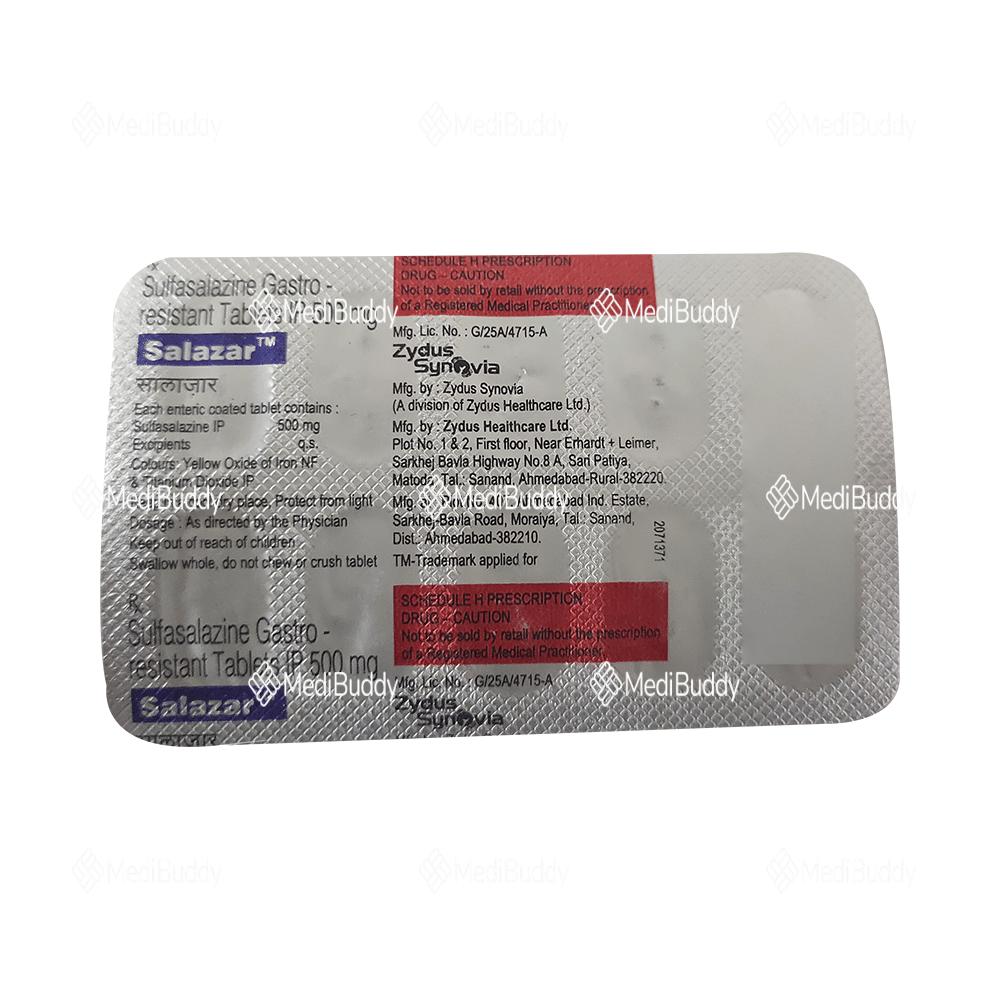
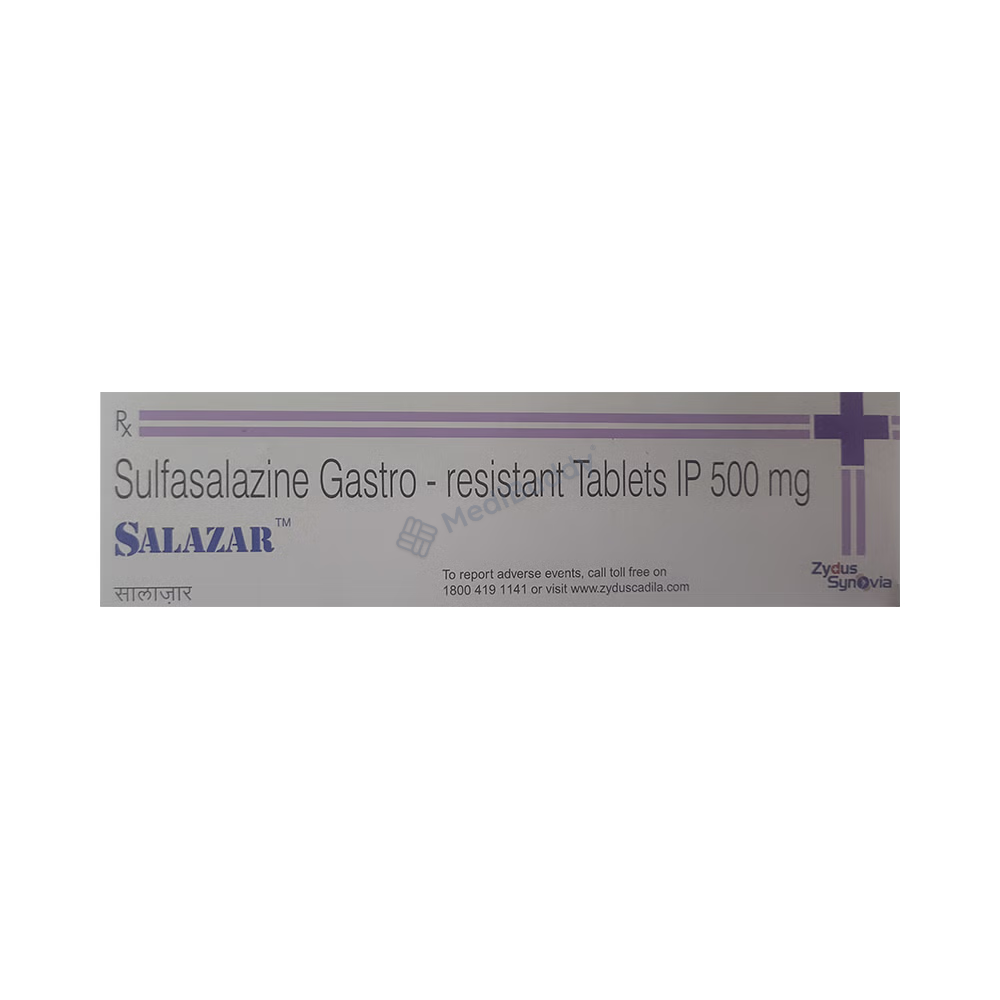
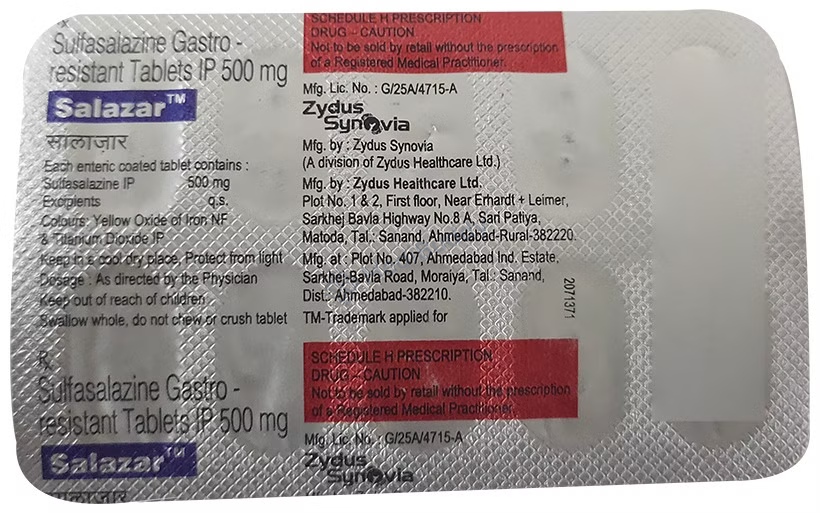


Salazar Tablet
By Salazar
Rx
10 Tablet in a Strip

Composition
Sulfasalazine(500mg)

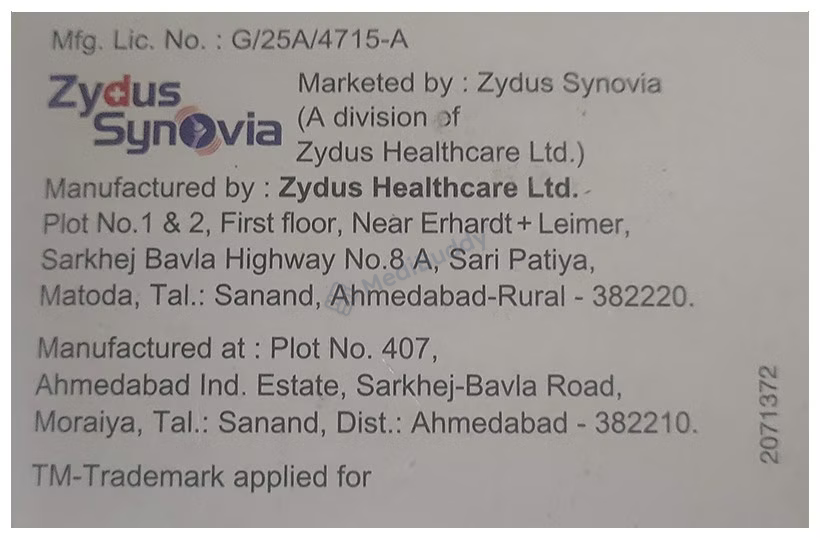
Manufacturer - Zydus Cadila
Zydus Tower, Satellite Cross Roads,Ahmedabad – 380015 Gujarat, India.

Expires on or after
November, 2026
About Salazar Tablet
Salazar Tablet is a medication used to treat various inflammatory conditions in the joints, skin, and bowel. These conditions include rheumatoid arthritis, psoriatic arthritis, ankylosing spondylitis, psoriasis, ulcerative colitis, and Crohn’s disease. It belongs to a class of anti-inflammatory medicines known as ‘aminosalicylates’ and ‘disease-modifying anti-rheumatic drug’ (DMARD).
When taking Salazar Tablet, it is recommended to consume it with food to prevent an upset stomach. Consistency is key, so take it regularly at the same time each day as prescribed by your doctor to reap the maximum benefits. Drinking plenty of water while taking this medicine can help avoid kidney issues like kidney stones.
Some common side effects of Salazar Tablet may include nausea, headache, loss of appetite, vomiting, diarrhea, and gastrointestinal discomfort. If these side effects persist or worsen, consult your doctor for guidance on managing or preventing them. Prior to starting this medication, inform your doctor about any heart, kidney, or liver problems you may have and disclose all other medications you are taking. Regular blood tests may be recommended by your doctor to monitor your kidney and liver functions.
For pregnant or breastfeeding individuals, it is essential to consult with a healthcare professional before taking Salazar Tablet. This medication can potentially lower sperm count temporarily in males and may require additional folic acid supplements during pregnancy. While breastfeeding, it is generally safe to take Salazar Tablet unless the baby is premature or at risk of jaundice.
Inflammatory bowel diseases like ulcerative colitis, Crohn's disease, and rheumatoid arthritis can be effectively managed with the use of Salazar Tablet. Regular monitoring through blood, kidney, and liver function tests may be necessary during treatment. It is crucial to inform your doctor about any existing medical conditions such as porphyria, jaundice, kidney, liver, or blood disorders before starting this medication. Additionally, if you are pregnant or breastfeeding, do notify your doctor as some precautions may be needed.
Overall, Salazar Tablet is a beneficial medication for managing various inflammatory conditions, but it is important to follow your doctor's guidance closely and report any concerning side effects promptly.
Benefits
Salazar Tablet offers various benefits in treating different conditions. When used for Rheumatoid arthritis, it helps manage inflammation, pain, and swelling by reducing the immune system response. It is important to follow the doctor's prescribed dose and frequency for effective results. If any side effects occur, inform the doctor promptly.
For Ulcerative colitis, Salazar Tablet works by relieving symptoms such as bleeding, frequent diarrhea, and abdominal pain. It also helps in preventing the recurrence of these symptoms. It is recommended to drink plenty of fluids to ensure proper hydration during the treatment.
In the case of Crohn’s disease, this medication assists in reducing inflammation and alleviating symptoms like diarrhea and abdominal pain. It plays a role in preventing the symptoms from reoccurring, providing relief and improving the patient's condition.
Salazar Tablet is also beneficial for managing Ankylosing spondylitis, a type of arthritis affecting the spine and larger joints. By reducing pain, stiffness, and swelling, this drug helps enhance flexibility, mitigate disease progression, and ultimately contribute to a better quality of life for individuals experiencing this condition.
Furthermore, when used for Psoriatic arthritis, Salazar Tablet exhibits anti-inflammatory properties that aid in reducing joint pain, swelling, and stiffness. It can slow down the progression of joint damage associated with Psoriatic arthritis and lead to improvements in both joint and skin symptoms for individuals with psoriasis and arthritis.
Overall, Salazar Tablet offers relief from symptoms, manages inflammation, and helps prevent disease progression across various conditions, enhancing the quality of life for patients. It is essential to adhere to the prescribed treatment plan and communicate any concerns or side effects to the healthcare provider for optimal results.
How to use the Salazar Tablet
To properly use Salazar Tablet, follow the dosage and duration recommended by your doctor. Swallow the tablet whole with a glass of water, without chewing, crushing, or breaking it. It is important to take Salazar Tablet with food to improve its absorption and reduce the risk of stomach upset. Remember to adhere to the prescribed dosing schedule to maximize the effectiveness of the medication. If you have any questions or concerns about how to use Salazar Tablet, consult your healthcare provider for further guidance.
Uses of Salazar Tablet
Salazar Tablet is commonly used for different medical conditions. It is frequently prescribed for Rheumatoid arthritis, Ulcerative colitis, Crohn’s disease, Ankylosing spondylitis, and Psoriatic arthritis. This medication is known for its effectiveness in managing these conditions. Whether it's treating joint inflammation in Rheumatoid arthritis, reducing inflammation in Ulcerative colitis and Crohn’s disease, improving spinal mobility in Ankylosing spondylitis, or relieving joint pain in Psoriatic arthritis, Salazar Tablet plays a crucial role in alleviating symptoms and improving the quality of life for individuals with these conditions.
What conditions Salazar Tablet treats?
Salazar Tablet is used to treat inflammatory conditions such as rheumatoid arthritis, psoriatic arthritis, ankylosing spondylitis, psoriasis, ulcerative colitis, and Crohn’s disease. It works by reducing inflammation, pain, and swelling in these conditions. To maximize benefits, take it with food at the same time daily. Potential side effects include nausea, headache, loss of appetite, vomiting, and diarrhea. Consult your doctor if side effects persist or worsen. Before taking Salazopyrin, inform your doctor about any heart, kidney, or liver issues, as well as other medications you are taking. Regular blood tests may be recommended. Pregnant or breastfeeding women should consult their doctors before use.
Should you consult a doctor?
If you are experiencing persistent or worsening side effects such as nausea, headache, loss of appetite, vomiting, diarrhea, or gastrointestinal discomfort while taking Salazar Tablet, it is important to consult your doctor. Additionally, if you have any concerns about how the medicine is affecting you, seeking medical advice is advisable. It is essential to inform your doctor about any pre-existing heart, kidney, or liver conditions, and also disclose all other medications you are currently taking before starting Salazar Tablet. Pregnant or breastfeeding individuals should consult their healthcare provider prior to using this medication. Regular blood tests may be recommended by your doctor to monitor kidney and liver functions as well as blood components. Remember to continue taking the medication as prescribed, even if you start feeling better, and stay hydrated by consuming plenty of water to prevent kidney issues like kidney stones. By following these guidelines and promptly seeking medical help when needed, you can ensure the safe and effective use of Salazar Tablet.
Side effects of Salazar Tablet
When taking Salazopyrin 500mg Tablets, some common side effects may occur. These side effects are usually mild and may go away as your body gets used to the medication. It is important to talk to your doctor if these side effects persist or if you are concerned about them. Possible side effects of Salazopyrin 500mg Tablets include diarrhea, gastrointestinal discomfort, headache, loss of appetite, nausea, oligospermia (low sperm count), and vomiting. It's important to be aware of these potential side effects and seek medical advice if needed.
Safety advice

liver
Salazar Tablet should not be used in patients with liver disease, as it is likely unsafe and should be avoided. It is important to consult with your doctor regarding the usage of this medication to ensure your safety and well-being.

kidney
Salazar Tablet may require caution for patients with kidney disease. Dose adjustment might be necessary. Consult your doctor and monitor kidney function regularly when using this medication.

alcohol
It is not safe to drink alcohol while taking Salazar Tablet.

driving
Salazar Tablet generally does not impact your driving ability.

pregnancy
Salazar Tablet is generally safe to use during pregnancy, with animal studies showing minimal adverse effects. Limited human studies available.

breastfeeding
Salazar Tablet may not be safe to use while breastfeeding as there is a risk of the drug passing into breastmilk and potentially harming the baby.
Consumption warning before consuming Salazar Tablet
Before consuming Salazar Tablet, it is crucial to follow these important warnings. Take the tablet with food to avoid stomach upset and ensure maximum effectiveness by taking it at the same time daily. Even if you start feeling better, continue the treatment as prescribed by your doctor. Drinking plenty of water while on this medication can help prevent kidney issues like kidney stones.
Common side effects may include nausea, headache, loss of appetite, vomiting, diarrhea, and stomach discomfort. Should you experience any of these side effects persistently or intensify, consult your doctor.
Prior to starting this medication, inform your doctor about any heart, kidney, or liver conditions, as well as other medications you are taking. Regular monitoring through blood tests may be necessary to check kidney and liver functions, as well as blood components. If you are pregnant or breastfeeding, seek advice from your healthcare provider before using this medicine.
What if you forgot to take Salazar Tablet?
If you forget to take a dose of Salazar Tablet, take it as soon as you remember. But if it's close to the time for your next dose, just skip the missed one and continue with your regular dosing schedule. Remember not to take a double dose to make up for the one you missed.
Related lab tests
When taking Salazar Tablet, there are several related lab tests that may be necessary to monitor your health and treatment. These tests can help your healthcare provider assess your condition and the effectiveness of the medication. Some of the relevant lab tests include Anti Neutrophilic Cytoplasmic Antibody (ANCA), Anti Saccharomyces Cerevisiae (ASCA) IgA and IgG, C-Reactive Protein Quantitative, Erythrocyte Sedimentation Rate (ESR), HLA-B27 PCR, Rheumatoid Factor (RF) Agglutination, Rheumatoid Factor (RF) Turbidometry, and Rheumatoid Factor IgG Antibody. These tests can provide valuable information on inflammation levels, autoimmune reactions, and overall response to treatment with Salazar Tablet. Regular monitoring through these lab tests can help ensure the best possible outcome for your health condition.
Additional Information
| Habit Forming | No |
| Chemical Class | Aminosalicylic Acids Derivative |
| Therapeutic Class | - |
| Action Class | Disease Modifying Anti-Rheumatoid Drugs (DMARDs)- Non biologics |
FAQs
Disclaimer
The information provided on this website is to the best of our abilities to ensure it is accurate, reliable, and reviewed by a team of professionals. It should not be used to diagnose, prevent, or cure any health problem. The information presented here is not intended to create a doctor-patient relationship or replace a registered medical practitioner's advice, diagnosis, or treatment. The absence or provision of any information or warning regarding any medicine should not be assumed as an implied or explicit assurance of safety or efficacy. We highly recommend consulting your registered medical practitioner for all queries or doubts related to your medical condition. Do not ignore professional medical advice or delay seeking it based on the content encountered on our website. We intend to support, not replace, the doctor-patient relationship.
₹52.86
Inclusive of all taxes
Content verified by

Dr. Abdullah Khan
MBBS - General Medicine
Last update on 01-Oct-2024


