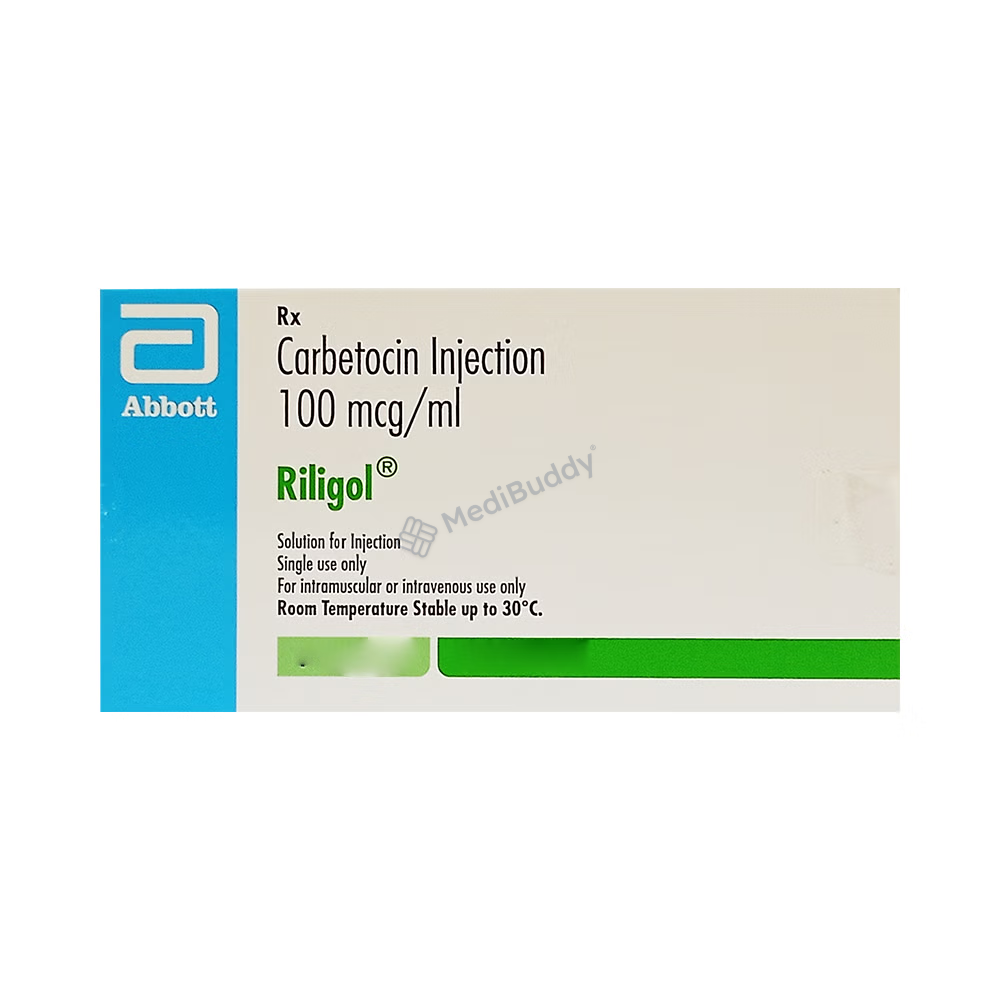
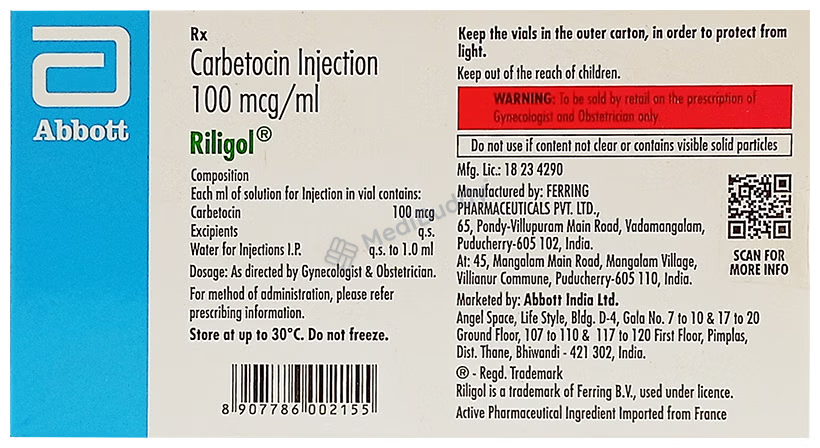
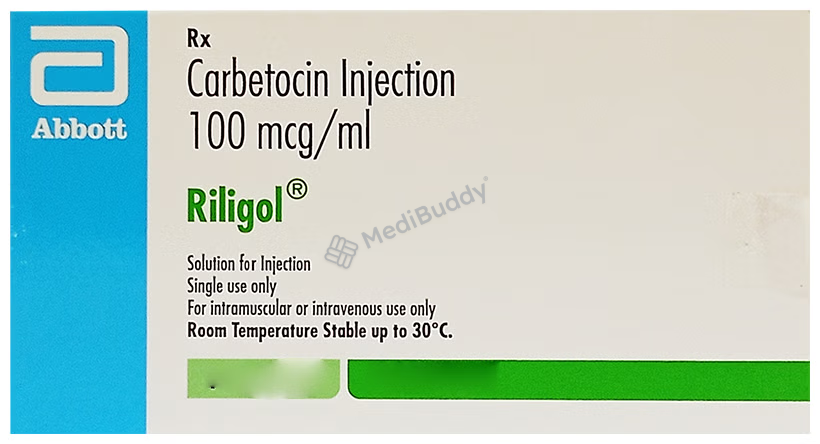
Riligol Injection

By Riligol

Rx

1ml Injection in a Vial

Composition icon

Composition

Carbetocin(100mcg/ml)

Manufacturer - Abbott icon

Manufacturer - Abbott

16th Floor, Godrej BKC, Plot – C, "G" Block, Bandra-Kurla Complex, Bandra (East), Mumbai – 400 051, India

Expires on or after icon

Expires on or after

April, 2027

About Riligol Injection

Riligol Injection is a medication primarily used to address postpartum bleeding in women who have recently given birth. After delivery, some women may experience delayed uterine contractions, which can lead to increased bleeding. Riligol Injection helps by stimulating the womb to contract, thereby reducing the risk of excessive bleeding.

The administration of Riligol Injection is done intravenously by a healthcare professional, such as a doctor or a nurse. It is crucial not to attempt self-administration of this medication at home. Before receiving Riligol Injection, it is important to disclose any existing medical conditions to your doctor.

Common side effects associated with Riligol Injection include nausea, stomach pain, itching, flushing, low blood pressure, headaches, and tremors. If any of these side effects persist or worsen, it is advisable to seek guidance from your healthcare provider. Additionally, inform your doctor of any new symptoms that may arise during the course of treatment.

Individuals who are allergic to any components of Riligol Injection or who have certain health conditions such as kidney or liver problems, heart issues, epilepsy history, migraines, asthma, or preeclampsia should not use this medication. Furthermore, pregnant women should avoid Riligol Injection, and consultation with a doctor is recommended for breastfeeding individuals.

Riligol Injection 1 ml, containing Carbetocin, falls under the category of oxytocic agents and is specifically indicated for preventing uterine atony and postpartum hemorrhage following cesarean section under epidural or spinal anesthesia. Postpartum hemorrhage is characterized by excessive bleeding after childbirth, and Carbetocin functions similarly to oxytocin, a hormone naturally produced by the body during childbirth to facilitate uterine contractions.

It is important to keep your healthcare provider informed about your health status and current medications to ensure there are no potential interactions or adverse effects from using Riligol Injection. The safety and effectiveness of Riligol Injection in children have not been firmly established, thus its use in this population is not recommended.


Benefits

Riligol Injection offers significant benefits in preventing postpartum bleeding after delivery. One key advantage is its ability to control excessive bleeding, which can occur following childbirth. By promoting the proper contraction of the uterus, Riligol Injection helps prevent complications such as hemorrhage, which can lead to severe blood loss, low blood pressure, shock, and even death if left untreated. This medication contains Carbetocin, a compound similar to oxytocin, a hormone naturally produced by the body to aid in uterine contractions during childbirth. By facilitating uterine contractions, Riligol Injection effectively reduces the risk of postpartum hemorrhage, particularly after cesarean sections performed under epidural or spinal anesthesia. Overall, Riligol Injection proves to be a valuable tool in ensuring the health and well-being of mothers by safeguarding against the dangers associated with excessive postpartum bleeding.


How to use the Riligol Injection

To use Riligol Injection, you should have a healthcare professional like a doctor or nurse administer the medicine to you. It is important not to try to administer the injection yourself. The Riligol Injection comes in a 1 ml dose, which will be given by the healthcare provider. This ensures the medication is safely and properly delivered into your body to provide the intended benefits. It is for your safety and well-being that you rely on a trained professional to perform the administration. So, always follow your healthcare provider's instructions and do not attempt to self-administer Riligol Injection.


Uses of Riligol Injection

Riligol Injection is used for preventing postpartum bleeding, specifically in cases of postpartum haemorrhage and uterine atony. It is an effective treatment to help manage excessive bleeding after childbirth, providing a crucial intervention to support women during this vulnerable period. This medication serves as a preventive measure, reducing the risk of complications related to postpartum bleeding and promoting better outcomes for new mothers.


What conditions Riligol Injection treats?

'Riligol Injection' is used to treat conditions such as postpartum haemorrhage and uterine atony. Postpartum haemorrhage is excessive bleeding after childbirth, which can result in low blood pressure. Symptoms include continuous vaginal bleeding. Uterine atony is when the uterus is weak and soft after giving birth, often due to inadequate muscle contractions. This can cause blood loss post-delivery.


Should you consult a doctor?

After receiving a Riligol Injection, it is important to seek medical attention if you experience any concerning symptoms. These include persistent nausea, stomach pain, itching, headache, flushing, low blood pressure, tremors, vomiting, back pain, chest pain, metallic taste, anemia, breathlessness, chills, or generalized pain. If any of these side effects bother you or worsen, consult your doctor promptly. Additionally, inform your healthcare provider if you develop new symptoms while being treated with Riligol Injection. If you have any medical conditions or concerns, always discuss them with your doctor before receiving this injection. Remember, it is crucial not to use Riligol Injection if you are allergic to its components, have kidney or liver issues, heart problems, epilepsy history, migraines, asthma, or are pregnant. Only a qualified healthcare professional should administer Riligol Injection, not for self-administration at home.


Side effects of Riligol Injection

Side effects may occur with Riligol Injection, but most of them are not severe and will likely go away as your body gets used to the medication. If any of these effects persist or if you are concerned about them, it is essential to consult your doctor. Common side effects include nausea, stomach pain, itching, headache, flushing (a warm sensation in the face, ears, neck, and trunk), low blood pressure (hypotension), tremors, vomiting, back pain, chest pain, metallic taste, anemia (low red blood cell count), breathlessness, chills, and generalized pain. Additional potential side effects to be aware of are dizziness, abdominal pain, and a feeling of warmth.


Safety advice

scroll

liver

Caution should be taken when using Riligol Injection in patients with liver disease as it could be unsafe for them. It is important to avoid using this medication without consulting with your doctor first. If you have liver issues, please make sure to seek guidance from your healthcare provider before starting Riligol Injection.

scroll

kidney

Riligol Injection may not be safe for use in individuals with kidney disease and should be avoided. Please seek advice from your doctor.

scroll

alcohol

Consult your doctor when consuming alcohol with Riligol Injection.

scroll

driving

When using Riligol Injection, the impact on driving ability is uncertain. Avoid driving if you have symptoms that impair concentration or reaction time.

scroll

pregnancy

Riligol Injection is not recommended for use during pregnancy. Studies on pregnant women and animals have revealed harmful effects on the developing baby. It is crucial to consult your doctor before using this medication.

scroll

breastfeeding

Riligol Injection is considered safe to use while breastfeeding. Studies show the medication does not transfer to breastmilk in significant levels, posing no harm to the baby.


Consumption warning before consuming Riligol Injection

Before considering the consumption of Riligol Injection 1 ml, it is important to be aware of certain warnings. Do not use this injection if you have allergies to any of its components, are pregnant, during labor before the delivery of the baby, or for labor induction. It is crucial to inform your doctor about any serious heart conditions, epilepsy, high blood pressure, blood clotting issues, gestational diabetes, migraine, asthma, or liver/kidney problems. If you are breastfeeding, consult your doctor before using this injection. The safety and effectiveness of Riligol Injection 1 ml in children have not been confirmed. Always disclose to your healthcare provider all the prescription/non-prescription medications, herbal products, and supplements you are taking before starting treatment with Riligol Injection.


Disease interactions

When using Riligol Injection, it is important to inform your doctor if you have serious cardiovascular disorders or epilepsy. These conditions can interact with the drug, affecting its effectiveness or potentially causing harmful side effects. By disclosing this information to your healthcare provider, they can adjust the treatment plan accordingly to ensure your safety and well-being. It is crucial to be transparent about your medical history to receive the most appropriate care while using Riligol Injection.


What if you forgot to take Riligol Injection?

If you forget to take your scheduled Riligol Injection, it is important to contact your doctor promptly. It is recommended to seek advice from your healthcare provider in such situations.


Additional Information

Habit FormingNo
Chemical ClassCarboxylic acid and derivatives
Therapeutic ClassGYNAECOLOGICAL
Action ClassOxytocin Receptor Antagonist

FAQs


Disclaimer

The information provided on this website is to the best of our abilities to ensure it is accurate, reliable, and reviewed by a team of professionals. It should not be used to diagnose, prevent, or cure any health problem. The information presented here is not intended to create a doctor-patient relationship or replace a registered medical practitioner's advice, diagnosis, or treatment. The absence or provision of any information or warning regarding any medicine should not be assumed as an implied or explicit assurance of safety or efficacy. We highly recommend consulting your registered medical practitioner for all queries or doubts related to your medical condition. Do not ignore professional medical advice or delay seeking it based on the content encountered on our website. We intend to support, not replace, the doctor-patient relationship.

499

Inclusive of all taxes

Content verified by

chevron-right

Dr. Gowri Kulkarni

MBBS - General Medicine, DNB - Psychiatry, MRCGP [INT] Family Medicine, BSIC (BACP)

Last update on 11-Feb-2025