
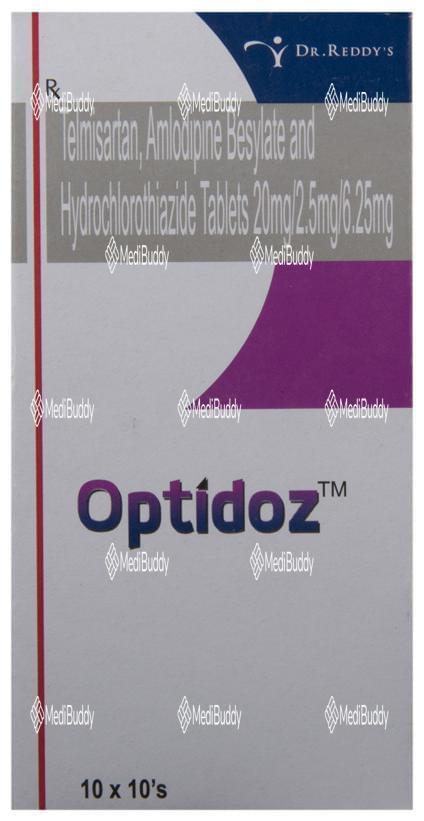
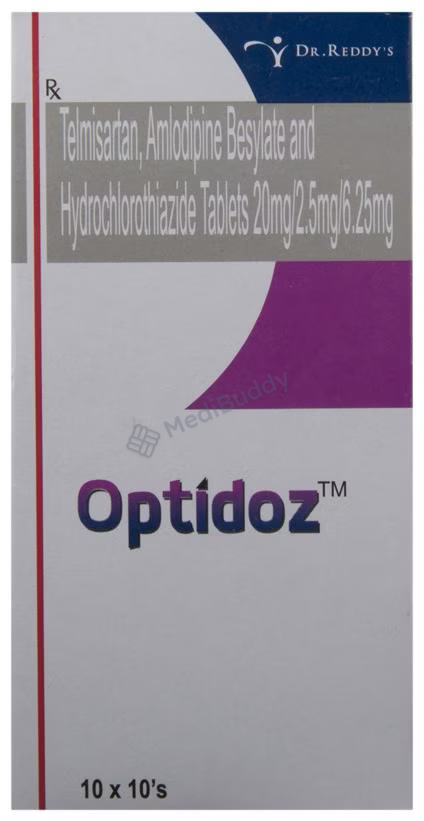
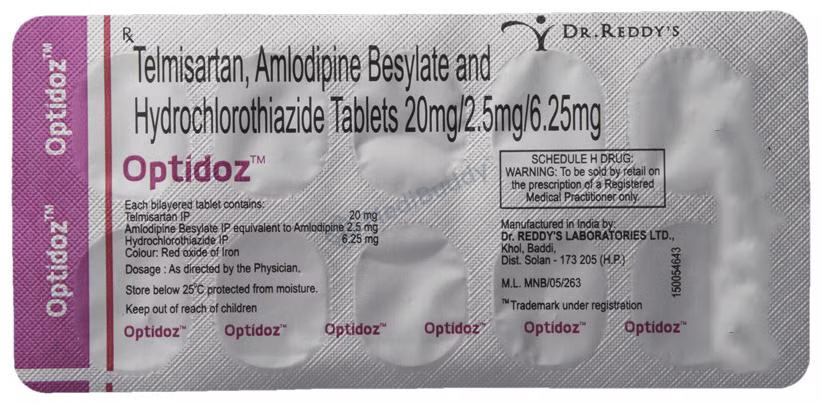
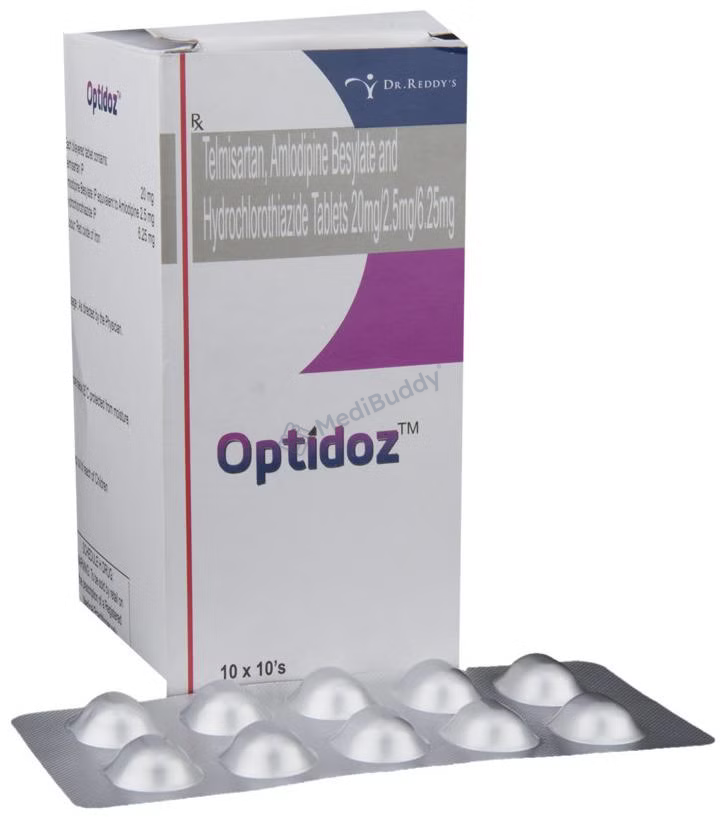

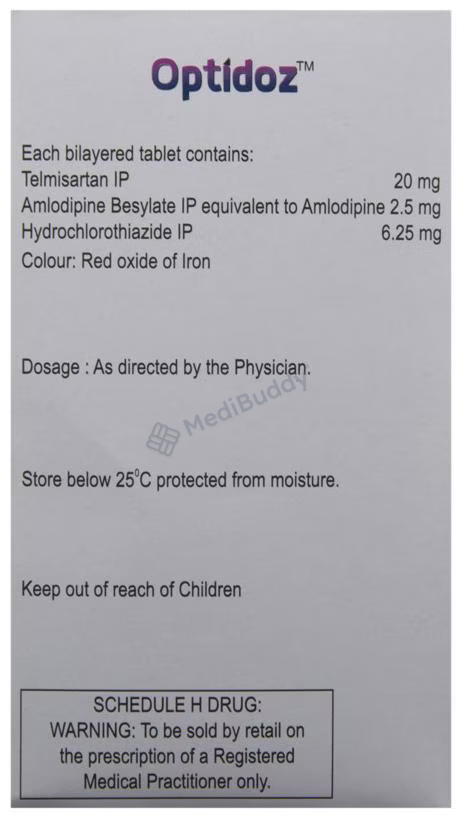

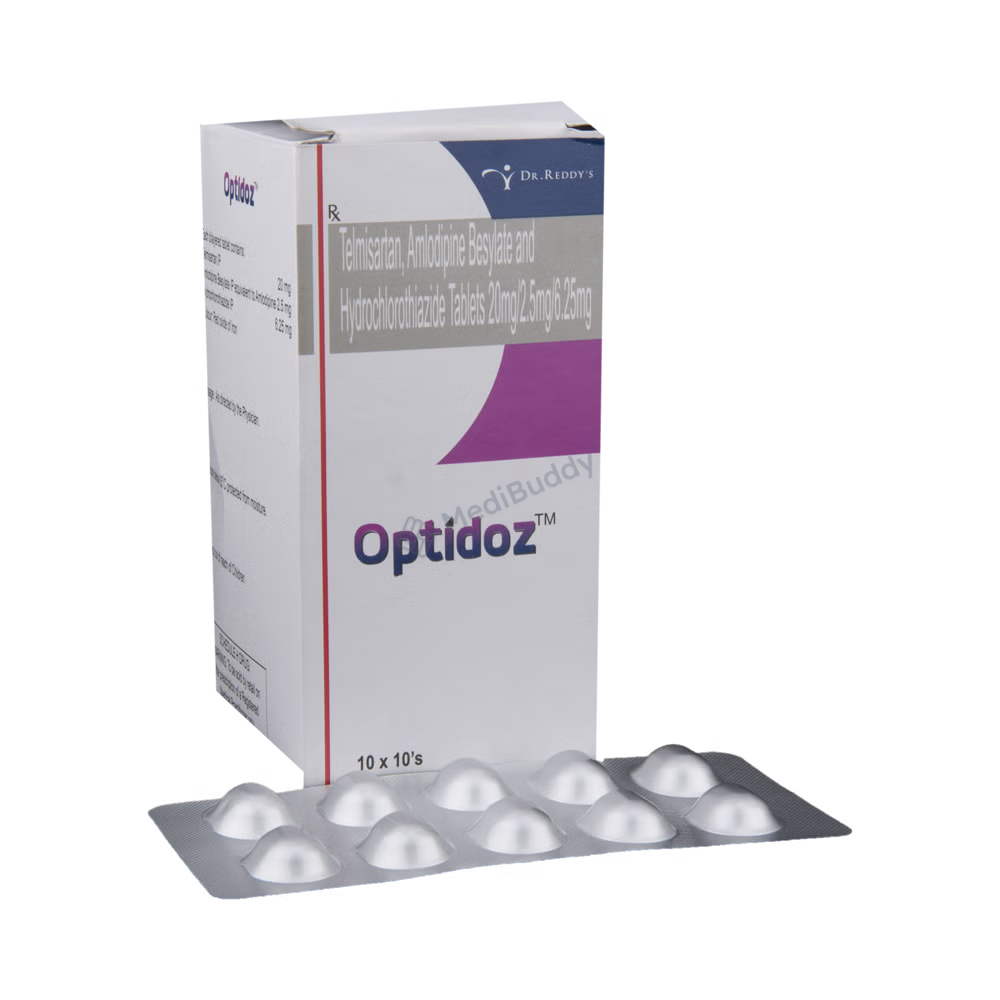
Optidoz Tablet
By Optidoz
Rx
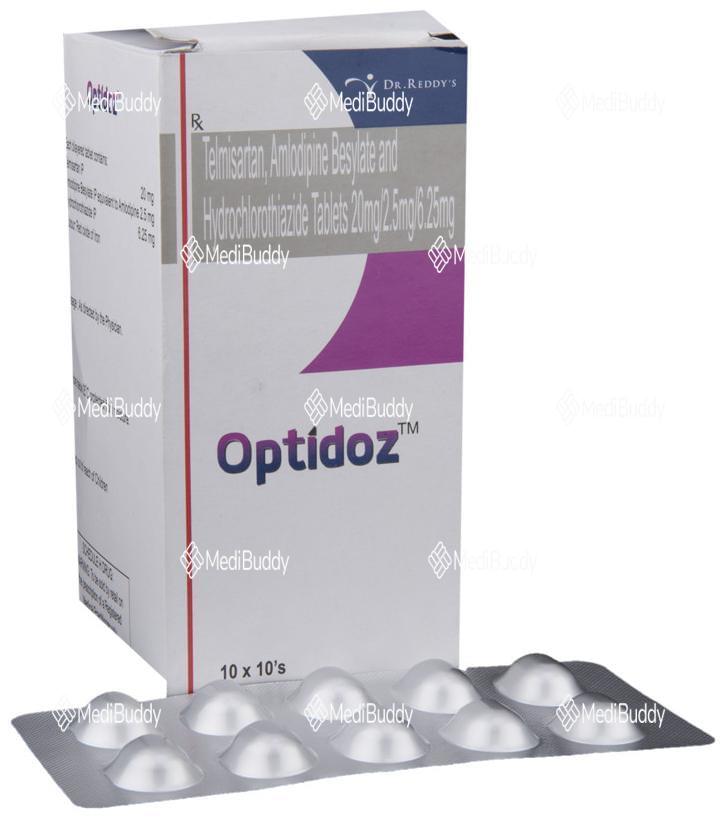
10 Tablet in a Strip

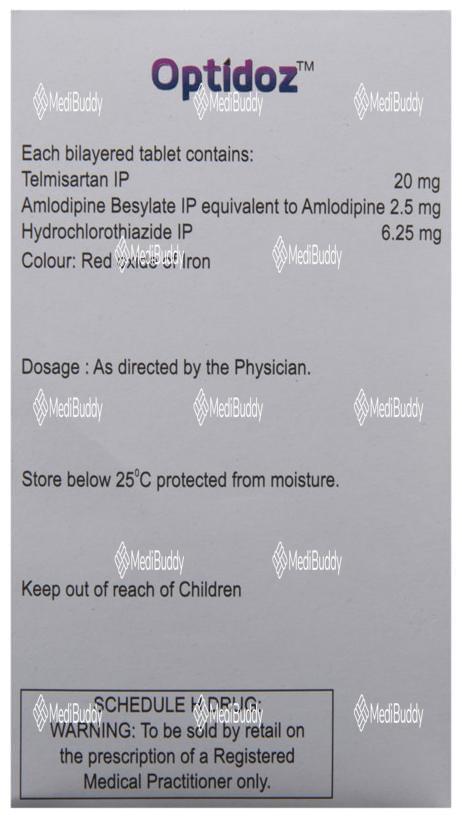
Composition
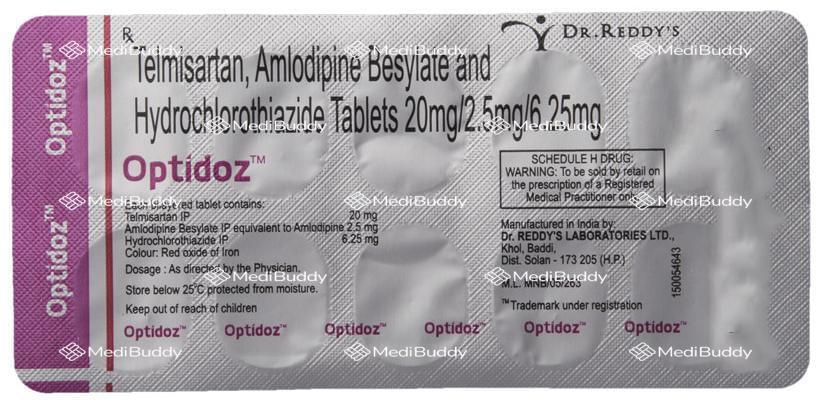
Telmisartan(20mg) + Amlodipine(2.5mg) + Hydrochlorothiazide(6.25mg)

Manufacturer - Dr Reddy's Laboratories Ltd
Dr. Reddy's Laboratories Ltd., 8-2-337, Road No. 3, Banjara Hills, Hyderabad, Telangana 500034, INDIA

Expires on or after
July, 2027
About Optidoz Tablet
Optidoz Tablet is a medication used to treat hypertension, also known as high blood pressure. Hypertension is a chronic condition where the force of the blood against the artery walls is elevated, potentially leading to heart diseases, irregular heartbeat, and other complications. Optidoz Tablet contains a combination of active ingredients, including Telmisartan, Amlodipine, and Hydrochlorothiazide, which are antihypertensive agents.
Telmisartan, an angiotensin receptor blocker, works by blocking certain substances that tighten blood vessels, allowing for smoother blood flow and improved heart efficiency in pumping blood throughout the body. Amlodipine, a calcium channel blocker, relaxes and widens blood vessels. Hydrochlorothiazide, a diuretic, helps remove excess water and electrolytes from the body through urine. Together, these components help lower high blood pressure, reducing the risk of future heart attacks and strokes.
Patients can take Optidoz Tablet with or without food, swallowing it whole with a glass of water. It is crucial to follow the prescribed dosage and take the medication at the same time each day for optimal effectiveness. The medication may lead to increased urination, so it is recommended to avoid taking it within four hours of bedtime.
Common side effects of Optidoz Tablet may include headache, dizziness, tiredness, taste changes, fatigue, flu-like symptoms, diarrhea, and sinusitis. These side effects usually resolve over time and do not require medical attention. However, if they persist or worsen, it is advisable to consult a healthcare provider. Drinking plenty of fluids while taking the medication can help alleviate symptoms like muscle weakness, dry mouth, and extreme thirst.
Prior to taking Optidoz Tablet, individuals should inform their doctor of any liver or kidney problems. Pregnant or breastfeeding women should seek medical advice before using this medication. Patients should also disclose all other medications they are taking, particularly those prescribed for high blood pressure or heart conditions. Regular monitoring of blood pressure, kidney function, electrolyte levels, and blood sugar is recommended to ensure that the medication is working effectively. Sudden cessation of Optidoz Tablet without medical advice can lead to adverse effects, and dosage adjustments should be managed gradually by a healthcare professional to prevent complications.
Benefits
Optidoz Tablet offers several benefits for individuals dealing with hypertension, also known as high blood pressure. The tablet works by relaxing the blood vessels, allowing blood to circulate more easily throughout the body. Additionally, it helps in eliminating excess water and increasing urine output, which ultimately leads to a reduction in blood pressure.
One of the key advantages of taking Optidoz Tablet is the significant lowering of high blood pressure levels. By making the heart more efficient at pumping blood and promoting better circulation, the tablet plays a crucial role in reducing the risk of potential heart attacks and strokes in the future. Moreover, the removal of excess water and certain electrolytes through urine helps in maintaining a healthy balance within the body.
It is important to note that while the effects of Optidoz Tablet may not be immediately noticeable, taking it regularly as prescribed ensures long-term benefits for overall well-being. Consistency in medication intake is crucial for the tablet to be most effective, even if one starts feeling better. By following the prescribed regimen, individuals can experience the full potential of Optidoz Tablet in managing hypertension and reducing the associated risks of cardiovascular complications.
How to use the Optidoz Tablet
When using Optidoz Tablet, always follow your doctor's instructions regarding dosage and duration. Swallow the tablet whole with a glass of water; avoid crushing, breaking, or chewing it. It can be taken with or without food, but it is advisable to take it at the same time each day. Remember, Optidoz Tablet should only be used if prescribed by a doctor. Do not exceed the recommended dosage or duration specified by your healthcare provider. Keep in mind to adhere to the guidelines provided to ensure the effectiveness and safety of the medication.
Uses of Optidoz Tablet
Optidoz Tablet is commonly used to treat hypertension, which is a medical condition characterized by high blood pressure. By taking Optidoz Tablet as prescribed, individuals experiencing hypertension can effectively manage their blood pressure levels. This medication works by helping to relax the blood vessels, allowing the blood to flow more easily and reducing the strain on the heart. As a result, Optidoz Tablet is a valuable treatment option for those dealing with hypertension issues.
What conditions Optidoz Tablet treats?
Hypertension is a chronic condition that occurs when blood pressure is too high. This can cause arteries to harden, reducing blood and oxygen flow to the heart. High blood pressure can result in chest pain, heart attacks, brain damage, and kidney failure. Monitoring blood pressure with a sphygmomanometer is important. Systolic pressure is measured when the heart pumps blood, while diastolic pressure is measured when the heart is at rest. An ideal blood pressure range is between 90/60 mmHg and 120/80 mmHg.
Should you consult a doctor?
If you experience persistent or worsening side effects such as headache, dizziness, tiredness, taste changes, fatigue, flu-like symptoms, diarrhea, and sinusitis while taking Optidoz Tablet, it is advisable to consult your doctor. Additionally, if you notice any new or bothersome symptoms, it is important to seek medical advice. Patients with liver or kidney issues should inform their healthcare provider before starting this medication. Pregnant or breastfeeding individuals should also consult their doctor for guidance. It is crucial to monitor your blood pressure, kidney function, electrolyte levels, and blood sugar regularly while on this medication. If any concerns or questions arise about the effects of Optidoz Tablet, it is essential to seek medical attention promptly to ensure proper management and ongoing safety.
Side effects of Optidoz Tablet
When taking Optidoz Tablet Tablets, some common side effects may occur as your body gets used to the medication. These side effects include dizziness, nausea, peripheral edema, flu-like symptoms, diarrhea, upper respiratory tract infection, and visual disturbance. In addition, you may experience sleepiness, ankle swelling, headache, flushing, tiredness, palpitations, and stomach upset. While most side effects are not serious and often fade as your body adjusts, it's important to consult your doctor if any side effects persist or if you have concerns about them. Your doctor can provide guidance and support to manage any discomfort you may experience.
Safety advice

liver
When using Optidoz Tablet, it is important to be cautious if you have liver disease. Patients with liver issues may require a dose adjustment when taking Optidoz Tablet. It is recommended to consult with your doctor before using this medication to ensure that it is safe for you.

kidney
Optidoz Tablet requires caution in severe kidney disease. Dose adjustment may be necessary, consult your doctor. Not recommended for patients with severe kidney disease.

alcohol
It is unsafe to drink alcohol while taking Optidoz Tablet. It is advised to avoid alcohol consumption while using this medication. Consult your doctor when consuming alcohol with Optidoz Tablet.

driving
When taking Optidoz Tablet, be cautious while driving due to possible side effects like dizziness, headaches, nausea, or tiredness that may impact focus and drive safely.

pregnancy
Optidoz Tablet is not recommended during pregnancy due to potential risk to the baby. However, in rare life-threatening situations, a doctor may prescribe it if benefits outweigh risks. Always consult your doctor.

breastfeeding
Optidoz Tablet is not recommended for use during breastfeeding, as it may potentially harm the baby due to the risk of toxicity.
Consumption warning before consuming Optidoz Tablet
Before consuming Optidoz Tablet 10's, it is crucial to be extremely cautious if you have liver, kidney, cardiovascular diseases, or if you are a diabetic patient. Only use this medication if the potential benefits outweigh the potential risks. Consulting your doctor before taking Optidoz Tablet is highly recommended. Your doctor will carefully assess the benefits and any potential risks associated with this medication before prescribing it to you. It is important to prioritize your health and well-being by seeking professional medical advice before starting any new medication regimen.
What if you forgot to take Optidoz Tablet?
If you forget to take your Optidoz Tablet at the scheduled time, take it as soon as you remember. But if it is nearly time for your next dose, then skip the missed dose and continue with your regular dosing schedule. Never take a double dose to make up for the missed one.
Related lab tests
When taking Optidoz Tablet, it is important to monitor your kidney function to ensure your body is processing the medication properly. Kidney function is crucial for filtering waste and excess fluids from the blood, so having regular kidney function tests can help detect any potential issues early on. Some related lab tests to consider while on Optidoz Tablet include:
1. Serum Creatinine Test: This test measures the level of creatinine in the blood, which is a waste product produced by muscles. Elevated creatinine levels may indicate kidney dysfunction.
2. Blood Urea Nitrogen (BUN) Test: BUN levels can help assess how well the kidneys are functioning, as they filter urea, a waste product of protein metabolism, from the blood.
3. Glomerular Filtration Rate (GFR) Test: This test calculates how well the kidneys are filtering waste from the blood. A low GFR may indicate kidney damage.
4. Urinalysis: This test examines the urine for abnormalities such as protein, blood, or glucose, which can indicate kidney problems.
Regular monitoring of these lab tests can help your healthcare provider ensure that Optidoz Tablet is safe and effective for you. It is essential to follow your doctor's recommendations for testing frequency and to report any unusual symptoms or changes in your health.
Additional Information
| Habit Forming | No |
| Chemical Class | - |
| Therapeutic Class | CARDIAC |
| Action Class | - |
FAQs
Disclaimer
The information provided on this website is to the best of our abilities to ensure it is accurate, reliable, and reviewed by a team of professionals. It should not be used to diagnose, prevent, or cure any health problem. The information presented here is not intended to create a doctor-patient relationship or replace a registered medical practitioner's advice, diagnosis, or treatment. The absence or provision of any information or warning regarding any medicine should not be assumed as an implied or explicit assurance of safety or efficacy. We highly recommend consulting your registered medical practitioner for all queries or doubts related to your medical condition. Do not ignore professional medical advice or delay seeking it based on the content encountered on our website. We intend to support, not replace, the doctor-patient relationship.
₹201
Inclusive of all taxes
Content verified by

Dr. Mansi Chaudhari
MBBS - General Medicine
Last update on 01-Oct-2024


