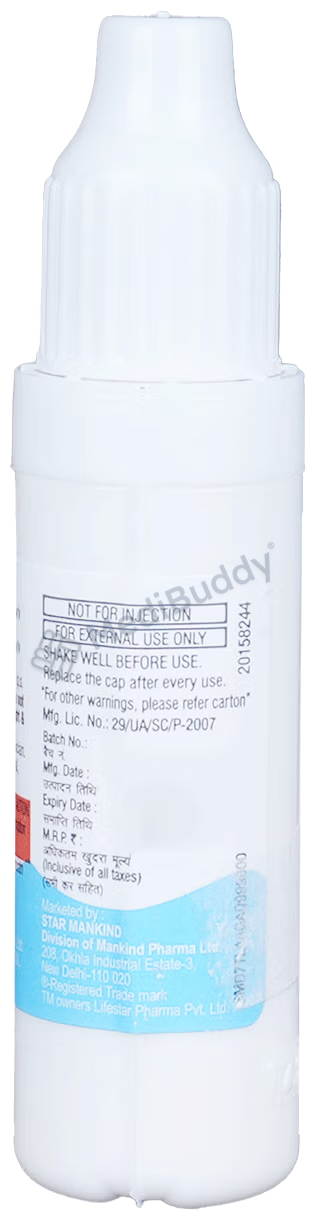
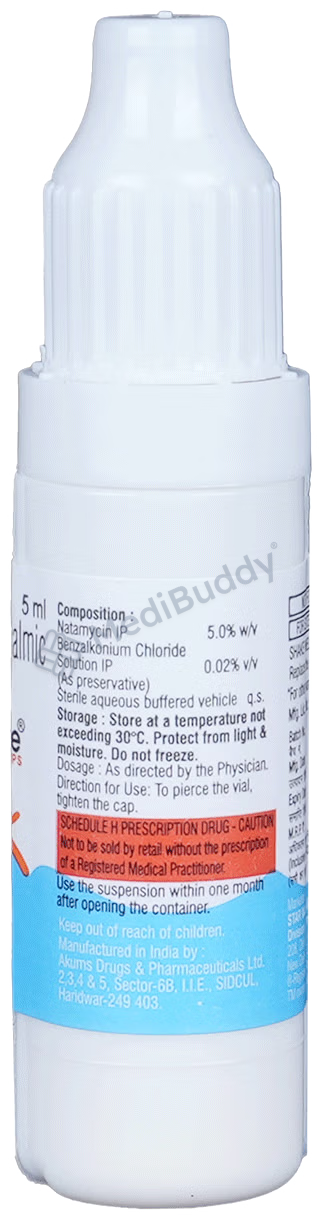
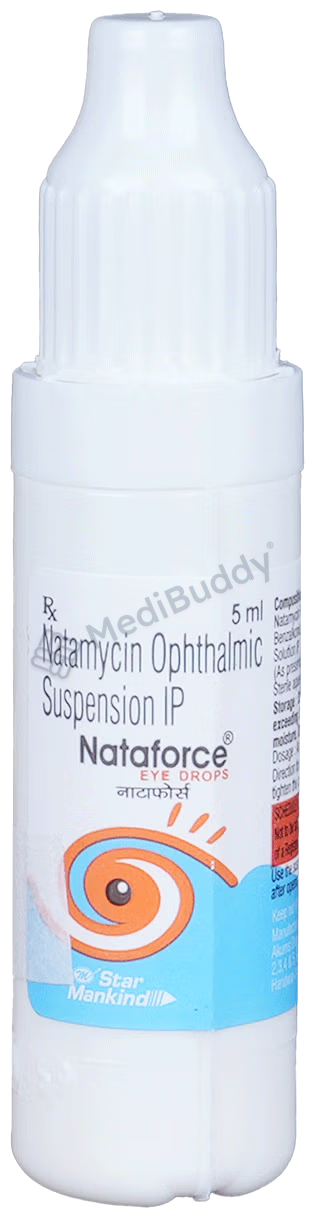
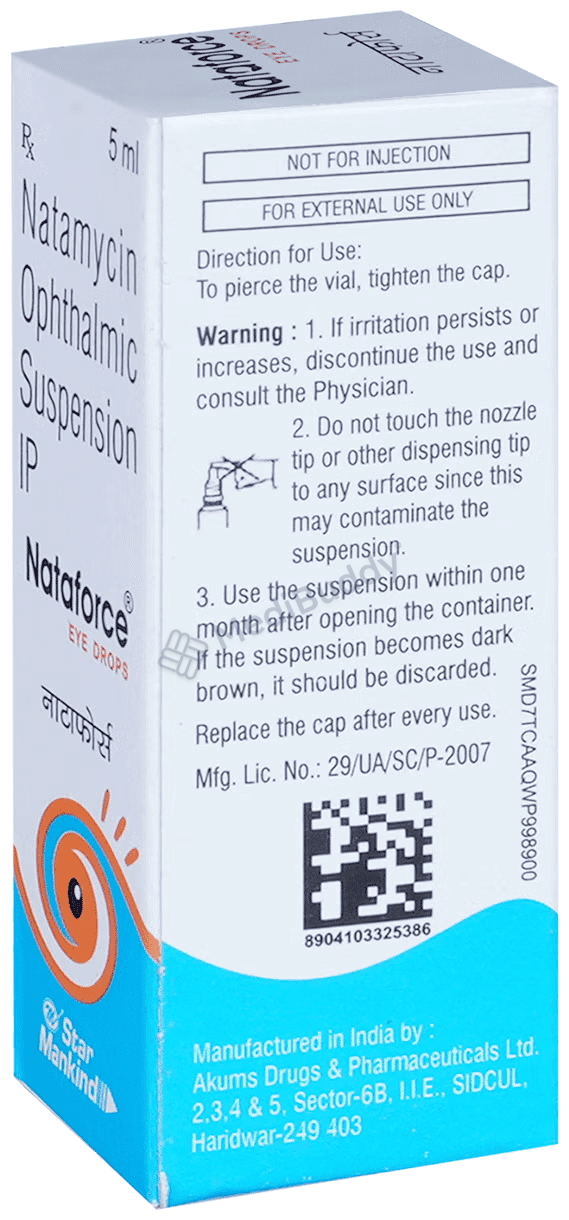
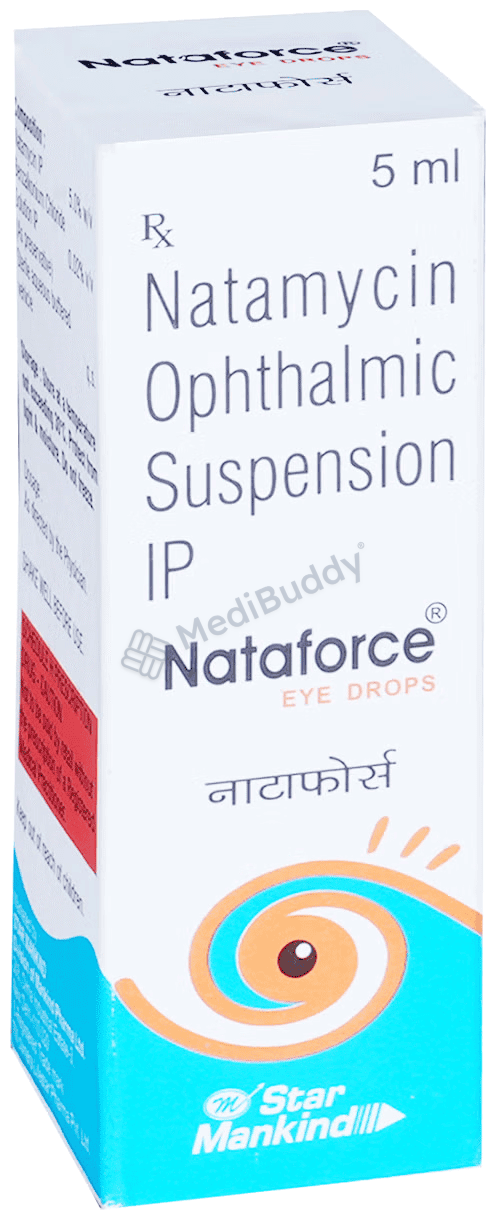
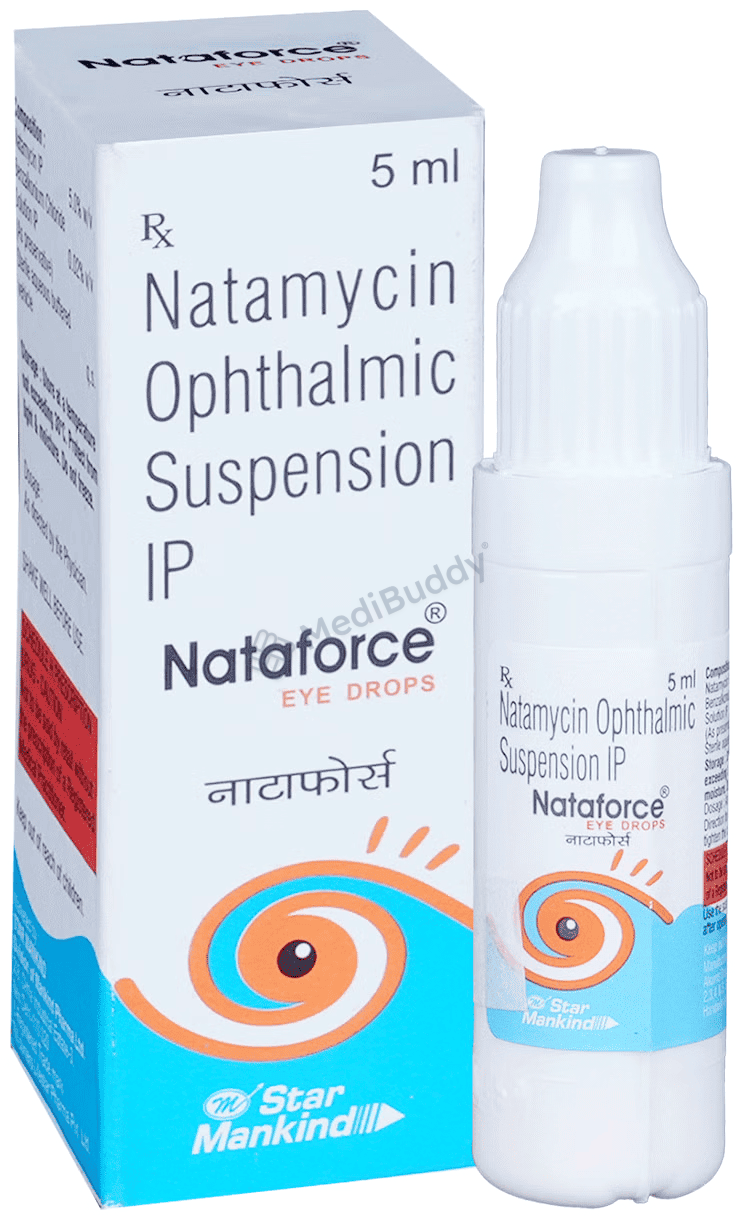
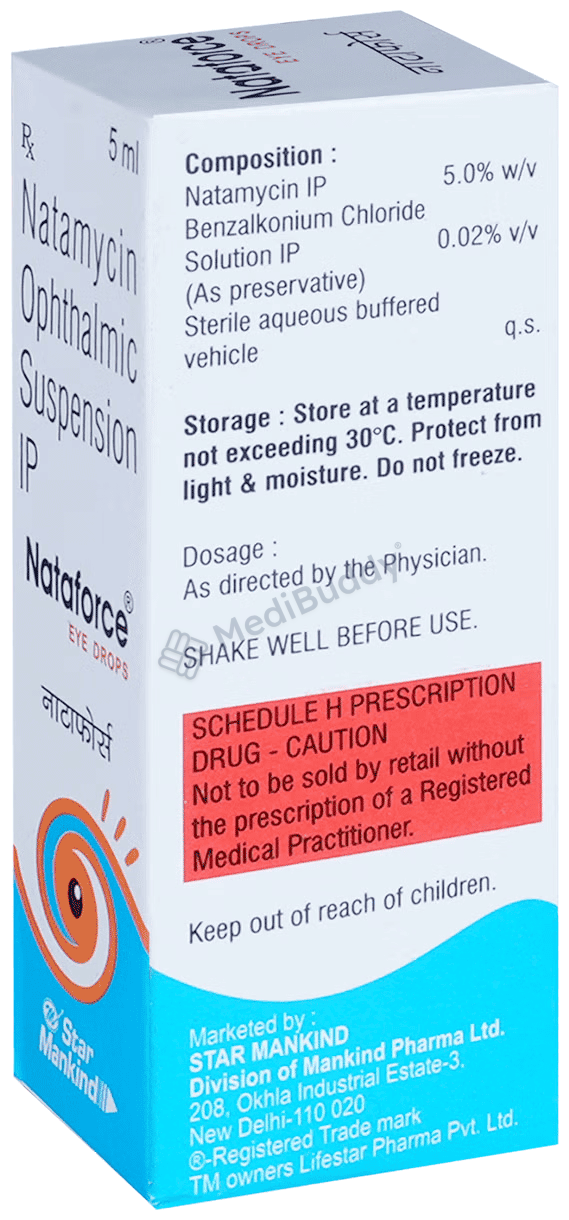
Nataforce Eye Drop
By Nataforce
Rx
5ml Eye Drop in a Packet

Composition
Natamycin(5% w/v)

Manufacturer - Mankind Pharma Ltd
208, Okhla Industrial Estate, Phase III, New Delhi - 110020

Expires on or after
April, 2027
About Nataforce Eye Drop
Nataforce Eye Drop is a type of antifungal medication specifically designed to target and treat fungal infections affecting the eyes. These infections occur when fungi invade the eye tissues, leading to symptoms such as eye pain, redness, and blurred vision. Fungi, although common in nature, can become problematic when they enter the eye, causing damage and discomfort. The active ingredient in Nataforce Eye Drop is Natamycin, which functions by destroying the outer cell membrane of the fungi, ultimately eradicating them.
To use Nataforce Eye Drop, follow the instructions provided by your doctor carefully. Administer the drop by holding the dropper close to the eye without direct contact, gently squeezing it to apply the medicine to the lower eyelid. Any excess liquid should be wiped off to prevent spillage. While this medication is generally well tolerated, you may experience mild eye irritation, which typically resolves on its own over time. If the irritation persists or worsens, consult your doctor promptly for further guidance.
It is crucial to adhere to the prescribed dose and duration of Nataforce Eye Drop treatment as recommended by your healthcare provider. Common side effects may include eye discomfort, blurred vision, and increased tear production. In most cases, these effects are temporary and do not necessitate medical intervention. However, if you experience persistent or worsening side effects, do not hesitate to seek medical advice promptly. Before using Nataforce Eye Drop, inform your doctor of any allergies to its components and disclose your pregnancy or breastfeeding status, as special precautions may apply.
Nataforce Eye Drop presents a targeted solution for fungal eye infections, such as blepharitis, conjunctivitis, and keratitis. This medication is intended for ophthalmic use only to effectively combat fungal growth within the eye. While utilizing Nataforce Eye Drop, refrain from wearing contact lenses during the treatment period. For optimal results, it is advisable not to exceed the recommended duration of 7-10 days without consulting your doctor. Additionally, this medication is not recommended for children and adolescents unless prescribed by a physician.
In summary, Nataforce Eye Drop offers a specialized approach to treating fungal eye infections, leveraging the antifungal properties of Natamycin to target and eliminate the fungi responsible for the infection. By following the prescribed usage instructions and promptly addressing any concerns with your doctor, you can effectively manage and alleviate fungal eye infections with Nataforce Eye Drop.
Benefits
Nataforce Eye Drop offers several benefits in the treatment of fungal infections of the eye. As an antifungal medication, it effectively targets and eliminates the fungus responsible for the infection, thereby stopping its growth. This action helps alleviate common symptoms associated with eye infections, including pain, redness, itching, and soreness. It is crucial to follow the prescribed dose and treatment duration as recommended by your healthcare provider to ensure optimal effectiveness. Completing the full course of treatment is important as it helps in completely curing the infection and reducing the likelihood of its recurrence. By using Nataforce Eye Drop as directed, individuals can experience relief from discomfort and promote the healing process of fungal eye infections.
How to use the Nataforce Eye Drop
To use Nataforce Eye Drop, which is meant for external use only, make sure to follow the guidance provided by your healthcare provider. Begin by washing your hands thoroughly before application to maintain cleanliness. Then, tilt your head slightly backward and approach the container's tip close to your eye without contact. Gently pull down your lower eyelid and instill the prescribed number of drops as per your doctor's instructions. After administering the drops, close your eyes and softly apply pressure on the inner corner for about 2 minutes to aid absorption. Ensure to repeat the same process for your other eye if directed by your physician.
It is crucial to handle the container with care and avoid touching the tip to your eyes, eyelids, surrounding areas, or fingers to prevent contamination. If you are being treated for fungal eye infections, refrain from wearing contact lenses during the therapy period. Remember, if you are also using eye ointments, apply them after using the eye drops.
The correct dosage and treatment duration will be determined by your doctor based on factors like age, weight, and the seriousness of the infection. It is essential to strictly adhere to your doctor's recommendations and not extend the usage of Nataforce Eye Drop beyond 7-10 days without consulting them first. By following these steps and guidelines, you can effectively and safely utilize Nataforce Eye Drop for eye-related concerns.
Uses of Nataforce Eye Drop
"Nataforce Eye Drop is specifically formulated to treat fungal infections of the eye. Its targeted function addresses fungal infections, providing relief and promoting healing. By using Nataforce Eye Drop, individuals can effectively combat eye ailments caused by fungal growth."
What conditions Nataforce Eye Drop treats?
Nataforce Eye Drop is used for treating fungal infections of the eyes. It functions as an antifungal medication by eliminating the fungi responsible for the infection. This helps alleviate symptoms like pain, redness, itching, or soreness that result from eye infections. The appropriate dosage and treatment duration should be followed as prescribed by your doctor to ensure the complete eradication of the infection and to prevent any recurrence.
Should you consult a doctor?
If you experience any of the following symptoms while using Nataforce Eye Drop, it is important to seek medical attention promptly: severe eye pain, sudden changes in vision, eye irritation that persists or worsens, increased redness or swelling in the eye, discharge from the eye that is thick or colored, or if you accidentally ingest the eye drops. These could be signs of a more serious condition that requires evaluation and treatment by a healthcare professional. It is essential to consult a doctor if you have any concerns about the use of Nataforce Eye Drop or if you experience any unexpected or concerning reactions while using the product. Your eye health is important, and seeking medical advice when needed can help ensure proper care and management of any potential eye issues.
Side effects of Nataforce Eye Drop
When using Nataforce Eye Drop, you may experience certain side effects that are usually temporary and go away as your body gets used to the medication. Some common side effects you may encounter include eye irritation, like discomfort, pain, or a feeling of having something in your eye. Your vision may become blurry, and you might notice increased tear production. Additionally, your eyes could appear red while using this medication. If any of these effects persist or if you become concerned, it is important to consult your doctor for guidance. In rare cases, severe allergic reactions can occur, presenting as symptoms such as skin rash, swelling of the eye, eyelids, face, lips, tongue, hands, or throat, which may lead to breathing difficulties. If you experience any severe allergic reactions, stop using Nataforce Eye Drop immediately and seek medical help.
Safety advice

liver
For maximum safety when using Nataforce Eye Drop, there is no known interaction with the liver. This means that Nataforce Eye Drop is generally considered safe for individuals with liver issues. Always follow the recommended dosage and usage instructions provided with the eye drop. If you have any concerns or doubts regarding the safety of Nataforce Eye Drop for your specific liver condition, it's advisable to consult with your healthcare provider for personalized guidance.

kidney
No interaction with kidney issues has been found or established for Nataforce Eye Drop.

alcohol
Consult your doctor when consuming alcohol with Nataforce Eye Drop.

driving
After using Nataforce Eye Drop, your vision may be blurry briefly. Avoid driving until your vision returns to normal.

pregnancy
Nataforce Eye Drop should be used with caution during pregnancy as it may have harmful effects on the developing baby based on animal studies. Consult your doctor for a thorough evaluation of the benefits and risks before using this medication.

breastfeeding
It is better to consult your doctor before using Nataforce Eye Drop while breastfeeding.
Age above 75(Geriatrics)
Nataforce Eye Drop should be used with caution in elderly patients (aged 65 years or above). Therefore, consult your doctor before using it.
Age below 6 months(Pediatrics)
The safety and effectiveness of Nataforce Eye Drop have not been established in children. Therefore, Nataforce Eye Drop should be used in children and adolescents (aged below 18 years) only if prescribed by the physician.
Consumption warning before consuming Nataforce Eye Drop
Before using Nataforce Eye Drop, it's crucial to remember that this medication is specifically designed for external use only on the eyes. Adhere strictly to the prescribed dosage and duration recommended by your healthcare provider to ensure effective treatment. When applying the eye drops, hold the dropper near the eye without direct contact, gently squeeze to instill the medicine under the lower eyelid, and carefully wipe off any excess liquid.
While generally well-tolerated, Nataforce Eye Drop may cause temporary eye irritation, which typically resolves on its own. If the irritation persists or worsens over time, it is advisable to seek advice from your doctor. Prior to using this antifungal medication for treating eye infections, ensure you are fully informed about its proper administration and potential side effects to promote safe and successful treatment outcomes.
What if you forgot to take Nataforce Eye Drop?
If you forget to take a dose of Nataforce Eye Drop, it is important to consult your doctor for guidance. Make sure to reach out to your healthcare provider to discuss what steps you should take next. It is always best to follow your doctor's advice on how to manage a missed dose of Nataforce Eye Drop to ensure the best outcome for your eye health.
What happens if you take overdose of Nataforce Eye Drop?
If you suspect that you or someone else has used more Nataforce Eye Drop than recommended, it is important to take immediate action. Start by rinsing the affected eye with warm water to help reduce any irritation. However, if the irritation persists or if there are any other concerning symptoms, it is crucial to seek medical attention and consult a doctor promptly. Overdosing on Nataforce Eye Drop can have serious consequences, so it is vital to address the situation promptly and follow professional guidance for the best possible outcome.
Additional Information
| Habit Forming | No |
| Chemical Class | Aminoglycosides |
| Therapeutic Class | OPHTHAL OTOLOGICALS |
| Action Class | Fungal cell membrane active agent |
FAQs
Disclaimer
The information provided on this website is to the best of our abilities to ensure it is accurate, reliable, and reviewed by a team of professionals. It should not be used to diagnose, prevent, or cure any health problem. The information presented here is not intended to create a doctor-patient relationship or replace a registered medical practitioner's advice, diagnosis, or treatment. The absence or provision of any information or warning regarding any medicine should not be assumed as an implied or explicit assurance of safety or efficacy. We highly recommend consulting your registered medical practitioner for all queries or doubts related to your medical condition. Do not ignore professional medical advice or delay seeking it based on the content encountered on our website. We intend to support, not replace, the doctor-patient relationship.
₹130.87
Inclusive of all taxes
Content verified by

Dr. Gowri Kulkarni
MBBS - General Medicine, DNB - Psychiatry, MRCGP [INT] Family Medicine, BSIC (BACP)
Last update on 01-Oct-2024


