

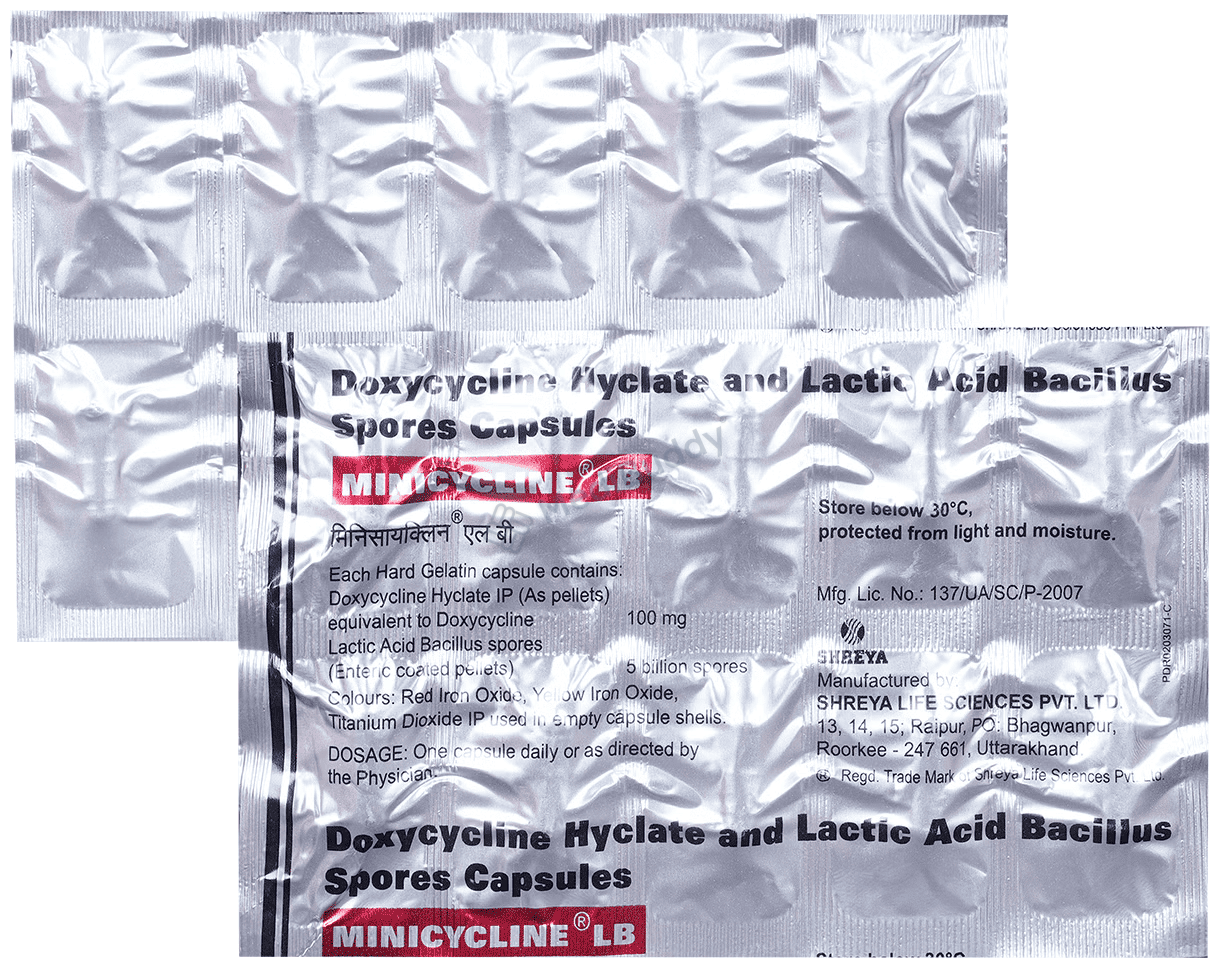
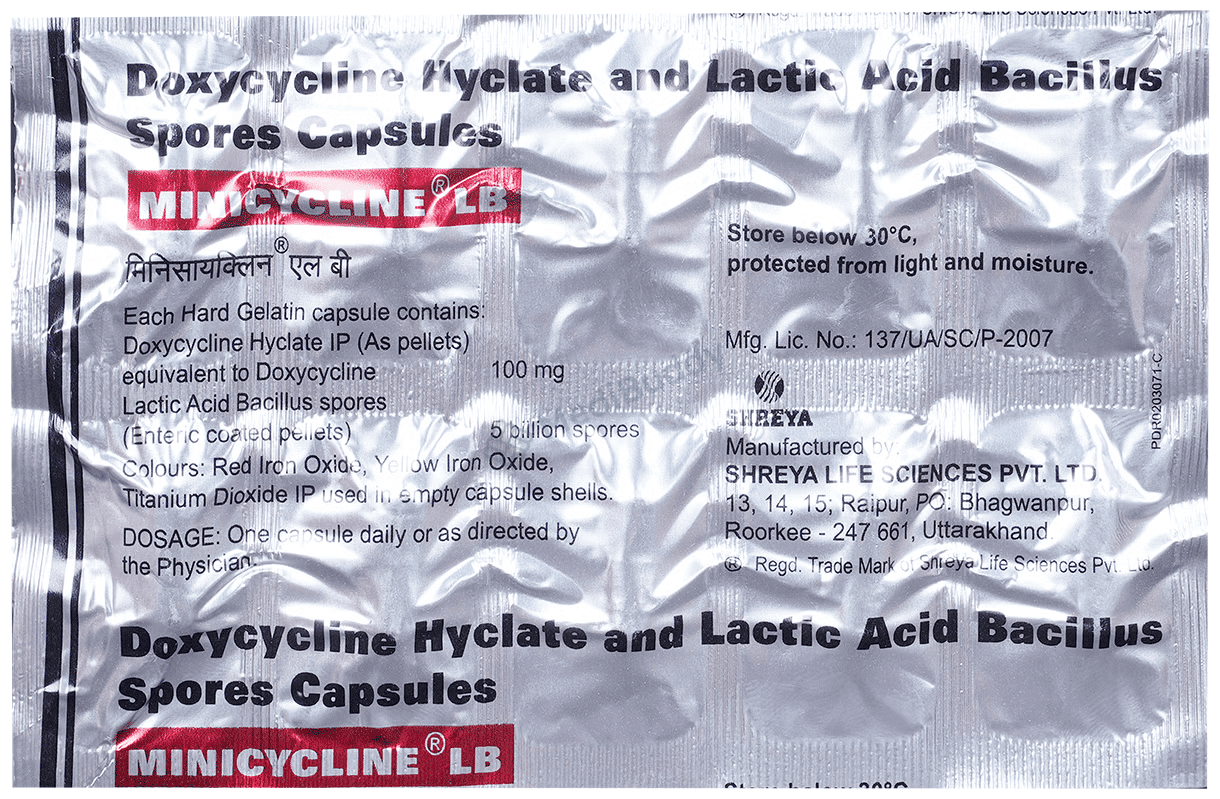
Minicycline LB Capsule
By Minicycline LB
Rx
10 Capsule in a Strip

Composition
Doxycycline(100mg) + Lactobacillus(5Million spores)

Manufacturer - Shreya Life Sciences Pvt Ltd
SHREYA HOUSE, 301/A, Pereira Hill Road, Andheri East, Mumbai - 400 099, India

Expires on or after
April, 2027
About Minicycline LB Capsule
Minicycline LB Capsule is a combination medication used to treat various bacterial infections that can occur in different parts of the body, such as the urinary tract, intestines, respiratory system, eyes, gums, and even sexually transmitted infections like gonorrhoea and syphilis. These infections result from harmful bacteria multiplying inside or on the body. Minicycline LB Capsule works by preventing the growth of these bacteria, thus helping to eradicate the infection. It contains two key components, Doxycycline and Lactobacillus.
Doxycycline, a vital ingredient in Minicycline LB Capsule, interferes with the production of essential proteins needed for the survival of the bacteria. By disrupting this process, Doxycycline effectively kills the bacteria causing the infection. On the other hand, Lactobacillus, a probiotic microorganism present in the capsule, aids in restoring the balance of good bacteria in the gut. This equilibrium may have been disrupted due to the infection itself or the use of antibiotics, thus Lactobacillus plays a crucial role in maintaining gut health.
Consuming Minicycline LB Capsule requires a prescription from a healthcare provider. It is essential to follow the doctor's instructions carefully regarding dosage, administration, and duration of the treatment. The capsule can be taken with or without food but at a consistent time each day for optimal effectiveness. Taking more than the recommended dose can be harmful to the body, and missing a dose should be compensated as soon as remembered. It is vital to complete the full course of treatment even if symptoms improve to ensure the infection is fully eradicated.
While Minicycline LB Capsule is generally well-tolerated, some common side effects may occur, including nausea, vomiting, diarrhea, and indigestion. If these symptoms worsen, prompt consultation with a healthcare provider is advisable. Additionally, if any signs of an allergic reaction, such as rashes, itching, swelling, or difficulty breathing, manifest, immediate medical attention is necessary. It is important to inform the doctor about any existing health conditions, ongoing medications, or allergies before starting Minicycline LB Capsule.
Pregnant or breastfeeding women, as well as children under eight years old, are advised to consult with a healthcare professional before using Minicycline LB Capsule. Alcohol consumption should be avoided as it can interact with the medication and cause drowsiness. While the capsule does not typically impair driving ability, caution is recommended if it leads to feelings of drowsiness or dizziness. Adequate rest, a balanced diet, and sufficient hydration are essential for a faster recovery while undergoing treatment with Minicycline LB Capsule.
Benefits
Minicycline LB Capsule is a powerful antibiotic medication that offers a multitude of benefits in the treatment of bacterial infections. This versatile drug can effectively combat a wide range of infections caused by bacteria throughout the body, including in the blood, brain, lungs, bones, joints, urinary tract, stomach, and intestines. Additionally, it is also effective in treating sexually transmitted diseases. By inhibiting the growth of bacteria responsible for the infection, Minicycline LB Capsule not only clears the infection but also aids in preventing diarrhea that may result from the medication or existing stomach and gut infections.
One of the key benefits of Minicycline LB Capsule is its ability to target and eliminate bacteria, ensuring that the infection is fully eradicated. It contains the active ingredients Doxycycline and Lactobacillus, with Doxycycline working to halt the synthesis of essential proteins needed for bacterial survival, leading to the bacteria's demise. Lactobacillus, on the other hand, acts as a beneficial microorganism that assists in restoring the balance of good bacteria in the gut, which may have been disrupted by infections or the use of antibiotics.
Moreover, Minicycline LB Capsule is instrumental in preventing bacterial infections from becoming resistant. It is crucial to adhere to the prescribed dosage and complete the full course as directed by a healthcare provider to ensure that all bacteria are effectively targeted and eliminated. By following the recommended regimen, patients can benefit from the full efficacy of Minicycline LB Capsule and minimize the risk of bacterial resistance developing.
Overall, the benefits of Minicycline LB Capsule extend beyond its capacity to treat bacterial infections to include the prevention of diarrhea, restoration of gut flora balance, and mitigation of antibiotic resistance. This medication stands as a valuable tool in combating various bacterial infections, promoting recovery, and safeguarding against potential complications associated with these infections.
How to use the Minicycline LB Capsule
When using Minicycline LB Capsule, it is important to follow your doctor's guidance on the dosage and how long to take it. You can take the capsule with or without food, but it is recommended to take it at the same time every day for best results. Remember to swallow the Minicycline LB Capsule whole with a glass of water; do not chew or crush it. Your physician will decide the right dose and duration for you based on factors such as your age, weight, and the specific condition being treated. By following your doctor's instructions carefully, you can ensure the medication is effective in managing your health condition.
Uses of Minicycline LB Capsule
Minicycline LB Capsule is commonly used to treat bacterial infections, particularly targeting intra-abdominal bacterial infections and antibiotic-associated diarrhea. By effectively addressing these conditions, this medication plays a crucial role in combating harmful bacteria in the body.
What conditions Minicycline LB Capsule treats?
A bacterial infection occurs when harmful bacteria enter and multiply in the body, leading to symptoms like fever, chills, and fatigue. It can affect any part of the body and spreads rapidly. Individuals with weakened immune systems or those taking immunosuppressive medication are at higher risk of bacterial infections.
Should you consult a doctor?
Before starting Minicycline LB Capsule, it is important to inform your doctor about any pre-existing medical conditions you may have. Seeking medical advice is essential if you experience any severe side effects while taking this medication. Some signs to watch out for include persistent gastrointestinal issues such as stomach pain or diarrhea, difficulty breathing, rash or other allergic reactions, or symptoms of liver problems like persistent nausea or yellowing of the skin or eyes. Additionally, if you notice any unusual changes in your mental health or experience severe headaches, blurred vision, or chest pain while taking Minicycline LB Capsule, it is crucial to consult your doctor promptly. Always follow your doctor's recommendations and seek medical attention if you have any concerns regarding your health while using this medication.
Side effects of Minicycline LB Capsule
When taking Minicycline LB Capsule, some common side effects may occur as your body gets used to the medicine. These can include feelings of nausea, vomiting, stomach upset, and a loss of appetite. In some cases, you might also experience diarrhea, rash, light sensitivity, or hives. It's important to note that rare but serious side effects could include hemolytic anemia, where red blood cells are destroyed faster than they can be replaced. If you notice any of these severe side effects, such as permanent discoloration of teeth (especially in pregnant women, infants, and children up to 8 years old), Clostridium difficile-associated diarrhea, or extreme sunburn reaction due to high light sensitivity, you should stop taking the medication immediately and seek medical assistance. It's always advisable to consult your doctor if you have concerns about any side effects or if they persist.
Safety advice

liver
When using Minicycline LB Capsule, it is important to exercise caution if you have liver disease. Patients with liver issues may require dose adjustments when taking Minicycline LB Capsule. It is recommended to consult your doctor for personalized guidance and monitoring when using this medication.

kidney
Consult with your doctor for proper guidance before using Minicycline LB Capsule.

alcohol
It is not safe to drink alcohol while taking Minicycline LB Capsule.

driving
Minicycline LB Capsule can reduce alertness and cause drowsiness, dizziness, and blurred vision. Avoid driving if experiencing these symptoms.

pregnancy
Minicycline LB Capsule is not safe to use during pregnancy. There is evidence showing it can harm the developing baby. However, in certain life-threatening situations, a doctor may prescribe it if the benefits outweigh the risks. Always consult your doctor before taking this medication during pregnancy.

breastfeeding
Minicycline LB Capsule is likely safe during breastfeeding. Limited data shows no significant risk to the baby.
Age above 75(Geriatrics)
Age below 6 months(Pediatrics)
Consumption warning before consuming Minicycline LB Capsule
Before consuming Minicycline-LB Capsule 10's, it is crucial to note the following warnings. Refrain from taking this medication if you have allergies to any of its components. Avoid self-medication with Minicycline-LB Capsule 10's to prevent the development of antibiotic resistance, which can render antibiotics ineffective against certain bacterial infections. Notify your healthcare provider if you have myasthenia gravis, porphyria, kidney or liver issues. Prior consultation with your doctor is essential if you are pregnant or breastfeeding. Steer clear of alcohol consumption while on Minicycline-LB Capsule 10's, as it may impact its effectiveness. Be mindful of potential dizziness that may arise, especially while driving. It is important to disclose all medications and health conditions to your doctor to mitigate any adverse reactions.
Disease interactions
When taking Minicycline LB Capsule, it is important to inform your doctor if you have certain health conditions. Make sure to tell your doctor if you have colitis, which is inflammation in the lining of the colon. Additionally, let your doctor know if you experience oesophageal irritation or have liver problems. Sharing this information will help your doctor determine if Minicycline LB Capsule is the right medication for you and if any adjustments need to be made to ensure your safety and well-being.
What if you forgot to take Minicycline LB Capsule?
If you happen to miss a dose of Minicycline LB Capsule, don't worry. Simply take the missed dose as soon as you remember. But if it is almost time for your next dose, it's best to skip the missed one and continue with your usual schedule. Avoid taking a double dose to make up for the missed one. Just resume your normal dosing routine. Remember, consistency is key when taking medication like Minicycline LB Capsule.
What happens if you take overdose of Minicycline LB Capsule?
If you or someone else takes more Minicycline LB Capsule than prescribed, it is considered an overdose. In case of an overdose, it is crucial to seek immediate medical help by consulting your doctor or going to the nearest hospital. An overdose can lead to serious health complications and requires prompt intervention to prevent any potential harm. If you suspect that an overdose has occurred, do not hesitate to seek medical assistance to address the situation promptly and effectively.
Related lab tests
The following lab tests are related to monitoring the use of Minocycline LB Capsules and ensuring their effectiveness and safety:
1. Complete Blood Count (CBC): This test measures the levels of different types of blood cells in the body, including red blood cells, white blood cells, and platelets. Minocycline may affect these blood cell levels, so regular CBC tests can help monitor for any potential side effects.
2. Peripheral Smear Examination: This test involves examining a sample of blood under a microscope to look for abnormalities in the size, shape, and number of blood cells. It can provide additional information about the impact of Minocycline on blood cells and help detect any potential issues early on.
These lab tests are essential for healthcare providers to ensure that patients taking Minocycline LB Capsules are responding well to the medication and are not experiencing any adverse effects on their blood cells. Regular monitoring through these tests can help in adjusting the dosage or discontinuing the medication if necessary.
Additional Information
| Habit Forming | No |
| Chemical Class | - |
| Therapeutic Class | ANTI INFECTIVES |
| Action Class | - |
FAQs
Disclaimer
The information provided on this website is to the best of our abilities to ensure it is accurate, reliable, and reviewed by a team of professionals. It should not be used to diagnose, prevent, or cure any health problem. The information presented here is not intended to create a doctor-patient relationship or replace a registered medical practitioner's advice, diagnosis, or treatment. The absence or provision of any information or warning regarding any medicine should not be assumed as an implied or explicit assurance of safety or efficacy. We highly recommend consulting your registered medical practitioner for all queries or doubts related to your medical condition. Do not ignore professional medical advice or delay seeking it based on the content encountered on our website. We intend to support, not replace, the doctor-patient relationship.
₹165
Inclusive of all taxes
Content verified by

Dr. Abdullah Khan
MBBS - General Medicine
Last update on 01-Oct-2024

Health
Hospitalisation
Download the Medibuddy App


