

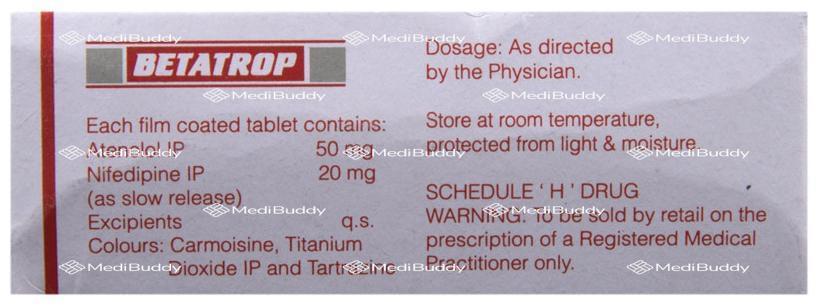
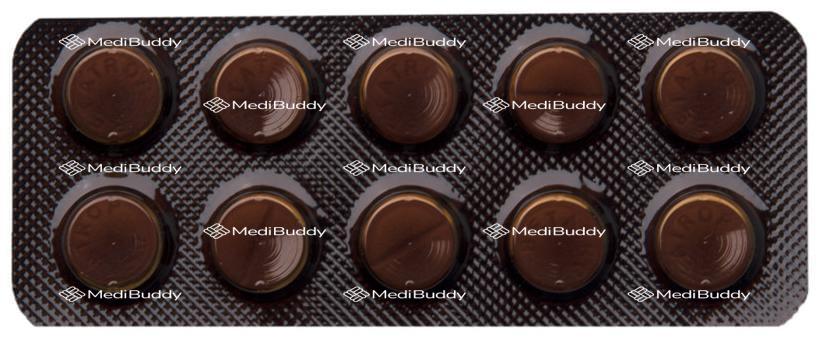
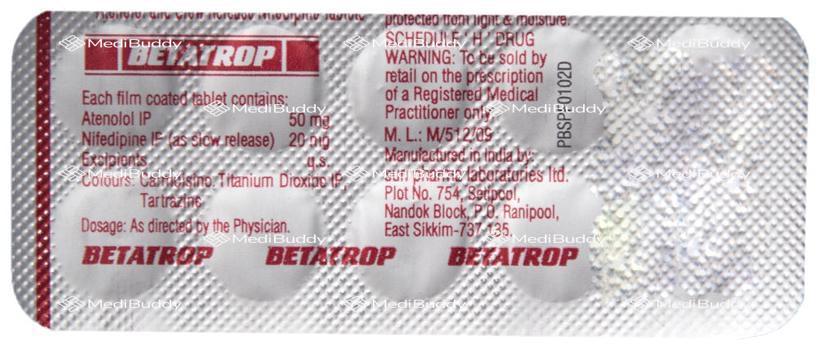


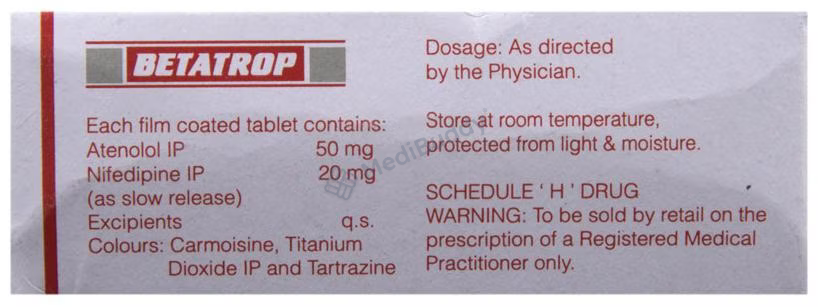




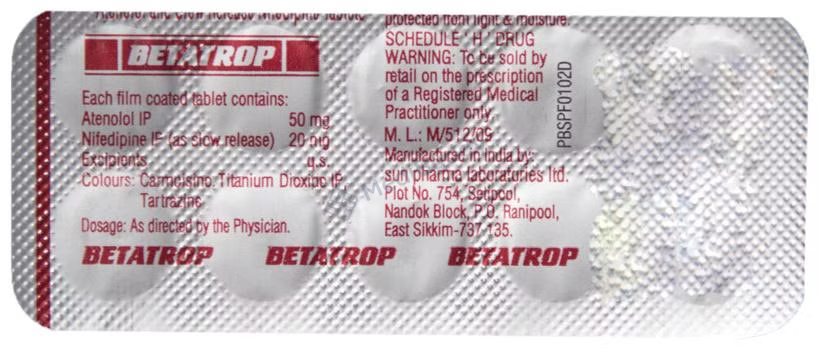
Betatrop Tablet

By Betatrop

Rx

10 Tablet in a Strip

Composition icon

Composition

Atenolol(50mg) + Nifedipine(20mg)

Manufacturer - Sun Pharmaceutical Industries Ltd icon

Manufacturer - Sun Pharmaceutical Industries Ltd

Plot no 107/108,Namli block , Ranipool, East Sikkim 737135

Expires on or after icon

Expires on or after

May, 2028

About Betatrop Tablet

Betatrop Tablet is a medication commonly used to treat hypertension, also known as high blood pressure. This medication is classified as a combination medication of antihypertensive drugs, designed to effectively control blood pressure levels when a single medication is not sufficient. By effectively lowering blood pressure levels, Betatrop Tablet helps in preventing potential heart attacks and strokes.

It is recommended to take Betatrop Tablet at the same time each day, ideally on an empty stomach, as advised by your doctor. Consistency in taking this medication is essential for optimal results. Even if you are feeling well, it is crucial not to discontinue Betatrop Tablet without consulting your healthcare provider, as high blood pressure often presents with no noticeable symptoms.

Potential side effects of Betatrop Tablet may include fatigue, ankle swelling, headache, slow heart rate, nausea, and dizziness. To mitigate swelling, elevating your legs while sitting may be beneficial. Regular monitoring of blood pressure, kidney function, and electrolyte levels may be required while on this treatment.

Before initiating Betatrop Tablet, it is vital to inform your doctor if you have any existing liver or kidney issues. Pregnant or breastfeeding individuals should consult with their healthcare provider before starting this medication. Disclosure of all other medications being consumed, particularly those prescribed for high blood pressure or heart conditions, is essential for optimal treatment outcomes.

Betatrop Tablet contains Atenolol, a beta-blocker, and Nifedipine, a calcium channel blocker. Atenolol aids in reducing heart rate and enhancing efficient blood pumping by the heart, whereas Nifedipine relaxes blood vessels, thereby lowering blood pressure and decreasing the risk of heart-related complications in the future.

Regular intake of Betatrop Tablet as advised by your healthcare provider is crucial for its effectiveness in controlling blood pressure and achieving the desired outcomes. It is important to maintain open communication with your doctor throughout the course of this medication and adhere to their recommendations for the best results.


Benefits

Betatrop Tablet offers several benefits in managing hypertension (high blood pressure). It is a combination medication containing Atenolol and Nifedipine, which work together in distinct ways to lower blood pressure. Atenolol, a beta-blocker, helps by blocking the release of stress hormones responsible for chest pain and irregular heartbeats. It also provides protection to the heart, especially during a heart attack. On the other hand, Nifedipine, a calcium channel blocker, functions by relaxing blood vessels, which in turn reduces blood pressure and minimizes the risk of heart-related issues like stroke, heart attack, or kidney problems in the future. By taking Betatrop Tablet regularly as prescribed, you can effectively control your blood pressure and decrease the likelihood of cardiovascular events. While the direct benefits of the medication may not be immediately felt, its long-term use can help in maintaining overall well-being. It is essential to complement the medication with lifestyle adjustments such as a healthy diet and regular physical activity to maximize its effectiveness. Thus, Betatrop Tablet serves as a valuable tool in managing hypertension and promoting heart health.


How to use the Betatrop Tablet

To properly use Betatrop Tablet, it is essential to follow your doctor's guidance on the dosage and duration of the treatment. This medication should be swallowed whole with a glass of water. It is important not to chew, crush, or break the tablet. Remember to take Betatrop Tablet on an empty stomach, unless otherwise advised by your physician. You can take it with or without food as directed. Following these instructions will help ensure that you get the maximum benefit from this medication.


Uses of Betatrop Tablet

Betatrop Tablet is primarily used for treating hypertension, which is commonly known as high blood pressure. This medication is specifically formulated to help lower and control elevated blood pressure levels in adults. By taking Betatrop Tablet as prescribed by a healthcare professional, individuals can manage their hypertension effectively. This medicine works to reduce the strain on the heart and blood vessels, promoting better circulation and overall cardiovascular health. It is important to follow the recommended dosage and usage instructions provided by a doctor when using Betatrop Tablet for hypertension management.


What conditions Betatrop Tablet treats?

Hypertension is a chronic condition where the force of blood against the artery walls is consistently too high. When the heart pumps more blood and the arteries become narrow, blood pressure rises. Uncontrolled high blood pressure can lead to serious heart diseases such as stroke and heart attack. Brain damage (stroke) and kidney failure are also possible outcomes of high blood pressure. Blood pressure readings consist of systolic (heart contraction) and diastolic (resting) pressures. Ideal blood pressure ranges between 90/60mmHg and 120/80mmHg. Hypertension is diagnosed when systolic pressure exceeds 140mmHg and diastolic pressure exceeds 90mmHg. Symptoms may include headache, nosebleed, vomiting, and chest pain.


Should you consult a doctor?

If you experience persistent side effects such as ankle swelling, headache, tiredness, palpitations, cold extremities, sleepiness, nausea, edema (swelling), slow heart rate, flushing, or constipation while taking Betatrop Tablet, it is advisable to consult your doctor. Additionally, seek medical attention if you have liver or kidney problems, or if you are pregnant or breastfeeding. If you notice any changes in your health or have concerns about the medication, contact your healthcare provider. It is essential to follow your doctor’s instructions carefully and not discontinue the medication without consulting them, as abrupt cessation may lead to worsening of your condition. Regular monitoring of blood pressure, kidney function, and electrolyte levels may be necessary during treatment. Remember to disclose all other medications you are taking to your doctor, especially those for high blood pressure or heart conditions.


Side effects of Betatrop Tablet

Betatrop Tablet may cause some side effects. Most of these side effects are usually mild and temporary, and will go away as your body gets used to the medication. It is important to note that not everyone will experience these side effects. However, if they persist or if you are concerned about them, it is best to consult your doctor.


Common side effects of Betatrop Tablet may include ankle swelling, headache, tiredness, palpitations, cold extremities, sleepiness, nausea, edema (swelling), slow heart rate, flushing (sense of warmth in the face, ears, neck, and trunk), constipation, blurred vision, sweating, dehydration, dizziness, muscle cramps, difficulty breathing, tightness in the chest, and cold hands or feet.


It is important to monitor how you feel while taking Betatrop Tablet and report any unusual or bothersome side effects to your healthcare provider. Remember, everyone's body reacts differently to medications, so what one person experiences may not be the same for another.


Safety advice

scroll

liver

When it comes to using Betatrop Tablet, caution is advised for patients with liver disease. It may be necessary to adjust the dosage of Betatrop Tablet in such cases. It is important to consult your doctor before using this medication if you have any liver issues.

scroll

kidney

Betatrop Tablet should be used cautiously in patients with kidney disease. Dosage adjustment may be necessary, so consulting your doctor is important. Regular blood pressure monitoring is advised for appropriate dose management.

scroll

alcohol

Betatrop Tablet can lead to increased drowsiness when combined with alcohol.

scroll

driving

Betatrop Tablet may lead to dizziness, faintness, extreme tiredness, or visual disturbances, which can impact the ability to drive safely.

scroll

pregnancy

Betatrop Tablet should not be used during pregnancy due to known risks to the developing baby. In rare life-threatening situations, a doctor may prescribe it if benefits outweigh risks. Always consult your doctor.

scroll

breastfeeding

Betatrop Tablet can be unsafe during breastfeeding as it may pass into breastmilk and harm the baby, based on limited human data.


Consumption warning before consuming Betatrop Tablet

Before taking Betatrop Tablet, ensure you are not allergic to this medication or any of its ingredients. Inform your doctor if you have a history of severe kidney or liver diseases, low potassium levels, chest pain, poor blood circulation, controlled heart failure, first-degree heart block, diabetes, thyrotoxicosis, liver issues, or adrenal gland diseases. Additionally, disclose conditions such as anuria, fluid or electrolyte imbalance, lupus erythematosus, gout, abnormal heart rhythms, thyroid disorders, and asthma before starting treatment.


It is crucial to consult your doctor if you are a breastfeeding mother as Betatrop Tablet components may pass into breast milk. Notify your healthcare provider if you are planning to conceive or are pregnant before using this medication. Be cautious as Betatrop Tablet may lead to light-headedness; rise slowly from sitting or lying positions. Avoid operating machinery or tasks requiring mental alertness. Not suitable for individuals under 18 years of age.


What if you forgot to take Betatrop Tablet?

If you forget to take a dose of Betatrop Tablet, try to take it as soon as you remember. But if it's close to the time for your next scheduled dose, just skip the missed one and continue with your usual dosing routine. Avoid taking a double dose to make up for the missed one.


Related lab tests

When taking Betatrop Tablet, it is important to monitor your kidney function. This is done through a series of lab tests that help assess how well your kidneys are working. The tests included in kidney function testing usually measure the levels of certain substances in the blood and urine that indicate how effectively your kidneys are filtering waste and balancing electrolytes. Some of the related lab tests you may need to undergo while on Betatrop Tablet include:


1. Creatinine Test: This test measures the levels of creatinine in your blood, which is a waste product produced by muscle metabolism and excreted by the kidneys. Elevated creatinine levels can indicate impaired kidney function.


2. Blood Urea Nitrogen (BUN) Test: BUN measures the amount of nitrogen in your blood that comes from the waste product urea. Elevated BUN levels may suggest kidney issues.


3. Glomerular Filtration Rate (GFR): GFR is a calculation based on creatinine levels, age, gender, and other factors that helps estimate how well your kidneys are filtering wastes.


4. Urinalysis: This test examines a urine sample for abnormalities such as protein, blood, or signs of infection that could indicate kidney problems.


5. Electrolyte Panel: This test measures the levels of electrolytes like sodium, potassium, and chloride in your blood, which can be affected by kidney function.


It is essential to discuss with your healthcare provider about the frequency of these lab tests and any other specific tests that may be needed based on your individual health condition and medication regimen. Monitoring your kidney function regularly can help ensure the safe and effective use of Betatrop Tablet.


Additional Information

Habit FormingNo
Chemical Class-
Therapeutic ClassCARDIAC
Action Class-

FAQs


Disclaimer

The information provided on this website is to the best of our abilities to ensure it is accurate, reliable, and reviewed by a team of professionals. It should not be used to diagnose, prevent, or cure any health problem. The information presented here is not intended to create a doctor-patient relationship or replace a registered medical practitioner's advice, diagnosis, or treatment. The absence or provision of any information or warning regarding any medicine should not be assumed as an implied or explicit assurance of safety or efficacy. We highly recommend consulting your registered medical practitioner for all queries or doubts related to your medical condition. Do not ignore professional medical advice or delay seeking it based on the content encountered on our website. We intend to support, not replace, the doctor-patient relationship.

129

Inclusive of all taxes

Content verified by

chevron-right

Dr. Archana Prabhakar

MBBS, M.Med (Family Medicine)

Last update on 01-Oct-2024