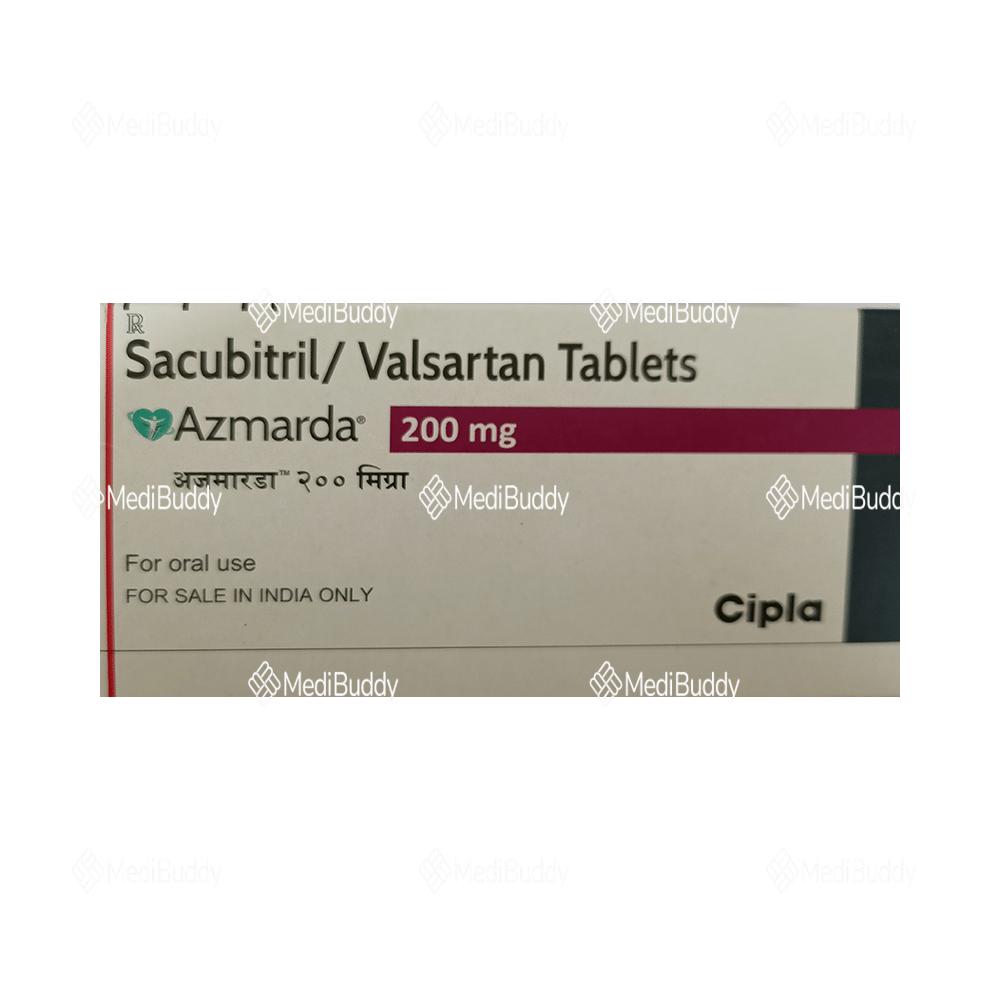
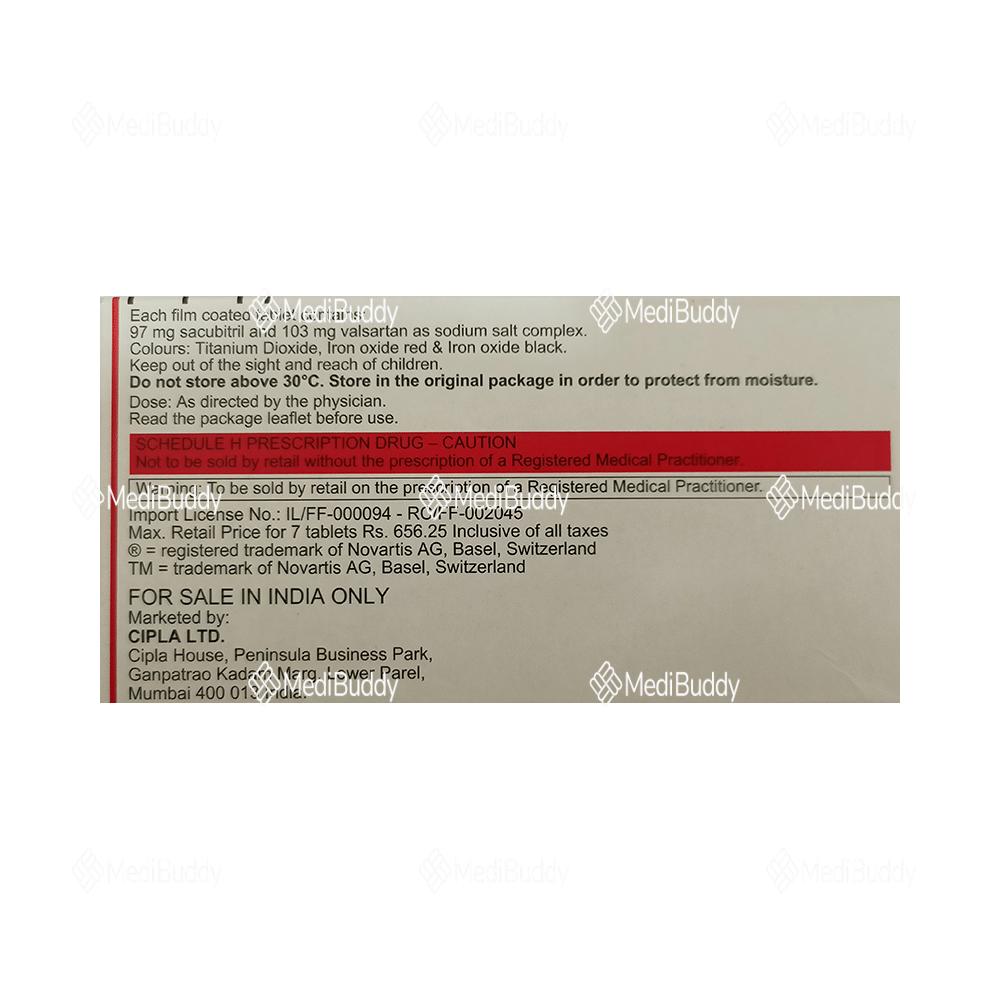

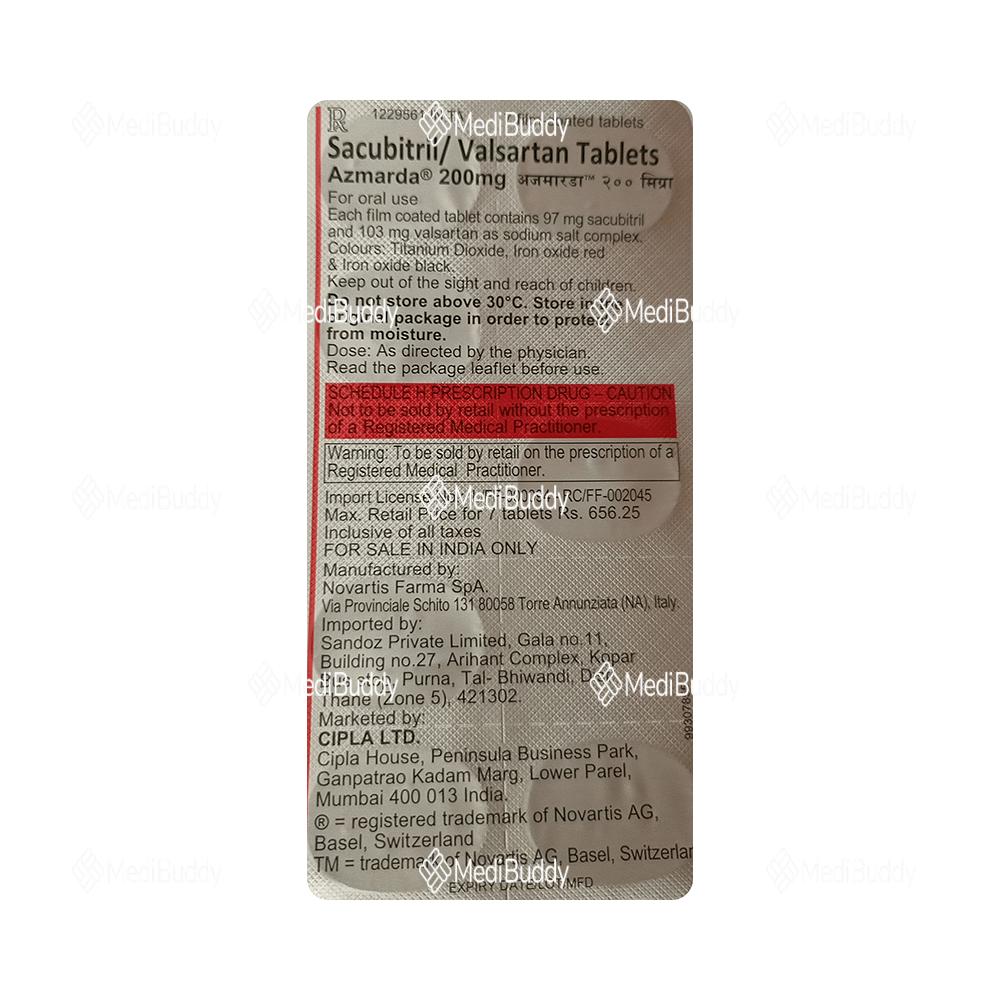


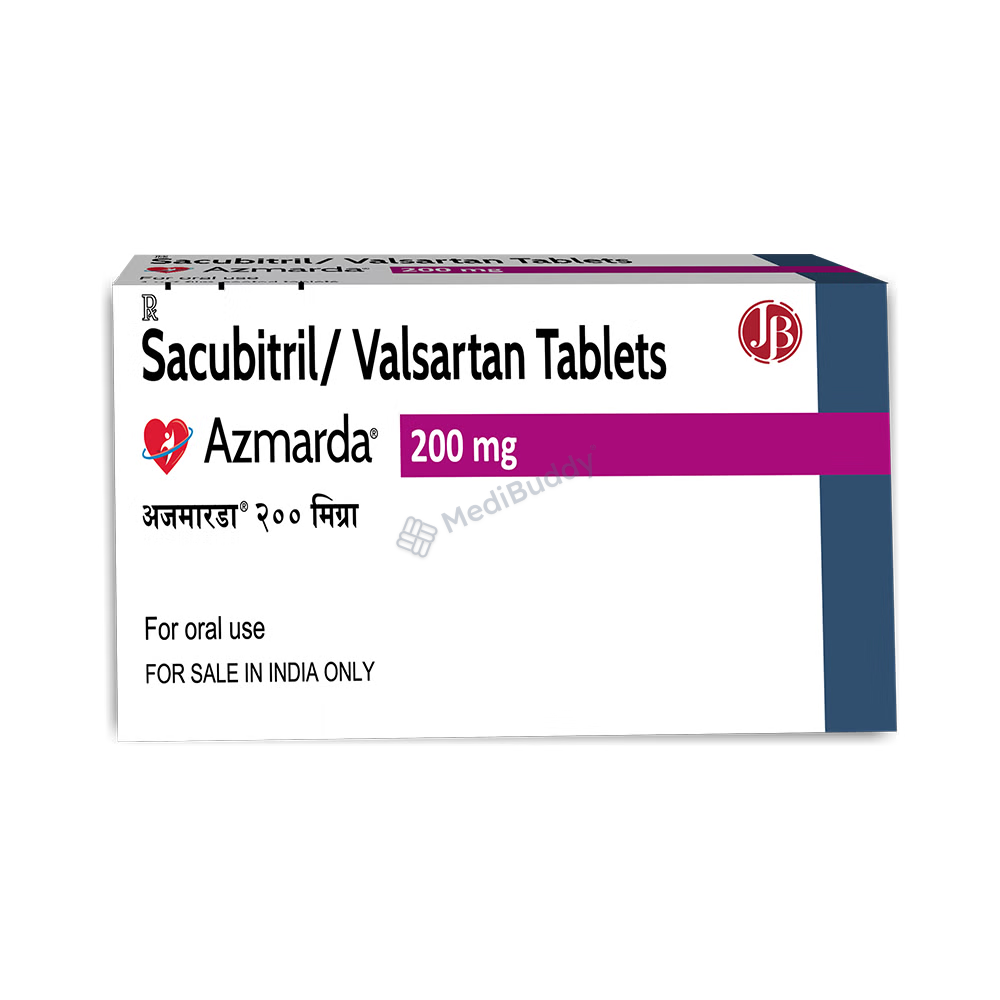
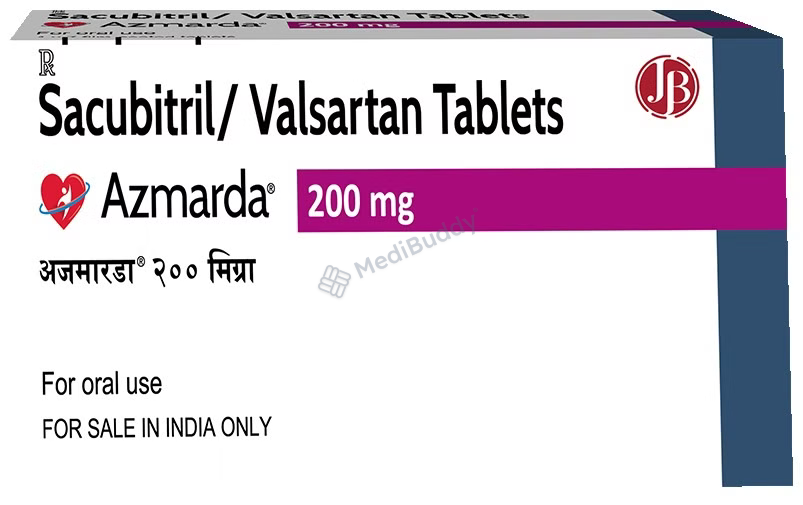
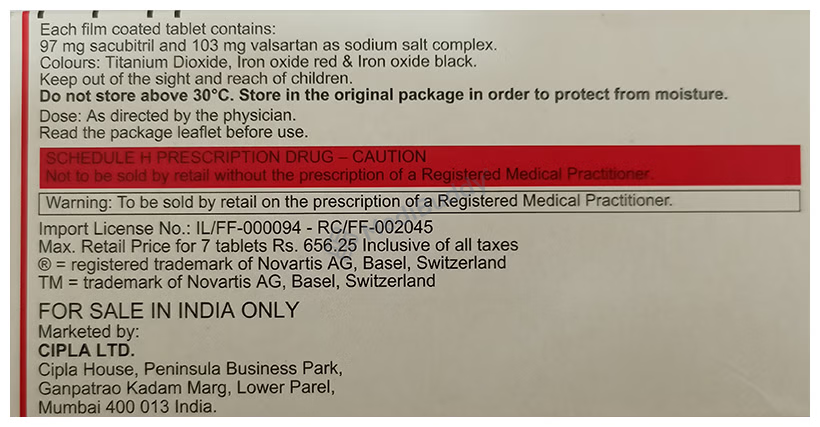
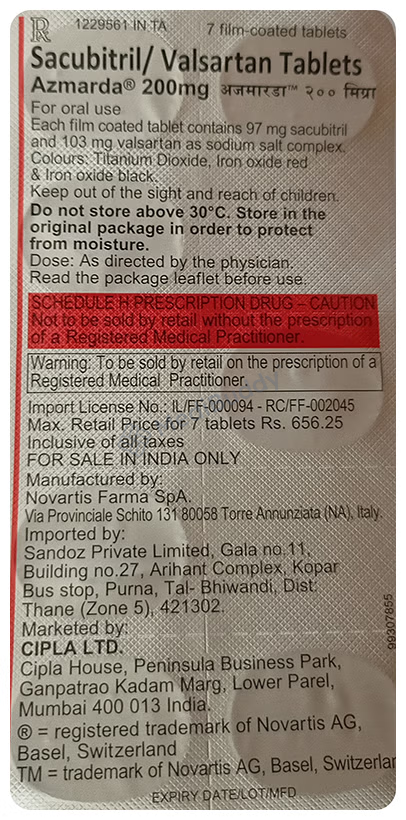
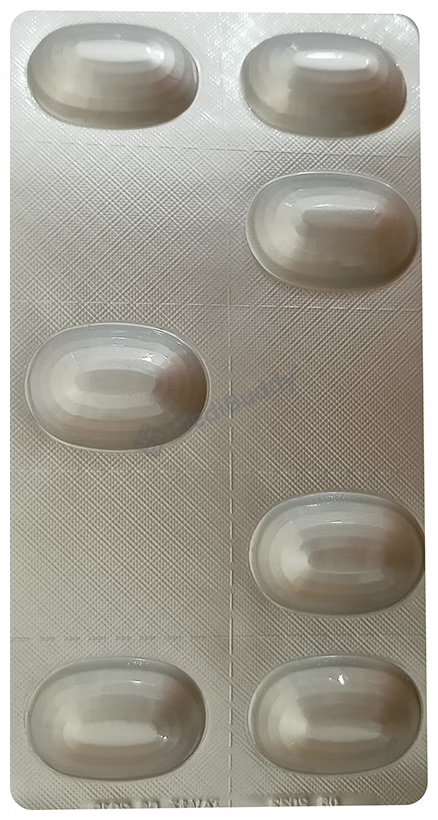
Azmarda 200mg Tablet

By Azmarda

Rx

7 Tablet in a Strip

Composition icon

Composition

Sacubitril(97mg) + Valsartan(103mg)

Manufacturer - J B Chemicals and Pharmaceuticals Ltd icon

Manufacturer - J B Chemicals and Pharmaceuticals Ltd

Cnergy IT Park, 3rd floor Appa Saheb Marathe Marg, Prabhadevi, Mumbai 400025

Expires on or after icon

Expires on or after

October, 2027

About Azmarda 200mg Tablet

Azmarda 200mg Tablet is a medication used in the treatment of heart failure. It helps reduce the risk of hospitalization and death in patients with long-lasting heart failure. This tablet is usually taken alongside other heart failure medications. The tablet contains a combination of two active ingredients: Valsartan and Sacubitril. Valsartan is an angiotensin receptor blocker that relaxes and widens blood vessels to help the heart pump blood more effectively. Sacubitril is a neprilysin inhibitor that also relaxes and widens blood vessels, aiding in improved blood circulation throughout the body.

Patients are advised to take Azmarda 200mg Tablet as prescribed by their doctor, at the same time each day for maximum benefits. It is crucial to continue taking the medication regularly and not to miss doses, even if feeling well, to prevent future complications. Common side effects may include angioedema, low blood pressure, impaired renal function, and high potassium levels in the blood. To minimize the risk of dizziness caused by low blood pressure, patients should rise slowly from sitting or lying positions. It's important to consult a doctor if these side effects persist or worsen.

Before starting Azmarda 200mg Tablet, patients should inform their doctor about any other medications they are taking, especially for blood pressure or heart conditions. Patients with kidney or liver disease should also disclose this information to their doctor. This medication is not recommended during pregnancy and breastfeeding. Regular monitoring of blood pressure and kidney function may be advised while undergoing treatment with Azmarda 200mg Tablet to ensure its effectiveness and safety.


Benefits

Azmarda 200mg Tablet is a beneficial medication for the treatment of heart failure, a condition where the heart is weak and unable to pump enough blood to the body. This medication contains a combination of two powerful medicines, Valsartan and Sacubitril. Valsartan is an angiotensin receptor blocker that helps relax and widen blood vessels, making it easier for the heart to pump blood to all body parts. Sacubitril, on the other hand, is a neprilysin inhibitor that also works to relax and widen blood vessels, aiding the heart in its pumping function.

By combining the effects of Valsartan and Sacubitril, Azmarda 200mg Tablet effectively lowers blood pressure, making it easier for the heart to circulate blood throughout the body. This results in relief from common symptoms of heart failure such as breathlessness, fatigue, and swelling in various parts of the body. Taking this medication as prescribed can improve your quality of life, making you feel better and more energetic.

Moreover, Azmarda 200mg Tablet may help you live longer and reduce the frequency of hospitalizations due to heart failure. It is essential to continue taking the medication regularly, even if you start feeling better, and make necessary lifestyle changes such as maintaining a healthy diet and staying physically active to maximize its effectiveness. Overall, Azmarda 200mg Tablet is a valuable treatment option for heart failure, offering significant benefits in managing the condition and improving your overall well-being.


How to use the Azmarda 200mg Tablet

To use Azmarda 200mg Tablet properly, follow the guidance of your doctor regarding the dosage and duration. Swallow the tablet whole with a glass of water, and do not chew, crush, or break it. It is recommended to take Azmarda 200mg Tablet at a consistent time each day. If you are prescribed the suspension form, shake the bottle well before use. Refer to the label instructions for specific details and use a measuring cup to take the medication as directed by your doctor. Whether taken with or without food will depend on your doctor's instructions. The correct dosage and duration of Azmarda 200mg Tablet will be determined by your physician based on factors such as your age, body weight, and the nature of your condition.


Uses of Azmarda 200mg Tablet

Azmarda 200mg Tablet is commonly used in the treatment of heart failure. It is specifically prescribed for adults who are dealing with long-term heart failure. This medication plays a crucial role in managing the symptoms and improving the overall condition of individuals suffering from this condition. By following your healthcare provider's instructions carefully, Azmarda 200mg Tablet can be a valuable component of a comprehensive treatment plan for heart failure.


What conditions Azmarda 200mg Tablet treats?

Azmarda 200mg Tablet is indicated for the treatment of heart failure, a chronic condition where the heart is unable to pump blood effectively. This can be due to various factors such as high blood pressure, heart muscle damage, faulty heart valves, or narrow heart arteries. Common symptoms of heart failure include shortness of breath, fatigue, rapid heartbeat, and swollen legs.


Should you consult a doctor?

It is essential to seek medical advice before taking Azmarda 200mg Tablet if you have a history of angioedema or low blood pressure. Additionally, if you experience vomiting, diarrhea, dehydration, hallucinations, paranoia, or changes in your sleeping pattern after taking this medication, consult your doctor promptly. Azmarda 200mg Tablet should not be used if you have diabetes, impaired kidney function (and are being treated with aliskiren), or a personal or family history of angioedema while taking angiotensin receptor blockers like valsartan or telmisartan. If any of these conditions apply to you, medical guidance is necessary before initiating Azmarda 200mg Tablet treatment.


Side effects of Azmarda 200mg Tablet

Azmarda 200mg Tablet may cause some side effects, although most of them usually do not require medical attention and tend to subside as your body gets used to the medication. However, it is essential to consult your doctor if these side effects persist or if you have concerns about them. Some common side effects of Azmarda 200mg Tablet include hypotension (low blood pressure) and increased potassium levels in the blood. Other potential side effects may include cough, dizziness, diarrhea, fainting, headache, nausea, stomach pain, vertigo, weakness, allergic reactions with rash and itching, dizziness when changing from sitting to standing position, signs of high potassium levels in the blood such as irregular heartbeat and muscle weakness, decreased renal function, signs of low red blood cells (anemia), tiredness, inflammation of the stomach lining leading to stomach pain and nausea, signs of low blood sugar levels like fast heartbeat, sweating, nervousness, or anxiety, hallucinations, changes in sleeping patterns.

It is advisable to stop taking Azmarda 200mg Tablet and seek immediate medical attention if you experience any severe allergic reactions such as swelling of the face, lips, tongue, or throat that may lead to difficulties in breathing or swallowing (angioedema). If you have any concerning side effects while taking Azmarda 200mg Tablet, it is crucial to contact your healthcare provider promptly for further evaluation and guidance.


Safety advice

scroll

liver

Azmarda 200mg Tablet should be used carefully in individuals with liver disease. Depending on the severity of the liver condition, a dose adjustment of Azmarda 200mg Tablet may be necessary. It is crucial to consult your doctor before taking this medication, especially if you have liver issues. Patients with mild to moderate liver disease typically do not require a dose adjustment when using Azmarda 200mg Tablet.

scroll

kidney

Azmarda 200mg Tablet should be used carefully in severe kidney disease. Adjusting the dose may be necessary, please consult your doctor. Regularly monitor blood pressure. No dose adjustment is required for mild to moderate kidney disease.

scroll

alcohol

It is not safe to drink alcohol while taking Azmarda 200mg Tablet.

scroll

driving

Azmarda 200mg Tablet may reduce alertness, impact vision, or cause drowsiness and dizziness. Avoid driving if experiencing these symptoms.

scroll

pregnancy

Azmarda 200mg Tablet is not safe during pregnancy as it poses risks to the developing baby. In life-threatening situations, a doctor may consider prescribing it if benefits outweigh risks. Consult your doctor before use.

scroll

breastfeeding

Azmarda 200mg Tablet is not recommended during breastfeeding as it may pass into breastmilk and harm the baby. Extra caution is advised.


Age above 75(Geriatrics)

Azmarda 200mg Tablet should be used with caution in elderly patients (above 65 years of age). Consult your doctor before taking Azmarda 200mg Tablet.

Age below 6 months(Pediatrics)

Azmarda 200mg Tablet is generally not recommended for use in children and adolescents (under 18 years of age). Consult your child’s doctor for advice.

Consumption warning before consuming Azmarda 200mg Tablet

Before consuming Azmarda 200mg Tablet 7’s, it is crucial to inform your doctor if you have kidney or liver diseases. It is important to discuss with your doctor any other medications you are currently taking along with Azmarda 200mg Tablet 7’s. It is advised to avoid smoking and alcohol consumption while using this medication. Pregnant and breastfeeding women should consult their doctor before taking Azmarda 200mg Tablet 7’s. Prolonged use of this medication can result in altered potassium levels, so regular monitoring is necessary. Driving and operating heavy machinery should be avoided as Azmarda 200mg Tablet 7’s may cause dizziness and drowsiness. Patients using this medication should be cautious when getting up to prevent orthostatic hypotension (sudden lowering of blood pressure when standing). Patients with diabetes should consult their doctor before taking Azmarda 200mg Tablet 7’s. It is essential to inform your doctor about any other medications you are currently taking, including aliskiren, heart or blood pressure medicines, lithium, or mineral supplements containing potassium. If you experience symptoms like light-headedness, minimal urination, rapid weight gain, or swelling in hands, feet, or ankles after taking Azmarda 200mg Tablet 7’s, inform your doctor immediately.


What if you forgot to take Azmarda 200mg Tablet?

If you forget to take a dose of Azmarda 200mg Tablet, take it as soon as you realize, but if it's nearly time for your next dose, just skip the missed one. Never take a double dose to make up for the missed one. Stick to your regular schedule to maintain the effectiveness of the medication.


What happens if you take overdose of Azmarda 200mg Tablet?

In the event that you or someone else takes an excessive amount of Azmarda 200mg Tablet accidentally, it is crucial to seek immediate medical attention. Overdosing on Azmarda 200mg Tablet can lead to severe symptoms such as intense dizziness and fainting. Contact your doctor promptly or proceed to the nearest hospital without delay if an overdose is suspected.


Related lab tests

When taking Azmarda 200mg Tablet, it is important to monitor your electrolyte levels regularly to ensure your body's balance of essential minerals is maintained. An electrolyte panel is a group of blood tests that measure the levels of electrolytes in your blood, such as sodium, potassium, and chloride. These electrolytes are crucial for proper muscle function, nerve function, and overall fluid balance in the body. By keeping track of your electrolyte levels through this panel, healthcare providers can assess how well your body is responding to the medication and make any necessary adjustments to your treatment plan. Some related lab tests that may be recommended alongside an electrolyte panel while taking Azmarda 200mg Tablet include:

1. Basic metabolic panel (BMP): This test measures electrolyte levels as well as glucose and kidney function markers.
2. Renal function panel: This test assesses how well your kidneys are functioning, which is important for monitoring any potential side effects of the medication.
3. Liver function tests: These tests evaluate the health of your liver, which can be affected by certain medications.
4. Complete blood count (CBC): This test provides information about your overall health, including red and white blood cell counts and platelet levels.

Regular monitoring of these lab tests can help ensure that your treatment with Azmarda 200mg Tablet is safe and effective. It is important to follow your healthcare provider's recommendations regarding the frequency of these tests and any necessary follow-up actions based on the results.


Additional Information

Habit FormingNo
Chemical Class-
Therapeutic ClassCARDIAC
Action Class-

FAQs


Disclaimer

The information provided on this website is to the best of our abilities to ensure it is accurate, reliable, and reviewed by a team of professionals. It should not be used to diagnose, prevent, or cure any health problem. The information presented here is not intended to create a doctor-patient relationship or replace a registered medical practitioner's advice, diagnosis, or treatment. The absence or provision of any information or warning regarding any medicine should not be assumed as an implied or explicit assurance of safety or efficacy. We highly recommend consulting your registered medical practitioner for all queries or doubts related to your medical condition. Do not ignore professional medical advice or delay seeking it based on the content encountered on our website. We intend to support, not replace, the doctor-patient relationship.

669.38

Inclusive of all taxes

Content verified by

chevron-right

Dr. Abdullah Khan

MBBS - General Medicine

Last update on 01-Oct-2024